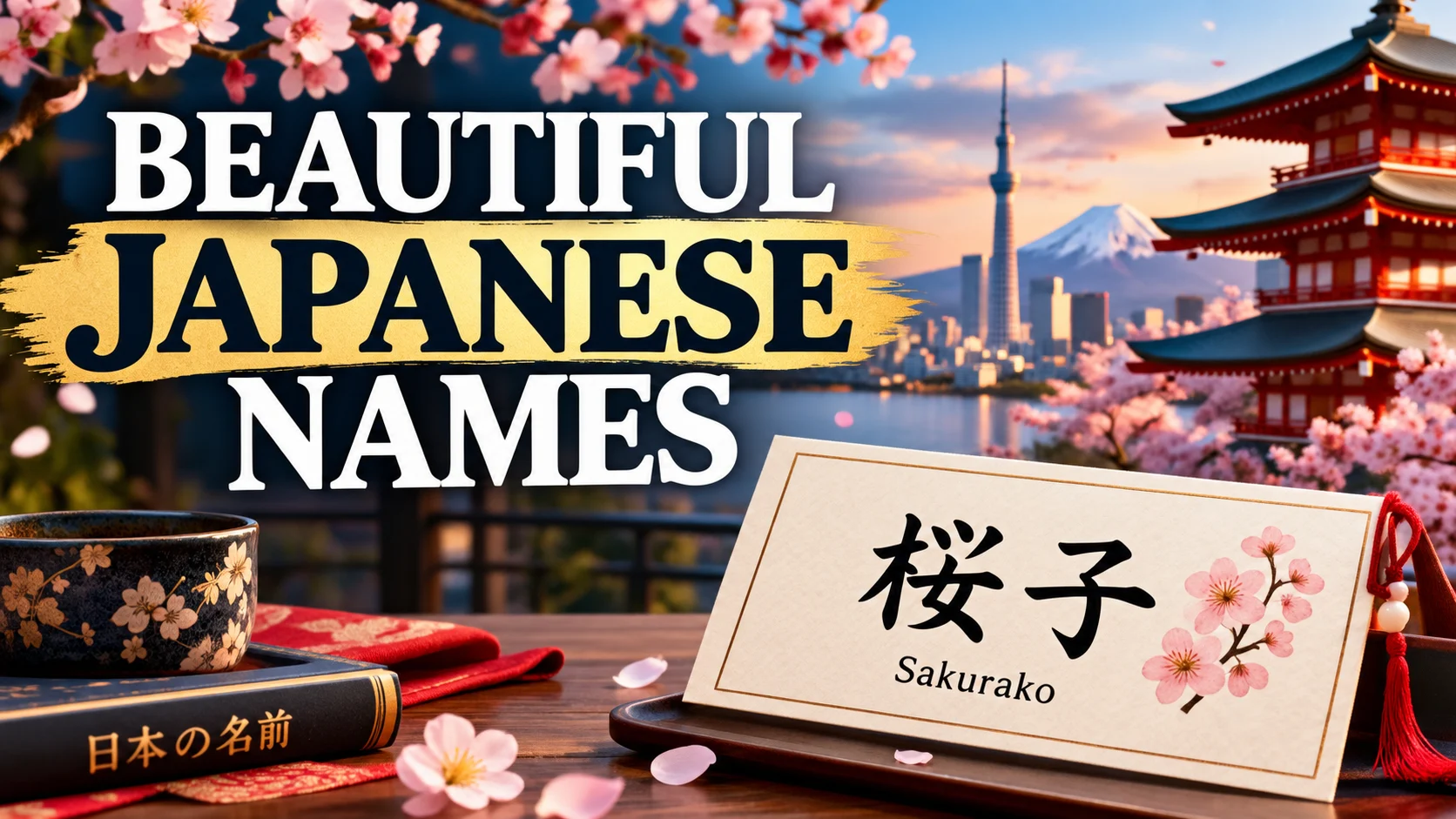
Japanese names combine sound, written characters, and cultural meaning. Many names connect to nature, seasons, virtues, emotions, or hopes for a child. Because different kanji can share the same reading, a name such as Yuki may represent meanings such as “snow” or “happiness,” depending on its written form.
A great name does more than sound beautiful. It can carry a memory, an image, a family hope, or a connection to nature.
That is one reason Japanese names attract so much interest from parents, writers, gamers, anime fans, pet owners, and anyone searching for a name with deeper symbolism. A short name such as Sora can evoke the sky, while Ren can connect to the lotus. Haru can suggest spring, sunlight, or clear weather depending on the kanji.
But there is an important detail many online name lists overlook: Japanese pronunciation and Japanese meaning are not always the same thing.
The sound comes first in many searches, but the written characters matter enormously. Two people can have names that sound identical while using different kanji and therefore carrying different meanings.
This guide brings the useful parts together. You will find beautiful Japanese names, example kanji, meanings, styles, gender usage, cultural context, and practical tips for choosing a name without treating Japanese naming as a simple English translation exercise.
What Are Japanese Names?
Japanese names usually consist of a family name and a given name. In Japanese order, the family name normally comes first.
Given names may be written using kanji, hiragana, or, in some situations, katakana. Kanji is especially important because individual characters can contribute meaning to the written name.
For example, the sound Yuki can be associated with different kanji. It can represent 雪, “snow,” or 幸, “happiness.” The pronunciation alone does not tell you which meaning applies.
This is one of the most important rules to remember when researching Japanese names:
Do not assign one fixed meaning to a Japanese name without checking its kanji.
The same principle applies to pronunciation. A written name can sometimes have multiple possible readings, while a familiar pronunciation can be represented by several character combinations.
12 Beautiful Japanese Names to Consider
1. Sakura — 桜
Meaning: Cherry blossom
Style: Feminine, nature-inspired
Vibe: Elegant, delicate, timeless
Best for: Baby names, characters, pets, usernames
Sakura is one of the most recognizable Japanese names internationally. The kanji 桜 refers to the cherry blossom, an enduring symbol associated with beauty and the changing seasons.
The appeal of Sakura comes from its simplicity. It feels distinctly Japanese without being difficult for many English speakers to pronounce. It also carries a strong visual identity, making it particularly effective for fictional characters and creative projects.
The name works well when you want something feminine and graceful without sounding overly elaborate.
Similar names: Hana, Aoi, Kaede, Saki
2. Aoi — 葵, 蒼, 碧
Meaning: Can relate to hollyhock or blue/green depending on kanji
Style: Modern, unisex
Vibe: Fresh, artistic, natural
Best for: Babies, characters, pets, creative usernames
Aoi is a strong choice if you want a short Japanese name with several possible written forms.
The kanji 葵 can refer to the hollyhock, while 蒼 and 碧 can express blue or green-related imagery. That flexibility gives Aoi a distinctly modern feel.
It is also a good example of why Japanese names should not be reduced to a single English definition. The sound Aoi can remain the same while the visual identity and meaning change with the kanji.
Similar names: Ao, Sora, Rin, Haru
3. Akira — 明, 亮, 昭
Meaning: Bright or clear, depending on kanji
Style: Classic, unisex
Vibe: Intelligent, confident, clean
Best for: Babies, characters, pen names
Akira has a strong international presence while remaining unmistakably Japanese in its naming context.
Kanji such as 明 and 昭 can express brightness, while 亮 can mean clear. The name therefore works especially well when you want an idea connected to light, clarity, or brilliance.
Its unisex usage also makes it flexible for fictional characters or families looking beyond strongly gendered names.
Similar names: Hikaru, Haru, Rei, Ritsu
4. Haru — 春, 晴, 陽
Meaning: Spring, clear weather, or sunlight depending on kanji
Style: Modern, unisex
Vibe: Warm, gentle, optimistic
Best for: Babies, characters, pets
Haru has a soft sound but a surprisingly broad semantic range.
With 春, it can mean “spring.” Other kanji can connect the name with sunlight or clear weather. This makes Haru particularly appealing to people searching for Japanese names inspired by seasons and nature.
It is short, easy to remember, and adaptable across different naming styles.
Rather than assuming Haru automatically means “spring,” check the exact kanji before assigning a meaning.
Similar names: Aoi, Sora, Yuki, Hana
5. Ren — 蓮, 恋
Meaning: Lotus or romantic love, depending on kanji
Style: Modern, concise, unisex
Vibe: Calm, stylish, memorable
Best for: Babies, characters, pets
Ren is one of the strongest short Japanese names for readers who want something simple but meaningful.
The kanji 蓮 means “lotus,” giving the name a natural and serene association. Another possible writing, 恋, relates to romantic love.
Ren also illustrates how dramatically the written meaning can change while the pronunciation remains identical.
Its compact sound makes it easy to use internationally, while the Japanese kanji provide additional depth.
Similar names: Rin, Rei, Riku, Sora
6. Yuki — 雪, 幸
Meaning: Snow or happiness, depending on kanji
Style: Traditional, unisex
Vibe: Soft, peaceful, bright
Best for: Babies, characters, pets
Yuki is particularly attractive because it can communicate completely different imagery through different kanji.
雪 means “snow,” creating a quiet winter association. 幸 means “happiness,” giving the name a warmer emotional meaning.
That contrast makes Yuki useful when comparing names by symbolism rather than sound alone.
It is also a good reminder that a Japanese name should be evaluated through its full written form rather than through a translated definition found in isolation.
Similar names: Yuna, Yu, Haru, Fuyu
7. Sora — 空
Meaning: Sky
Style: Modern, unisex
Vibe: Open, peaceful, adventurous
Best for: Babies, characters, pets
Sora is an appealing choice for anyone drawn to nature-inspired names.
The kanji 空 means “sky,” creating a simple but expansive image. The name feels contemporary while still having a straightforward connection to a Japanese word.
For fictional characters, Sora can work particularly well when the character is associated with freedom, travel, openness, or the natural world.
It is also relatively easy for international readers to remember and pronounce.
Similar names: Aoi, Haru, Hikari, Yuki
8. Hinata — 日向, 陽向
Meaning: Sunny place or toward the sun
Style: Modern, unisex
Vibe: Cheerful, energetic, warm
Best for: Babies, characters, anime-inspired naming
Hinata has a naturally bright feel because its established kanji forms can connect to sunlight and a sunny place.
It is a particularly recognizable choice in contemporary Japanese pop culture, but it should not be selected only because of a fictional character. The name itself has a broader linguistic and cultural life beyond entertainment.
Hinata works well if you want a name with warmth and movement rather than a purely delicate aesthetic.
Similar names: Haru, Hikari, Sora, Akari
9. Kaede — 楓
Meaning: Maple tree
Style: Nature-inspired, elegant
Vibe: Calm, seasonal, graceful
Best for: Girls, characters, nature-themed naming
Kaede is strongly associated with the maple tree through 楓.
It is a beautiful option for someone looking for a Japanese nature name that feels less immediately obvious than Sakura. The maple also evokes seasonal imagery, particularly autumn landscapes.
Kaede has a gentle sound and works especially well in stories, character naming, and creative projects where the natural world is part of the character’s identity.
Similar names: Sakura, Hana, Aoi, Hotaru
10. Minato — 湊, 港
Meaning: Harbor
Style: Contemporary, traditionally masculine but flexible
Vibe: Welcoming, confident, energetic
Best for: Baby boys, characters, modern naming
Minato means “harbor” through kanji such as 湊 or 港.
It is especially interesting for readers looking for a name with a strong modern connection in Japan. In Meiji Yasuda’s 2025 survey, 湊 ranked first among boys’ names by written form.
The harbor imagery also gives the name a natural metaphor: a place where people and journeys meet.
Similar names: Kai, Riku, Sora, Kaito
11. Rin — 凛
Meaning: Dignified, severe, or cold depending on interpretation and context
Style: Short, modern, unisex
Vibe: Refined, strong, composed
Best for: Babies, characters, usernames
Rin is compact but has a firm sound.
The kanji 凛 is associated with a dignified or austere quality. That gives the name a more composed feeling than some softer Japanese nature names.
Its short length makes it memorable, while its unisex usage gives it flexibility.
Rin is especially useful for writers who want a character name that feels understated rather than dramatic.
Similar names: Ren, Rei, Ritsu, Aoi
12. Hikaru — 光
Meaning: Light
Style: Classic, unisex
Vibe: Bright, energetic, hopeful
Best for: Babies, characters, creative names
Hikaru is closely associated with the idea of light. The kanji 光 means “light,” making the symbolism easy to understand.
The name has a strong balance between traditional Japanese identity and international accessibility. It can suit a character, baby, pet, or creative persona when you want a name associated with brightness without using a literal English word such as “Light.”
Similar names: Akira, Hikari, Haru, Rei
Quick Comparison Table
| Name | Example Kanji | Meaning | Style | Vibe |
| Sakura | 桜 | Cherry blossom | Feminine | Elegant |
| Aoi | 葵, 蒼, 碧 | Hollyhock / blue-green | Unisex | Artistic |
| Akira | 明, 亮, 昭 | Bright / clear | Unisex | Confident |
| Haru | 春, 晴, 陽 | Spring / sunlight | Unisex | Warm |
| Ren | 蓮, 恋 | Lotus / romantic love | Unisex | Calm |
| Yuki | 雪, 幸 | Snow / happiness | Unisex | Peaceful |
| Sora | 空 | Sky | Unisex | Free |
| Hinata | 日向, 陽向 | Sunny place / toward sun | Unisex | Cheerful |
| Kaede | 楓 | Maple tree | Nature-inspired | Graceful |
| Minato | 湊, 港 | Harbor | Modern | Welcoming |
| Rin | 凛 | Dignified | Unisex | Refined |
| Hikaru | 光 | Light | Unisex | Bright |
Current Japanese Name Trends
If you want a name that feels current rather than purely historical, recent Japanese naming data provides useful context.
Meiji Yasuda’s 2025 survey found 湊 (Minato) at the top of the boys’ ranking by written name and 翠 (Sui/Midori) at the top for girls. Other highly placed names included 伊織 (Iori), 結翔 (Yuito/Yuto), 紬 (Tsumugi), 凛 (Rin), and 陽葵 (Himari).
The survey also showed the continuing popularity of short, single-kanji names. Among readings, Haruto remained the leading boys’ reading for the seventeenth consecutive year, while Ema ranked first among girls’ readings.
These figures are useful as a snapshot of recent Japanese naming preferences, but they should not be treated as a universal ranking of every Japanese name.
How to Choose the Perfect Japanese Name
Choosing a Japanese name becomes easier when you separate sound, meaning, writing, and cultural context.
1. Start with the sound
Say the name aloud. Is it easy to pronounce and remember?
2. Check the exact kanji
Never stop at a romanized spelling. Find out which characters create the meaning you want.
3. Consider gender usage
Some names are strongly associated with one gender, while others are commonly used for multiple genders.
4. Think about cultural context
A name that looks beautiful in English may have a different impression in Japanese. If the name is for a real child, family member, or someone with Japanese heritage, consulting a fluent Japanese speaker is worthwhile.
5. Check pronunciation
Romanization can hide details such as long vowels. Make sure you know how the name is actually pronounced.
6. Match the name to its purpose
A baby name, fictional character name, pet name, and username have different requirements.
7. Avoid choosing a name only for its translation
“Moon,” “flower,” “warrior,” or “dark” may sound attractive in English, but the actual Japanese name and kanji should make sense in context.
Classic and Vintage Japanese Names
If you prefer a traditional feeling, consider names such as:
- Akiko
- Chiyo
- Yoshiko
- Reiko
- Yukiko
- Ichiro
- Jiro
- Saburo
- Taro
- Fumiko
Some traditional naming patterns have become less common over time. For example, -ko was historically common in girls’ names, while names connected to birth order were once more visible among boys.
That does not make these names outdated in every context. It simply means their historical and generational associations can differ from those of newer names.
Japanese Names for Different Uses
| Purpose | Good Style to Explore |
| Baby girl | Sakura, Aoi, Kaede, Hana, Rin |
| Baby boy | Minato, Ren, Riku, Haruto |
| Unisex baby name | Haru, Akira, Sora, Yuki |
| Fictional character | Akira, Hinata, Sora, Ren |
| Pet | Yuki, Hana, Sora, Momo |
| Username | Aoi, Rin, Ren, Yuki |
| Nature theme | Sakura, Kaede, Sora, Yuki |
| Strong/simple style | Ren, Rin, Akira, Ritsu |
Frequently Asked Questions
1. What is the prettiest Japanese name?
There is no objectively prettiest Japanese name. The best choice depends on the sound, kanji, meaning, and purpose. Names such as Sakura, Aoi, Kaede, Yuki, and Sora are appealing to many readers because they connect naturally with flowers, colors, seasons, snow, or the sky.
2. What are some popular Japanese names?
Recent Japanese naming data includes names such as Minato, Iori, Yuito, Sui, Himari, Tsumugi, Rin, and Haruto. Popularity changes from year to year, so current Japanese rankings are more useful than older lists when you want a genuinely contemporary name.
3. What Japanese name means love?
The answer depends on the kanji. Ai (愛) directly means “love” or “affection” and is used in Japanese names. Other names may contain kanji associated with love, affection, or relationships without literally translating to “love.”
4. What Japanese name means flower?
Several Japanese names can connect with flowers. Hana (花) literally means “flower,” while names such as Sakura connect to specific plants or blossoms. The exact meaning should always be checked against the chosen kanji.
5. Is Yuki a boy or girl name?
Yuki can be used for both boys and girls. Its meaning also depends on the kanji. For example, 雪 means “snow,” while 幸 means “happiness.” Other kanji combinations are possible.
6. Is Sora a unisex Japanese name?
Yes. Sora is used for both boys and girls. The kanji 空 means “sky,” giving the name a clear nature-related association. It is also short and relatively easy for international speakers to recognize.
7. Can one Japanese name have several meanings?
Yes. This is one of the defining complexities of Japanese names. Different kanji can share the same pronunciation. Consequently, the same romanized name can have different meanings, spellings, and visual associations.
8. Should I choose a Japanese name if I am not Japanese?
There is no universal answer. If you are choosing a name for a real person, especially a legal name, research pronunciation, cultural usage, and kanji carefully. A fluent Japanese speaker or someone familiar with Japanese naming conventions can help you avoid unintended meanings or awkward combinations.
Quick Query Fan-Out
What makes a name Japanese?
A Japanese personal name generally follows Japanese naming conventions and may be written in kanji, hiragana, or katakana. Kanji often contributes the name’s semantic meaning.
Do Japanese names have meanings?
Yes, especially when written in kanji. However, the meaning depends on the specific characters used, so a romanized name alone may not reveal its exact meaning.
Are Japanese names gender-specific?
Some names are traditionally associated with boys or girls, while others are used for both. Names such as Haru, Ren, Sora, Yuki, and Akira can be used across genders depending on context and writing.
What is the difference between a Japanese surname and given name?
In traditional Japanese order, the family name comes before the given name. For example, a person may be introduced using surname followed by personal name.
Are Japanese names written in kanji?
Many are, but not all. Names may also be written in hiragana, and katakana is commonly used for foreign names.
What Japanese names are popular right now?
Current 2025 survey data from Meiji Yasuda places Minato (湊) first among boys’ written names and Sui/Midori (翠) first among girls’ written names. Popular readings included Haruto for boys and Ema for girls.
Can the same Japanese name have different meanings?
Absolutely. Different kanji can produce the same pronunciation while expressing different meanings.
Conclusion
The most appealing Japanese names are not simply beautiful sounds translated into English. Their character, pronunciation, kanji, and cultural context can all shape how a name is understood.
Names such as Sakura, Aoi, Haru, Ren, Yuki, Sora, Kaede, and Minato show just how wide the range can be. Some evoke flowers and seasons. Others suggest light, happiness, the sky, a lotus, or a harbor.
The most important lesson is simple: always check the kanji before deciding on a meaning. A romanized name may represent several different written forms, and each can carry a different interpretation.
Whether you are naming a baby, fictional character, pet, username, or creative project, choose the name that sounds right, looks right, and fits the context.
Which Japanese name is your favorite? Share your choice and the meaning you like most.

Scarlett Howard is a writer and name enthusiast at NicknameCorner. She creates creative and helpful guides on nicknames, names, usernames and naming ideas, helping readers find meaningful, memorable and unique names for every occasion.