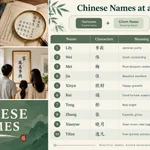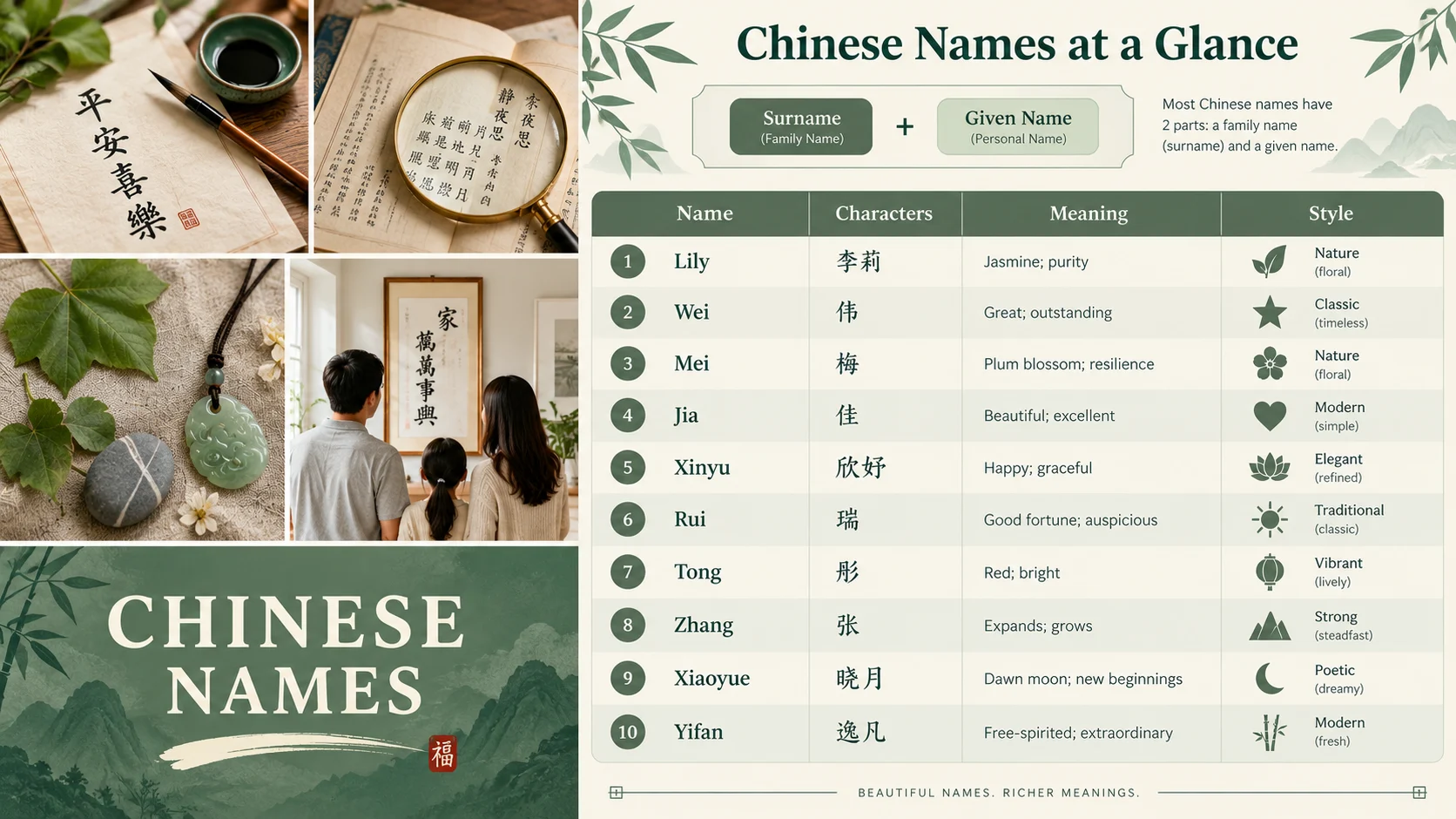
Chinese names typically consist of a one-character surname followed by a one- or two-character given name. The surname comes first, reflecting family heritage, while the given name carries meanings chosen for qualities like beauty, strength, virtue, or auspicious fortune.
A Chinese name is more than a label. It is a compact poem, often built from characters chosen for their sound, their meaning, and the hopes a family holds for a child. The focus keyword here is Chinese names, and understanding them requires looking at both structure and symbolism. Chinese names follow a pattern that has remained remarkably stable for centuries: surname first, given name second. But within that structure, the possibilities are vast. Given names can reference classical poetry, natural elements, moral virtues, or modern aspirations. Parents may spend months consulting dictionaries, fortune-tellers, or naming websites before settling on two characters that feel right. The result is a naming system that rewards curiosity. Whether you are naming a child, writing a character, or simply fascinated by naming traditions, this guide explains how Chinese names work, what popular names mean today, and how to approach choosing one with care.
How Chinese Names Work
Before examining specific names, it helps to understand the structure. A Chinese name consists of a surname (姓, xìng) followed by a given name (名, míng). Most surnames are one character, though some two-character surnames exist. The given name can be one or two characters, with two-character names now making up more than 80 percent of Chinese names.
Surname comes first. This reflects the cultural emphasis on family and lineage. Unlike Western naming conventions, there is no middle name in the traditional sense. The full name is usually three characters: one surname plus two given characters.
Generation names. In some families, particularly historically, all children of the same generation share one character in their given name. This practice has become less common in modern China but still appears in some families and regions.
Meaning over sound alone. Chinese parents typically consider both the meaning of each character and the combined meaning of the name. The sound matters too, especially for avoiding unfortunate homophones. A name that sounds beautiful in one dialect may carry an awkward association in another.
10 Chinese Names Worth Understanding
1. 雨桐 (Yǔtóng)
Meaning: 雨 means rain; 桐 refers to the paulownia tree, a fast-growing hardwood traditionally associated with prosperity and the phoenix in Chinese mythology. Together, the name suggests refreshing rain nourishing a thriving tree.
Origin and usage: This name topped the list of most popular newborn girls’ names in Sichuan province in 2025. It represents the current preference for nature-infused, poetic two-character names.
Style and vibe: Soft, elegant, and botanical. The name feels gentle but not fragile, balancing the transient quality of rain with the rooted strength of a tree.
Best for: Parents drawn to nature imagery and classical aesthetics. It works well for families who value names that sound beautiful without being overly ornate.
Similar names: 雨萱 (Yǔxuān), 雨欣 (Yǔxīn), 桐语 (Tóngyǔ), 梓桐 (Zǐtóng), 诗桐 (Shītóng).
Why it works today: Yutong combines accessibility with poetic depth. It is easy to pronounce and write, and its imagery resonates with contemporary interest in nature and sustainability.
2. 锦程 (Jǐnchéng)
Meaning: 锦 means brocade or splendid; 程 means journey or path. The name together suggests a splendid journey or a path of promise. It is often interpreted as “bright prospects.”
Origin and usage: This name ranked first among newborn boys in Sichuan in 2025. The character 锦 has become one of the most popular naming characters in recent years, reflecting parental hopes for success and beauty.
Style and vibe: Aspirational, ambitious, and traditionally masculine. The brocade imagery carries connotations of wealth and refinement.
Best for: Parents who want a name with clear positive meaning and a strong, forward-looking feel.
Similar names: 锦汐 (Jǐnxī), 锦颖 (Jǐnyǐng), 铭泽 (Míngzé), 沐宸 (Mùchén), 奕辰 (Yìchén).
Why it works today: Jincheng reflects a broader trend of choosing characters that convey both material prosperity and aesthetic beauty. It is ambitious without being aggressive.
3. 静姝 (Jìngshū)
Meaning: 静 means quiet or still; 姝 means beautiful woman or lovely. The name comes from the Classic of Poetry (诗经), specifically the poem “Quiet Girl” (静女): “静女其姝” meaning “the quiet girl is lovely”.
Origin and usage: This is a classical literary name that has endured for centuries. It appears in the Shijing, one of the oldest collections of Chinese poetry. The name reflects the traditional ideal of gentle, refined femininity.
Style and vibe: Classical, literary, and restrained. It carries a quiet confidence rather than overt drama.
Best for: Families with literary interests or those who value traditional Chinese aesthetics. It suits parents who want a name with clear classical roots.
Similar names: 静好 (Jìnghǎo), 淑慎 (Shūshèn), 惠然 (Huìrán), 巧倩 (Qiǎoqiàn), 美盼 (Měipàn).
Why it works today: Jingshu offers a connection to China’s poetic heritage. It is not common in modern usage, which makes it distinctive for families seeking a name with literary weight.
4. 铭泽 (Míngzé)
Meaning: 铭 means to inscribe or remember; 泽 means grace, moisture, or beneficence. The name suggests remembered kindness or inscribed grace.
Origin and usage: This name appeared in top rankings for boys in multiple Chinese regions in 2025, including Fuzhou where it ranked first and Sichuan where it placed third. The character 泽 is among the most frequently used naming characters in recent birth data.
Style and vibe: Steady, virtuous, and warm. The inscribing imagery suggests permanence, while the grace element softens it.
Best for: Parents who want a name with moral overtones that is not overly abstract. It works well for families who prefer names with a serious but kind feel.
Similar names: 铭宇 (Míngyǔ), 铭轩 (Míngxuān), 泽楷 (Zékǎi), 钧泽 (Jūnzé), 浩宇 (Hàoyǔ).
Why it works today: Mingze balances two strong characters without becoming unwieldy. It reflects the current preference for names that combine virtue (inscription, remembrance) with generosity (grace).
5. 汐玥 (Xīyuè)
Meaning: 汐 means evening tide or night tide; 玥 refers to a legendary pearl or precious stone. Together, the name evokes a luminous pearl in the evening tide.
Origin and usage: This name ranked fifth among girls in Sichuan in 2025 and has appeared in top rankings in other regions as well. The character 汐 has risen sharply in popularity, reflecting a broader trend toward water-related imagery in girls’ names.
Style and vibe: Modern, luminous, and slightly mysterious. The tide imagery gives it movement, while the pearl element adds value and rarity.
Best for: Parents who want a contemporary name with poetic imagery that is not tied to classical literature. It suits families who prefer modern aesthetics over traditional references.
Similar names: 汐瑶 (Xīyáo), 沐瑶 (Mùyáo), 书瑶 (Shūyáo), 锦汐 (Jǐnxī), 昕玥 (Xīnyuè).
Why it works today: Xiyue captures the current taste for water imagery and precious-stone characters. It sounds soft and modern without being invented.
6. 书瑶 (Shūyáo)
Meaning: 书 means book or writing; 瑶 means precious jade. The name suggests a precious jade of literature or a gem among books.
Origin and usage: This name ranked third among girls in Sichuan in 2025 and has been in the top 20 for consecutive years. It also ranked first for girls in Putian in 2025. The combination of scholarly imagery with precious stone reflects contemporary parental aspirations.
Style and vibe: Refined, educated, and elegant. The book element suggests intellectual cultivation, while the jade element adds value and beauty.
Best for: Families who value education and refinement. It works well for parents who want a name that conveys both intelligence and beauty.
Similar names: 诗瑶 (Shīyáo), 沐瑶 (Mùyáo), 钰涵 (Yùhán), 锦颖 (Jǐnyǐng), 妍瑶 (Yányáo).
Why it works today: Shuyao reflects the growing preference for names that combine intellectual and aesthetic values. It is aspirational without being materialistic.
7. 沐宸 (Mùchén)
Meaning: 沐 means to bathe or receive moisture; 宸 refers to the imperial palace or the North Star. Together, the name suggests one who is bathed in imperial favor or who dwells near the celestial palace.
Origin and usage: This name ranked second among boys in Sichuan in 2025 and first in Putian. The character 宸 has been widely used in recent years, though historically it was rarely used in personal names because of its imperial associations.
Style and vibe: Grand, celestial, and ambitious. The palace imagery gives it a sense of scale that is unusual in personal names.
Best for: Parents who want a name with a majestic feel. It suits families who prefer names that sound powerful rather than gentle.
Similar names: 沐瑶 (Mùyáo), 沐妍 (Mùyán), 奕辰 (Yìchén), 铭泽 (Míngzé), 浩宸 (Hàochén).
Why it works today: Muchen combines the softness of water imagery with the grandeur of imperial symbolism. It is ambitious in meaning but gentle in sound.
8. 蓁蓁 (Zhēnzhēn)
Meaning: 蓁蓁 means lush or luxuriant, describing dense vegetation. The name comes from the Classic of Poetry, from the poem “Peach Tree” (桃夭): “桃之夭夭,其叶蓁蓁” meaning “the peach tree is young and beautiful, its leaves are lush”.
Origin and usage: This is a classical name from the Shijing, traditionally used for girls. It represents the old practice of drawing names from classical literature, particularly for daughters.
Style and vibe: Literary, natural, and melodic. The doubled character gives it a rhythmic, nickname-like quality even in formal use.
Best for: Families with a strong appreciation for classical Chinese literature. It suits parents who want a name that is both traditional and distinctive.
Similar names: 芃芃 (Péngpéng), 燕飞 (Yànfēi), 淑慎 (Shūshèn), 如云 (Rúyún), 静姝 (Jìngshū).
Why it works today: Zhenzhen offers a direct connection to China’s oldest poetry. It is uncommon in modern usage, which gives it a distinctive character for families seeking literary depth.
9. 灵雨 (Língyǔ)
Meaning: 灵 means spirit, effective, or timely; 雨 means rain. The name comes from the Classic of Poetry, from the poem “Ding zhi fang zhong”: “灵雨既零” meaning “timely rain has fallen”.
Origin and usage: This classical name carries the meaning of beneficial, timely rain, an important blessing in an agricultural society. It is a literary name with clear positive associations.
Style and vibe: Poetic, beneficial, and gentle. The rain imagery is life-giving rather than gloomy.
Best for: Parents who appreciate classical poetry and nature imagery. It works well for families who want a name with a clear, positive meaning drawn from traditional sources.
Similar names: 朝雨 (Zhāoyǔ), 绿竹 (Lǜzhú), 琇莹 (Xiùyíng), 佩玉 (Pèiyù), 琼琚 (Qióngjū).
Why it works today: Lingyu is a reminder that classical names do not have to be obscure or difficult. It is simple, pronounceable, and carries centuries of literary weight.
10. 邦媛 (Bāngyuàn)
Meaning: 邦 means state or nation; 媛 means beautiful woman. The name comes from the Classic of Poetry, from the poem “Junzi xie lao”: “展如之人兮,邦之媛也” meaning “this person is truly the beauty of the nation”.
Origin and usage: This is a classical literary name with a grand, national scale. It reflects the traditional practice of drawing girls’ names from the Shijing, as captured in the saying “for girls, the Classic of Poetry” (女诗经).
Style and vibe: Literary, dignified, and expansive. The national scale of the imagery gives it weight beyond personal beauty.
Best for: Families who want a name with literary depth and a sense of larger purpose. It suits parents who appreciate classical references.
Similar names: 邦彦 (Bāngyàn), 静姝 (Jìngshū), 如云 (Rúyún), 洵美 (Xúnměi), 燕婉 (Yànwǎn).
Why it works today: Bangyuan offers a classical alternative to modern names. It connects a child to a poetic tradition that stretches back thousands of years, while its meaning honors both beauty and public spirit.
Quick Comparison Table
| Name | Meaning | Style | Best For | Vibe |
|---|---|---|---|---|
| 雨桐 (Yǔtóng) | Rain + paulownia tree | Modern-nature | Nature lovers | Soft, botanical |
| 锦程 (Jǐnchéng) | Splendid journey | Aspirational | Ambitious families | Bright, forward-looking |
| 静姝 (Jìngshū) | Quiet + lovely | Classical-literary | Poetry enthusiasts | Restrained, elegant |
| 铭泽 (Míngzé) | Inscribe + grace | Virtuous-modern | Moral-minded parents | Steady, warm |
| 汐玥 (Xīyuè) | Evening tide + pearl | Modern-luminous | Contemporary taste | Mysterious, precious |
| 书瑶 (Shūyáo) | Book + jade | Refined-educated | Scholarly families | Elegant, intellectual |
| 沐宸 (Mùchén) | Bathed + imperial palace | Grand-ambitious | Power-oriented | Majestic, celestial |
| 蓁蓁 (Zhēnzhēn) | Lush vegetation | Classical-nature | Literature lovers | Melodic, green |
| 灵雨 (Língyǔ) | Timely rain | Classical-poetic | Poetry fans | Gentle, beneficial |
| 邦媛 (Bāngyuàn) | National beauty | Classical-dignified | Traditionalists | Grand, literary |
How to Choose a Chinese Name
Consider the surname first. The surname is fixed in most cases, so the given name must work with it phonetically and visually. Avoid combinations that create awkward homophones or unintended phrases. A surname like 吴 (Wú, meaning “none” or “not”) can create unfortunate combinations if paired carelessly.
Decide between classical and modern sources. Classical names from the Shijing or Chuci carry literary weight and historical depth. Modern names often draw from nature imagery, precious stones, or aspirational concepts. Neither approach is inherently better; the choice depends on the family’s values.
Check character meaning and stroke count. Each character carries its own meaning, and some parents also consider stroke count for aesthetic or traditional reasons. A name with overly complex characters can cause practical problems in daily life, particularly with digital systems that may not support rare characters.
Test the sound in your dialect. A name that sounds elegant in Mandarin may carry an unintended meaning in Cantonese, Hokkien, or another dialect. For families with regional ties, this is worth checking.
Avoid direct imitation of famous figures. Chinese naming tradition generally discourages naming a child directly after a famous historical or contemporary person. The concern is not superstition but the difficulty of living under a borrowed name.
Do not use characters from elder relatives’ names. Traditional Chinese naming taboos prohibit using the same character as a living elder in the family, as it is considered disrespectful.
Think about international usability. If the child may live or work internationally, consider how the name will be pronounced by non-Chinese speakers. Some families choose a Chinese name with a sound that is manageable in other languages, or they select an English name alongside it.
Query Fan-Out:
- How do Chinese names work? Chinese names place the surname first, followed by the given name. Most surnames are one character, and given names are typically one or two characters.
- What are the most common Chinese surnames? Li (李), Wang (王), and Zhang (张) are the three most widely used surnames in China, together covering over 20 percent of the population.
- What do Chinese given names mean? Given names often reflect qualities parents hope for: beauty, intelligence, strength, or good fortune. Many derive from classical poetry or historical texts.
- Are Chinese names changing? Yes. Names like 子涵 (Zihan) and 浩宇 (Haoyu) that dominated in previous decades are declining, while characters like 锦 and 汐 are rising in recent birth registrations.
- Can Chinese names be two characters? Given names can be one or two characters. Two-character given names are now more common, making up over 80 percent of Chinese names.
- Do Chinese people have nicknames? Yes. Chinese nicknames often derive from given names, use doubled characters (like 婷婷), or add the prefix 小 (Xiao, meaning little).
- What names should be avoided in Chinese culture? Names of famous historical figures are generally avoided, as is naming a child directly after a living elder relative.
FAQ
What is the structure of a typical Chinese name?
A standard Chinese name has a one-character surname followed by a one- or two-character given name, in that order. The surname comes first because Chinese culture emphasizes family lineage. Two-character given names are now more common than single-character ones.
What are the most common Chinese surnames?
The three most common surnames are 李 (Lǐ), 王 (Wáng), and 张 (Zhāng). Together they account for roughly 21 percent of China’s population. Other common surnames include 刘 (Liú), 陈 (Chén), and 杨 (Yáng).
What do recent naming trends in China look like?
Recent birth data shows strong preference for characters like 锦 (splendid), 汐 (tide), 泽 (grace), and 瑶 (jade). Names like 子涵 (Zihan) and 浩宇 (Haoyu) that were extremely common in earlier decades are declining in some regions.
Can Chinese names come from poetry?
Yes. A longstanding tradition draws names from classical texts, especially the Classic of Poetry (诗经) for girls and the Songs of Chu (楚辞) for boys. Names like 静姝, 蓁蓁, and 灵雨 all come directly from the Shijing.
Do Chinese people use nicknames?
Yes. Common nickname patterns include doubling a character from the given name (e.g., 婷婷 from 婷), adding the prefix 小 (Xiǎo, little), or using an unrelated affectionate term. Nicknames are typically used among family and close friends rather than in formal settings.
What names are considered taboo in Chinese culture?
Names of famous historical figures are generally avoided, as is using a character from a living elder relative’s name. In the past, some names reflected son preference (like 招弟, meaning “seeking a little brother”), but these have become rare and are generally avoided today.
How many characters can a Chinese given name have?
Most given names are one or two characters. Two-character names are more common in modern usage. Single-character names still exist but are less frequent, partly because longer names reduce the chance of duplication.
Can non-Chinese people choose a Chinese name?
Yes, but it requires care. A Chinese name should be chosen with attention to character meaning, sound, and cultural appropriateness. Consulting a native speaker or language instructor can help avoid unfortunate homophones or culturally awkward combinations
Conclusion
Chinese names reward attention. Each one is built from characters chosen for their sound, their meaning, and the future a family imagines. From classical names drawn from the Classic of Poetry like 静姝 and 蓁蓁 to modern favorites like 雨桐 and 锦程, the range is wide but the underlying logic is consistent: a surname that anchors a person to family, and a given name that aspires toward something beautiful. Use this guide as a starting point. Consider the sound, the meaning, and the cultural context. Think about the person who will carry the name for a lifetime. If you have a favorite Chinese name or a naming tradition from your own family, share it in the comments. The best conversations about Chinese names are the ones where everyone brings a different perspective.

Scarlett Howard is a writer and name enthusiast at NicknameCorner. She creates creative and helpful guides on nicknames, names, usernames and naming ideas, helping readers find meaningful, memorable and unique names for every occasion.