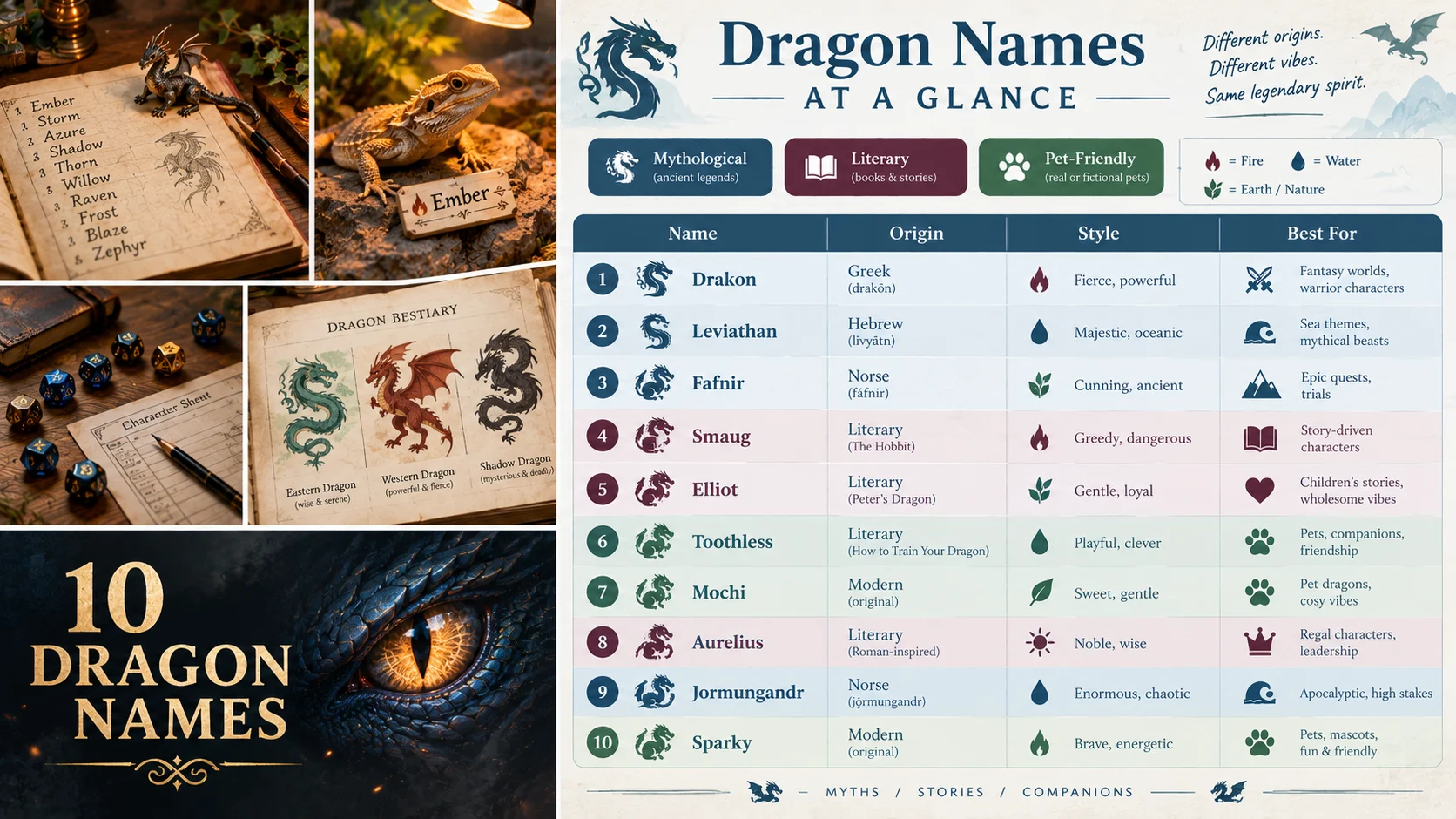
Dragon names are names given to mythical dragons, fictional characters, or real pets like bearded dragons. They draw from mythology, literature, and invented languages. Common categories include fire-themed names, mythological names, fantasy-inspired names, and cute pet names.
A dragon name is a small act of world-building. Whether you are naming a character in a story, a creature in a tabletop campaign, or a bearded dragon basking under a heat lamp, the right name gives the creature weight. It suggests where the dragon comes from, what it breathes, and whether it inspires awe or affection. The search for dragon names pulls together mythology, fantasy literature, and practical pet naming, and the best choices usually sit at the intersection of sound and story. This guide walks through ten dragon names from different traditions, explains their roots, and offers practical advice for choosing one that fits. No name determines a dragon’s nature. But a thoughtful choice can make a fictional beast feel real or give a pet a name worth saying every day.
10 Dragon Names Worth Considering
1. Smaug
Meaning and origin: Smaug is the dragon from J.R.R. Tolkien’s The Hobbit. Tolkien noted that the name derives from the Germanic word smeugan, meaning “to squeeze through a hole,” possibly a reference to a worm or serpent . The name has no older mythological precedent and is entirely Tolkien’s creation.
Style and vibe: Smaug is grand, menacing, and unmistakably literary. It has a single syllable that lands hard, and it carries the weight of treasure hoards and arrogant speeches.
Best for: Writers creating a villainous or formidable dragon. It suits a creature of intelligence and greed rather than a friendly companion.
Similar names: Glaurung, Ancalagon, Scatha, Fafnir.
Why it works today: Smaug set the standard for modern fantasy dragons. The name is short enough to remember but strange enough to feel ancient, and its association with Tolkien gives it immediate gravity.
2. Fafnir
Meaning and origin: Fafnir comes from Norse mythology. He was a dwarf prince who killed his father for a cursed hoard of gold and transformed into a dragon to guard it . The name appears in the Volsunga Saga and is one of the oldest named dragons in European literature.
Style and vibe: Fafnir is heavy, guttural, and mythic. It sounds like something spoken in a saga, and it carries a built-in cautionary tale about greed.
Best for: A dragon with a tragic or cursed backstory. It works well for characters defined by obsession or corruption.
Similar names: Nidhogg, Jormungandr, Ladon, Tiamat.
Why it works today: Fafnir is recognizable to mythology enthusiasts but not overused in mainstream fantasy. It offers historical depth without feeling clichéd.
3. Tiamat
Meaning and origin: Tiamat is a primordial goddess of saltwater chaos in Mesopotamian mythology, often depicted as a dragon or serpent . In the Enuma Elish, she is defeated by the god Marduk. The name has been adopted into Dungeons & Dragons as a five-headed dragon goddess.
Style and vibe: Tiamat is grand, ancient, and feminine. It has a flowing sound that suggests water and creation as much as destruction.
Best for: A dragon of immense power, particularly one tied to chaos or the sea. It suits characters with a cosmic scale.
Similar names: Bahamut, Apep, Hydra, Leviathan.
Why it works today: Tiamat bridges ancient myth and modern gaming. It is a name that signals scale and antiquity without requiring explanation.
4. Mushu
Meaning and origin: Mushu is the small red dragon from Disney’s Mulan. The name’s Chinese characters translate roughly to “wood” and “necessary” . The character is a comedic guardian spirit, far removed from the imposing dragons of mythology.
Style and vibe: Mushu is playful, scrappy, and affectionate. It has a bouncy, two-syllable rhythm that feels friendly rather than fearsome.
Best for: A small dragon, a companion creature, or a pet with personality. It works for characters who are more sidekick than threat.
Similar names: Mushu variants include Mulan-adjacent names, but similar cute dragon names include Puff, Spyro, and Elliott.
Why it works today: Mushu proves that dragon names do not have to be intimidating. For a pet bearded dragon or a lighthearted character, it offers instant warmth.
5. Drogon
Meaning and origin: Drogon is one of Daenerys Targaryen’s three dragons in George R.R. Martin’s A Song of Ice and Fire and the Game of Thrones adaptation. The name is invented but follows a pattern of hard consonants and short vowels used for Valyrian names .
Style and vibe: Drogon is sharp, modern, and aggressive. The initial dr cluster evokes the word “dragon” directly.
Best for: A dragon in a contemporary fantasy setting. It suits creatures meant to feel dangerous and central to a narrative.
Similar names: Rhaegal, Viserion, Caraxes, Syrax.
Why it works today: Drogon is instantly recognizable to a broad audience, and its sound is efficient and memorable. It demonstrates how a modern invented name can feel as solid as a mythological one.
6. Ryujin
Meaning and origin: Ryujin is the Japanese dragon god of the sea, said to dwell in a coral palace and control the tides with magical jewels . The name is composed of characters meaning “dragon” and “god” or “spirit.”
Style and vibe: Ryujin is elegant and flowing. It has a calm, regal quality, fitting a creature associated with water rather than fire.
Best for: A wise or benevolent dragon, particularly one tied to water, weather, or the sea. It suits characters who wield authority without menace.
Similar names: Shenlong, Long, Tatsu, Naga.
Why it works today: Interest in non-Western dragon traditions has grown, and Ryujin offers a name with genuine mythological weight from a living cultural tradition. It is distinctive without being difficult to pronounce.
7. Ember
Meaning and origin: Ember is an English word name referring to the glowing remains of a fire. It entered name usage in the late twentieth century alongside other nature and word names. It does not have a mythological origin but draws on the universal association of dragons with fire .
Style and vibe: Ember is warm, simple, and approachable. It works equally well for a fierce dragon and a gentle one, and it has a soft sound that contrasts with harder dragon names.
Best for: A pet dragon or a character who is young, small, or not yet fully powerful. It suits names that need to be said often in daily life.
Similar names: Ash, Blaze, Cinder, Spark, Kindle.
Why it works today: Ember is short, easy to spell, and evocative without being aggressive. For a bearded dragon or a story character meant to feel relatable, it is a practical choice.
8. Hydra
Meaning and origin: The Hydra is a many-headed water serpent from Greek mythology, slain by Heracles as one of his twelve labors. The name comes from the Greek hydr-, meaning water . In modern usage, it has become a generic term for multi-headed dragons.
Style and vibe: Hydra is classical, scientific, and slightly cold. It has a crisp, two-syllable structure that feels more taxonomic than affectionate.
Best for: A dragon with multiple heads or a creature defined by regeneration and resilience. It also works for a character with a scholarly or clinical edge.
Similar names: Ladon, Python, Wyvern, Draco.
Why it works today: Hydra is familiar without being overused as a character name. Its scientific resonance gives it a modern, precise feel that distinguishes it from purely literary dragon names.
9. Falkor
Meaning and origin: Falkor is the luckdragon from Michael Ende’s The Neverending Story and its film adaptation. The name is invented, though it may evoke “falcon” or a similar Germanic root. Falkor is notable for being a benevolent, furry, dog-like dragon rather than a reptilian monster .
Style and vibe: Falkor is gentle, whimsical, and nostalgic. It carries the warmth of a childhood favorite and suggests protection rather than danger.
Best for: A friendly dragon, a companion creature, or a pet with a sweet temperament. It works for stories aimed at younger audiences.
Similar names: Elliott, Puff, Sisu, Mushu.
Why it works today: Falkor offers a dragon name that is unambiguously kind. For pet owners or writers who want a dragon without menace, it is a strong choice with built-in emotional resonance.
10. Shenron
Meaning and origin: Shenron is the wish-granting dragon from the Dragon Ball franchise. The name is a Japanese rendering of the Chinese Shenlong, meaning “god dragon” or “spirit dragon” . In the series, Shenron is summoned by collecting seven dragon balls and can grant a single wish.
Style and vibe: Shenron is powerful, formal, and slightly ceremonial. It has a rolling, resonant sound that fits a creature of immense scale.
Best for: A dragon with a specific role or function, such as granting boons or guarding knowledge. It suits characters who are more than simple beasts.
Similar names: Shenlong, Ryujin, Long, Bahamut.
Why it works today: Shenron is instantly recognizable to a global audience raised on anime and video games. Its connection to East Asian dragon traditions gives it cultural grounding beyond the franchise.
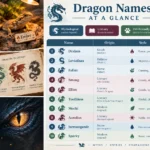
Quick Comparison Table
| Dragon Name | Meaning/Origin | Style | Best For | Vibe |
|---|---|---|---|---|
| Smaug | Tolkien invention, “squeeze through hole” | Literary-grand | Villainous dragons | Menacing, arrogant |
| Fafnir | Norse myth, cursed dwarf | Mythic-heavy | Tragic characters | Greedy, ancient |
| Tiamat | Mesopotamian chaos goddess | Cosmic-feminine | Powerful dragons | Primordial, grand |
| Mushu | Disney, Chinese characters | Playful-cute | Pets, sidekicks | Scrappy, warm |
| Drogon | Game of Thrones invention | Modern-sharp | Contemporary fantasy | Aggressive, central |
| Ryujin | Japanese sea dragon god | Elegant-regal | Wise dragons | Calm, authoritative |
| Ember | English word name | Simple-warm | Pets, young dragons | Gentle, bright |
| Hydra | Greek water serpent | Classical-scientific | Multi-headed creatures | Cold, precise |
| Falkor | Neverending Story invention | Gentle-whimsical | Friendly dragons | Protective, nostalgic |
| Shenron | Dragon Ball, “god dragon” | Formal-ceremonial | Wish-granters | Powerful, formal |
How to Choose the Perfect Dragon Name
Match the name to the creature’s role. A dragon meant to terrify should sound different from a dragon meant to comfort. Smaug and Falkor occupy opposite ends of the same spectrum, and both work because their names fit their narrative functions.
Consider the source material. Mythological names carry built-in associations. Fafnir suggests greed. Tiamat suggests chaos. Ryujin suggests authority. If you want those associations, use them deliberately. If you do not, choose a name with less baggage.
Test the sound aloud. Dragon names often appear in dialogue or are spoken to pets. Say the name several times. A name that looks striking on paper may be awkward in conversation. Short names with hard consonants tend to carry well.
Decide between real and invented. Real names from mythology or literature offer instant recognition. Invented names like Drogon or Falkor offer freshness. Neither is better, but they serve different purposes.
For pets, prioritize practicality. A bearded dragon named Smaug is fun, but you will say the name daily. Short, two-syllable names with clear vowels are easiest for pets and humans alike. Names like Ember, Mushu, or Sparky work well in this context .
Check cultural weight. Some dragon names come from living traditions. Ryujin, Shenlong, and Naga carry cultural significance beyond fantasy. Use them with awareness and respect, not as generic fantasy decoration.
Query Fan-Out:
- What are famous dragon names from mythology? Fafnir from Norse myth, Tiamat from Mesopotamian tradition, and the Hydra from Greek mythology are widely recognized .
- What are dragon names from books and movies? Smaug from The Hobbit, Mushu from Mulan, and Drogon from Game of Thrones are well-known examples .
- What are good names for a pet bearded dragon? Short, friendly names like Sparky, Rocky, Sunny, or Peaches work well for pet lizards .
- What dragon names mean fire? Names like Azar (Hebrew for flame), Tanwen (Welsh for white fire), and Ember connect to fire imagery .
- What are female dragon names? Options include Adalinda, Belinda, Brenna, and Dalinda, many with meanings related to serpents or light .
- How do I create a unique dragon name? Combine mythological roots, translated nature words, or invented syllables that fit your dragon’s appearance or story.
- What are Chinese dragon names? Shenlong, Long, and Ryujin (Japanese) are associated with water, rain, and fortune in East Asian traditions .
FAQ
What are the most famous dragon names?
Smaug from The Hobbit, Fafnir from Norse mythology, Tiamat from Mesopotamian myth, and Drogon from Game of Thrones are among the most widely recognized dragon names across literature and popular culture .
What are good names for a bearded dragon?
Short, friendly names work best for pets. Consider Sparky, Rocky, Sunny, Peaches, Ember, or Mushu. These names are easy to say and suit a small, approachable reptile rather than a monstrous one .
What dragon names mean fire?
Azar (Hebrew for flame), Tanwen (Welsh for white fire), Ember, Blaze, and Cinder all connect to fire. Many fire-themed names are descriptive words rather than traditional given names .
What are female dragon names?
Options include Adalinda, Belinda, Brenna, Dalinda, and Kaliyah. Many female dragon names emphasize qualities like light, serpents, or nobility rather than aggression .
What are Chinese dragon names?
Shenlong (spirit dragon), Long (the general Chinese dragon), and Ryujin (the Japanese sea dragon god) are prominent. Chinese dragons are traditionally associated with water, rain, and fortune rather than fire and destruction .
How do I create a unique dragon name?
Combine a meaningful root word with a sound that fits your dragon. You can translate a nature word into another language, combine syllables from mythological names, or invent a short, sharp name that matches the creature’s appearance or element.
What are cute dragon names for a pet?
Mushu, Puff, Spyro, Elliott, Peaches, Toasty, and Pixie are among the friendlier options. Cute dragon names tend to be short, have soft sounds, and avoid the harsher consonants of mythological names .
Do dragon names have to come from mythology?
No. Many well-known dragon names are modern inventions from literature, games, or film. Smaug, Drogon, and Falkor are all invented names that have become recognizable through their stories .
Conclusion
Dragon names carry more weight than most naming decisions. A dragon is rarely just an animal in a story. It is a symbol, a threat, a companion, or a force of nature, and its name should signal which one. The ten names in this guide range from the mythic heaviness of Fafnir to the playful warmth of Mushu, and from Tolkien’s invented grandeur to the simple, daily practicality of Ember for a pet. Use them as starting points. Say each one aloud. Consider the creature it belongs to. Whether you are naming a dragon for a campaign, a novel, or a tank in your living room, the best dragon names are the ones that feel inevitable once you find them. Share your favorites in the comments.

Mia Kensington is a name and nickname enthusiast at NicknameCorner.com, she writes helpful guides on cute nicknames, baby names, usernames and creative name ideas, making it easier for readers to find names that feel unique, meaningful and memorable.