Korean girl names are feminine given names used in Korea, typically composed of two syllables written in Hangul or Hanja. Common elements include Seo (auspicious), Yun (soft), Ji (wisdom), and Eun (kindness). Popular examples include Seo-yun, Seo-a, and Ha-yun.
A name whispered to a newborn in Seoul carries centuries of meaning. Korean girl names are not just sounds. They often hold Hanja characters chosen for auspicious meanings, Hangul syllables picked for soft rhythms, and sometimes pure Korean words drawn from nature. The result is a naming tradition that is both deeply considered and quietly beautiful.
Whether you are expecting a daughter, writing a character, or simply drawn to Korean culture, understanding how these names work opens a window into Korean values. You will find names that mean wisdom, names that mean flower, and names that sound like a gentle breeze. Some are common across generations. Others feel fresh because parents are rediscovering native Korean words that fell out of fashion decades ago.
This guide walks through ten Korean girl names worth knowing. For each one, you will find the meaning, origin, style notes, and practical considerations. The goal is not to declare a winner. It is to give you the context to recognize a name that feels right.
10 Korean Girl Names Worth Considering
1. Seo-yun (서윤)
Meaning and origin: Seo-yun is a two-syllable Sino-Korean name. The first syllable, Seo, often carries meanings like auspicious or felicitous. The second syllable, Yun, can mean soft, sleek, or allow. The specific meaning depends on the Hanja characters chosen by the family. It ranked as the number one girl name in Korea for 2025 based on birth registration data .
Style and vibe: Seo-yun feels balanced and melodic. The soft vowel sounds and absence of a harsh final consonant give it a gentle quality that aligns with broader naming trends in Korea.
Best for: Families drawn to contemporary Korean naming styles. It is familiar in Korea but not overly common outside Korean communities.
Similar names: Seo-a, Seo-yeon, Ha-yun, Ji-yun.
Why it works today: Seo-yun represents the current preference for smooth, vowel-rich names. Its recent popularity reflects real naming patterns rather than hype, and it pairs well with most Korean surnames.
2. Seo-a (서아)
Meaning and origin: Seo-a combines Seo (auspicious) with A, which can mean elegant, graceful, or refined depending on the Hanja. It has been among the top girl names in Korea since the late 2010s and ranked second in 2025 .
Style and vibe: Seo-a is short, bright, and modern. The open vowel ending gives it an airy quality. It works equally well as a standalone name or with a longer middle name.
Best for: Parents who want a name that feels current but rooted. Its brevity makes it practical for daily use.
Similar names: Seo-yun, Seo-hyeon, Si-a, Ha-rin.
Why it works today: Seo-a exemplifies the shift toward names that prioritize sound and feeling over elaborate Hanja meanings. It is easy to say, easy to remember, and carries a light elegance.
3. Ji-an (지안)
Meaning and origin: Ji-an combines Ji, which can mean wisdom, will, or purpose, with An, which often means peace or calm. It ranked fifth among Korean girl names in 2025 . The name can be written in multiple Hanja combinations, each with slightly different shades of meaning.
Style and vibe: Ji-an feels grounded and thoughtful. It has a modern Korean sound while carrying traditional virtue concepts. The meaning combination of wisdom and peace gives it quiet depth.
Best for: Families who value names with both contemporary style and meaningful Hanja potential.
Similar names: Ji-yu, Ji-su, Ji-min, Si-an.
Why it works today: Ji-an bridges old and new. Its components carry classical meanings, but the overall sound fits neatly with current naming preferences for soft, two-syllable names.
4. Ha-yun (하윤)
Meaning and origin: Ha-yun combines Ha, which can mean summer or great, with Yun, meaning soft or allow. It ranked sixth in 2025 . The name reflects the broader trend of Yun-ending names rising in popularity, alongside Seo-yun and A-yun.
Style and vibe: Ha-yun is warm and flowing. The Ha component adds a slightly brighter tone compared to the softer Seo. It feels approachable and gentle.
Best for: Parents who like the Yun sound but want something slightly less common than Seo-yun.
Similar names: Seo-yun, A-yun, Ha-rin, Ha-eun.
Why it works today: Ha-yun captures the dominant phonetic trend in Korean girl names while maintaining a distinct identity. It is modern without feeling invented.
5. A-rin (아린)
Meaning and origin: A-rin ranked third among Korean girl names in 2025 . The meaning depends on the Hanja chosen. A can mean elegant or graceful, while Rin can carry meanings related to a gem, forest, or beauty, depending on the characters used. Some sources associate Rin with a feminine unicorn in Korean naming symbolism .
Style and vibe: A-rin is crisp and lively. The double consonant ending gives it a slightly more energetic feel than names ending in vowels. It is modern and youthful.
Best for: Families who want a name with a bit more texture and energy while staying within current Korean naming conventions.
Similar names: Ha-rin, Seo-rin, A-yun, I-seo.
Why it works today: A-rin offers a balance of softness and definition. Its rising popularity reflects its appeal across different age groups and family preferences.
6. Haneul (하늘)
Meaning and origin: Haneul is a native Korean name meaning sky or heaven. Unlike Sino-Korean names, it does not use Hanja characters. It is written purely in Hangul and draws its meaning directly from the Korean word for sky .
Style and vibe: Haneul is open, expansive, and poetic. It has a timeless quality that transcends naming trends. The sound is soft but carries a sense of breadth.
Best for: Families who prefer native Korean names over Sino-Korean constructions. It works well for parents who want a name with a clear, nature-based meaning.
Similar names: Iseul (dew), Byeol (star), Bada (sea), Nara (country).
Why it works today: Haneul represents the enduring appeal of pure Korean names. It is easy to understand, beautiful in meaning, and does not require knowledge of Hanja to appreciate.
7. Iseul (이슬)
Meaning and origin: Iseul is a native Korean name meaning dew. Like Haneul, it uses pure Korean language rather than Sino-Korean roots. It is a relatively uncommon name, making it distinctive without being difficult to pronounce .
Style and vibe: Iseul is delicate, fresh, and understated. The meaning evokes morning dew, giving it a quiet, natural beauty.
Best for: Parents seeking a rare but accessible Korean name with a clear nature connection.
Similar names: Haneul, Byeol, Bom (spring), Gaeul (autumn).
Why it works today: Iseul fits the growing interest in native Korean names that feel personal and grounded. Its rarity makes it memorable without being complicated.
8. Yuna (유나)
Meaning and origin: Yuna is a Korean feminine name that can be written with various Hanja combinations. Common interpretations include gentle and graceful. It gained international recognition through figures in Korean pop culture, including members of K-pop groups .
Style and vibe: Yuna is soft and approachable. It has a familiar sound that works across languages, making it one of the more internationally accessible Korean girl names.
Best for: Families who want a Korean name that is easy for non-Korean speakers to pronounce and remember.
Similar names: Yuri, Yujin, Mina, Sora.
Why it works today: Yuna balances Korean identity with global usability. It does not require special phonetic knowledge to say correctly, and its gentle sound appeals across cultures.
9. Bada (바다)
Meaning and origin: Bada is a native Korean word meaning sea. It is used as a given name, primarily for girls, though it can be unisex. The name draws directly from the Korean language without Hanja influence .
Style and vibe: Bada is simple, cool, and modern. The meaning is immediate and visual. It has a slightly unconventional feel compared to traditional Sino-Korean names.
Best for: Parents who want a short, meaningful name with a strong nature connection and a contemporary edge.
Similar names: Haneul, Iseul, Byeol, Nabi (butterfly).
Why it works today: Bada is part of a broader movement toward native Korean names that feel personal and expressive. Its one-word clarity makes it easy to introduce and remember.
10. Nari (나리)
Meaning and origin: Nari is a native Korean name meaning lily. It appears in Korean naming traditions as a nature-derived name without Hanja. It is less common than Sino-Korean names but carries a clear, beautiful meaning .
Style and vibe: Nari is sweet, natural, and slightly old-fashioned in a charming way. The lily meaning gives it a floral softness.
Best for: Families who love flower names and want a Korean option that is not overly common.
Similar names: Nabi (butterfly), Bada (sea), Haneul (sky), Yeon (lotus).
Why it works today: Nari offers the appeal of a flower name without the predictability of more common botanical choices. Its native Korean roots give it authenticity and warmth.
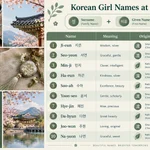
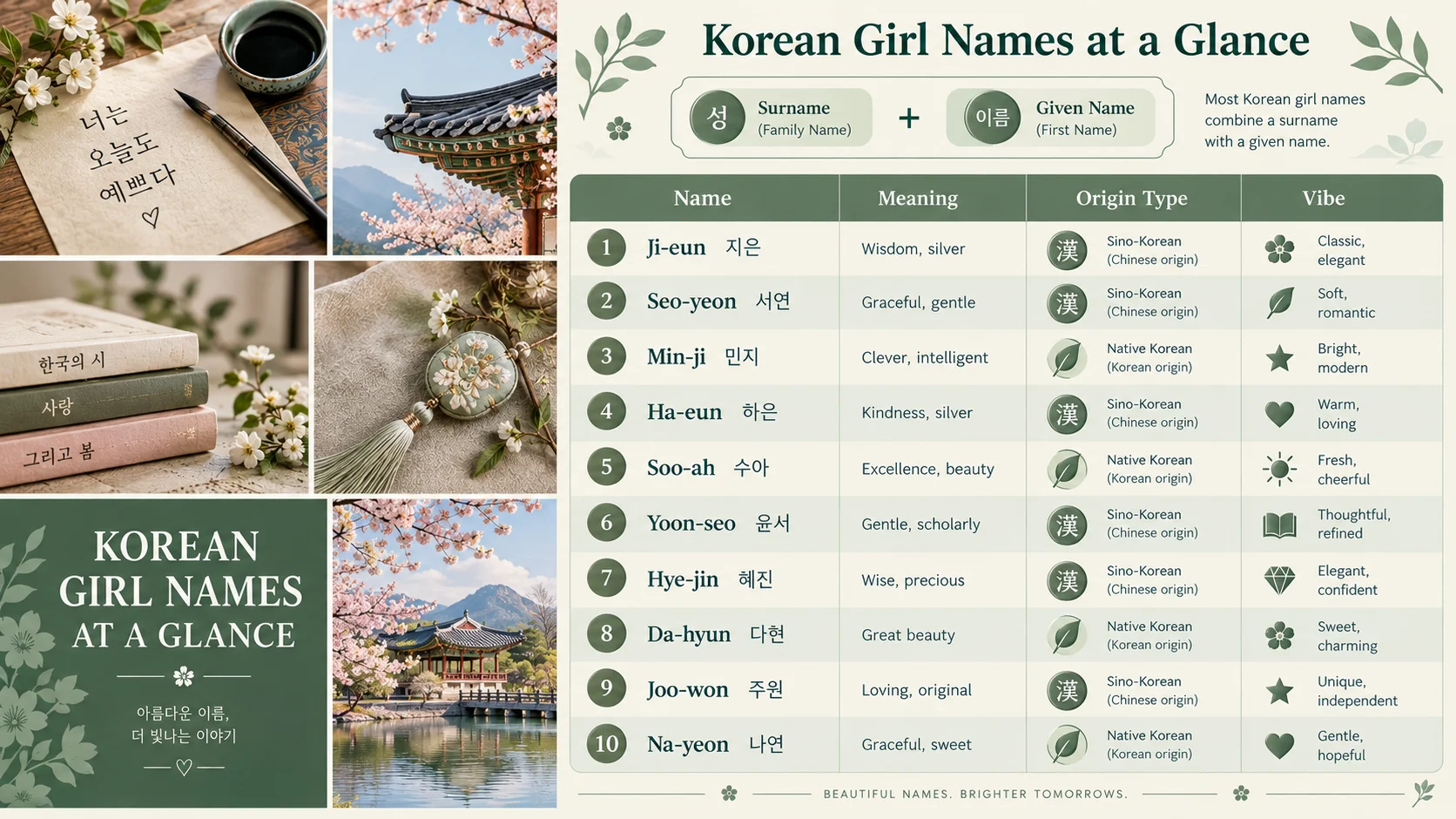
Quick Comparison Table
| Name | Meaning | Origin Type | Style | Best For | Vibe |
|---|---|---|---|---|---|
| Seo-yun | Auspicious + soft | Sino-Korean | Modern-popular | Trend-aware families | Melodic, balanced |
| Seo-a | Auspicious + elegant | Sino-Korean | Modern-short | Minimalists | Bright, airy |
| Ji-an | Wisdom + peace | Sino-Korean | Modern-meaningful | Meaning-focused parents | Grounded, thoughtful |
| Ha-yun | Summer/great + soft | Sino-Korean | Modern-warm | Families who like Yun | Warm, flowing |
| A-rin | Elegant + gem/forest | Sino-Korean | Modern-lively | Parents wanting energy | Crisp, youthful |
| Haneul | Sky/heaven | Native Korean | Timeless-nature | Nature lovers | Open, poetic |
| Iseul | Dew | Native Korean | Rare-nature | Uniqueness seekers | Delicate, fresh |
| Yuna | Gentle/graceful | Sino-Korean | International-soft | Global families | Approachable, familiar |
| Bada | Sea | Native Korean | Modern-simple | Contemporary namers | Cool, clear |
| Nari | Lily | Native Korean | Nature-sweet | Flower name lovers | Warm, natural |
How to Choose the Perfect Korean Girl Name
Decide between Sino-Korean and native Korean. Sino-Korean names use Hanja characters with specific meanings and are the majority of Korean given names. Native Korean names like Haneul and Iseul use pure Korean words and often carry nature meanings. Neither is better. The choice depends on whether you want Hanja significance or a purely Korean linguistic connection.
Consider the Hanja if using a Sino-Korean name. Many Korean families consult naming experts or use resources to select Hanja characters that align with positive meanings and the child’s birth date according to traditional fortune beliefs . If you are outside Korea, you can still choose meaningful Hanja or opt for a Hangul-only approach.
Check pronunciation for your context. If the child will grow up outside Korea, consider how the name sounds to non-Korean speakers. Names like Yuna and Mina travel more easily than names with sounds that are unfamiliar in the local language.
Think about syllable structure. Current Korean naming trends favor two-syllable names with soft vowels and fewer final consonants . Names ending in vowels like Seo-a and Ji-yu feel lighter and more modern than names with strong final consonants.
Avoid overused syllable combinations if uniqueness matters. The Seo and Yun syllables dominate recent rankings. If you want a name that stands out, consider native Korean options or less common Hanja combinations.
Respect the culture. Korean naming carries centuries of tradition. If you are not Korean, approach the names with respect for their origins and meanings. It is appropriate to choose a Korean name if you have a genuine connection to Korean culture or heritage.
Query Fan-Out:
- What are the most popular Korean girl names right now? Recent data shows Seo-yun, Seo-a, A-rin, I-seo, and Ji-an as top choices in Korea .
- What Korean girl names mean beautiful? Seo-yeon combines auspicious Seo with beautiful Yeon. A-reum directly means beauty in native Korean.
- What are unique Korean girl names? Native Korean names like Haneul (sky), Iseul (dew), and Byeol (star) offer distinctive alternatives to Sino-Korean names .
- How do Korean naming traditions work? Many families consult naming experts who consider Hanja meanings, birth date compatibility, and Yin-Yang balance, though practices vary widely .
- What Korean girl names work well internationally? Yuna, Mina, Sora, and Hana are relatively easy for non-Korean speakers to pronounce and spell.
- What are cute Korean girl names? Bada (sea), Nabi (butterfly), and Sarang (love) offer sweet meanings with soft sounds.
- Do Korean girl names have Hanja meanings? Many do, but native Korean names like Haneul and Iseul use pure Korean words without Hanja. Both approaches are common.
FAQ
What are the most popular Korean girl names right now?
Recent birth registration data shows Seo-yun, Seo-a, A-rin, I-seo, and Ji-an as top choices in Korea. Popularity shifts yearly, and the top spot has alternated between Seo-a and I-seo before Seo-yun rose to first place in 2025 .
What Korean girl names mean beautiful?
Seo-yeon combines auspicious Seo with Yeon, meaning beautiful. A-reum is a native Korean word meaning beauty. Mi-nyeo and Mi-ja are older names containing the Mi element, which means beauty in Sino-Korean.
What are unique Korean girl names?
Native Korean names like Iseul (dew), Byeol (star), and Nari (lily) are less common than Sino-Korean names. These offer distinctive options without being difficult to pronounce or spell .
How do Korean naming traditions work?
Many Korean families consult naming experts who consider Hanja meanings, the child’s birth date, and Yin-Yang balance. However, practices vary widely. Some families choose names based simply on sound and personal preference, especially in younger generations .
What Korean girl names work well internationally?
Yuna, Mina, Sora, Hana, and Jina are relatively easy for non-Korean speakers to pronounce and spell. These names have simple phonetic structures and do not require special knowledge of Korean pronunciation rules.
What are cute Korean girl names?
Bada (sea), Nabi (butterfly), Sarang (love), and Nari (lily) offer sweet meanings with soft sounds. Native Korean names in particular tend to carry a gentle, natural quality that many find endearing.
Do Korean girl names always have Hanja meanings?
No. Native Korean names like Haneul and Iseul do not use Hanja. They are written purely in Hangul and derive meaning from Korean vocabulary. Sino-Korean names, which form the majority, do have Hanja characters with specific meanings.
Can non-Korean families use Korean names?
Yes, with cultural respect. Many families with Korean heritage or strong connections to Korean culture choose Korean names. If you have no such connection, consider whether the name’s cultural significance is appropriate for your family’s context.
Conclusion
Korean girl names offer a range of possibilities that few other naming traditions can match. You can choose a Sino-Korean name with carefully selected Hanja meanings, or a native Korean word like Haneul that means sky. You can follow current trends with Seo-yun and Seo-a, or look to less common options like Iseul and Nari. Each choice carries its own kind of beauty.
The best approach is to start with meaning and sound together. Say the name aloud. Consider how it will feel to write in Hangul and romanized form. Think about the child who will grow into it. And if you have a Korean girl name that means something special to you, share it in the comments. The best name lists grow from real stories.

Benjamin Clarke is a writer and nickname enthusiast at NicknameCorner.com, where he helps readers discover creative, meaningful, funny and unique nicknames for people, pets, usernames and special occasions. His content focuses on practical ideas, clear explanations and nickname inspiration that makes choosing the perfect name easier.