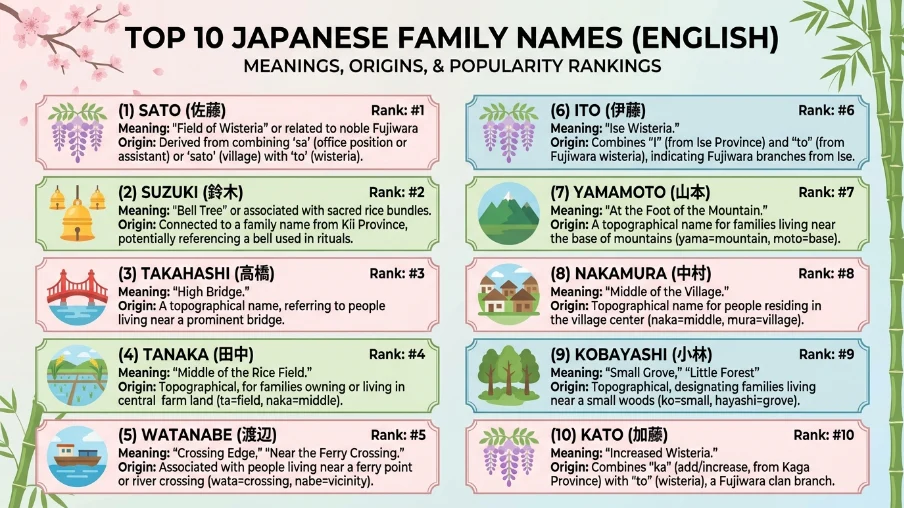
Japanese family names, or surnames, carry deep cultural significance and often derive from geographical locations, natural features, or clan associations. The most common Japanese family names include Sato, Suzuki, Tanaka, Yamamoto, and Watanabe, each with unique historical origins and meanings rooted in Japanese heritage.
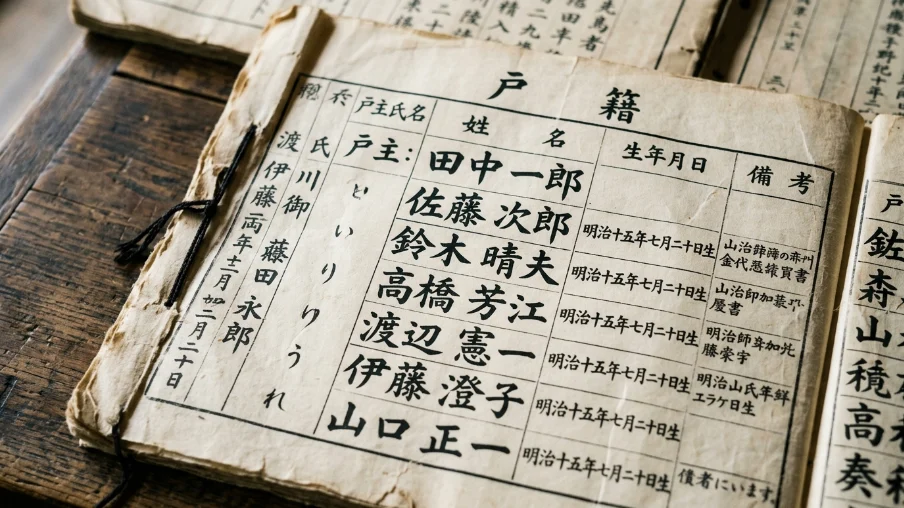
Have you ever wondered about the stories hidden behind a name? Japanese family names are more than just labels they are windows into centuries of history, culture, and identity. Every Japanese surname tells a tale of ancestors, landscapes, and traditions that have shaped families for generations. Whether you’re researching your own ancestry, naming a character, or simply fascinated by Japanese culture, understanding Japanese family names opens a door to a rich heritage.
The Japanese naming system is beautifully complex, with over 100,000 family names in existence today. Japanese family names often connect to geographical features like mountains, rivers, or rice fields, reflecting the deep relationship between people and their environment. Some surnames trace back to noble clans, while others emerged from common occupations or distinctive characteristics.
In this guide, we explore the 10 most common Japanese family names, their meanings, origins, and cultural significance. Discover the fascinating world behind these Japanese family names, from the historically significant to the beautifully simple. Each name carries its own unique story waiting to be told.
1. Sato — The Most Common Japanese Family Name
Meaning
Help wisteria
Origin
Sato originated from the Fujiwara clan, one of Japan’s most powerful noble families. The name combines “sa” (help) and “to” (wisteria), honoring the clan’s connection to wisteria flowers.
Personality
People with the surname Sato are often seen as helpful, reliable, and community-oriented. The name suggests someone who supports others and brings people together.
Style
Classic, Traditional, Respected
Best For
Families with deep Japanese heritage, historical research, traditional contexts
Popularity
Sato is Japan’s most common family name, with over 1.9 million people sharing this surname. It remains consistently popular throughout Japanese history.
Emotional Appeal
Sato carries a warm, trustworthy feeling. The wisteria association adds a touch of elegance and natural beauty, making it both strong and gentle.
Pop Culture Reference
Numerous prominent figures bear the Sato name, from Olympic athletes to politicians, making it widely recognized in Japanese society.
Similar Nicknames
Saato, Satou, Sato-san, Sato-sama
Why It Still Works Today
Sato remains popular because of its deep historical roots and positive meaning. The connection to the influential Fujiwara clan gives it prestige, while the straightforward nature makes it accessible.
2. Suzuki — The Musical Japanese Family Name
Meaning
Bell tree
Origin
Suzuki combines “su” (bell) and “zuki” (tree). The name originally referred to a type of tree that produces bell-shaped fruit or the sound of bells in the wind.
Personality
Suzuki suggests someone musical, artistic, and connected to nature. People with this name often embody creativity and a gentle spirit.
Style
Artistic, Natural, Elegant
Best For
Artistic families, musicians, nature lovers
Popularity
Suzuki is the second most common Japanese family name. Its popularity extends globally through the famous Suzuki automobile and musical instrument companies.
Emotional Appeal
The name evokes peaceful images of bells ringing through trees. It feels both modern and timeless, connecting to nature and artistry.
Pop Culture Reference
The Suzuki Motor Corporation and Suzuki musical instrument company have made this name internationally recognized.
Similar Nicknames
Suzu, Zuki, Suzuki-san
Why It Still Works Today
Suzuki’s dual meaning of bells and trees gives it a poetic quality that resonates across generations. Its global recognition through brands adds contemporary relevance.
3. Tanaka — The Japanese Family Name of the Rice Field
Meaning
Rice field
Origin
Tanaka literally means “rice field,” combining “ta” (rice paddy) and “naka” (middle). It originated from people who lived or worked in central rice fields.
Personality
Tanaka suggests practicality, hard work, and groundedness. It represents someone connected to the land and community values.
Style
Earthly, Traditional, Stable
Best For
Agricultural families, rural heritage, practical individuals
Popularity
Tanaka ranks among Japan’s most common surnames, with historical roots dating back centuries to Japan’s agricultural society.
Emotional Appeal
The name feels warm and familiar, connecting to the heart of Japanese culture and the importance of rice farming.
Pop Culture Reference
Tanaka is a common surname in Japanese media, from anime characters to historical figures.
Similar Nicknames
Tan, Tana, Tanaka-san
Why It Still Works Today
Tanaka’s connection to agriculture and community keeps it relevant as a symbol of Japanese cultural identity and values.
4. Yamamoto — The Mountain Japanese Family Name
Meaning
Base of the mountain
Origin
Yamamoto combines “yama” (mountain) and “moto” (base/origin), referring to someone who lived at the foot of a mountain.
Personality
People with the Yamamoto surname often represent strength, stability, and reliability. The mountain connection suggests endurance and protection.
Style
Strong, Traditional, Powerful
Best For
Families in mountainous regions, strong family lines
Popularity
Yamamoto is among the top five most common Japanese surnames and carries significant historical weight.
Emotional Appeal
The name evokes images of majestic mountains and enduring strength. It feels protective and grounding.
Pop Culture Reference
Admiral Isoroku Yamamoto, the naval commander during World War II, brought historical prominence to this name.
Similar Nicknames
Yama, Moto, Yamamoto-san
Why It Still Works Today
Yamamoto’s strong imagery and historical significance maintain its popularity. The mountain symbolism appeals across cultures.
5. Watanabe — The Crossing Japanese Family Name
Meaning
Crossing
Origin
Watanabe comes from a crossing or ferry point, combining “wata” (crossing) and “nabe” (pot/border). It originated as a place name.
Personality
Watanabe suggests adaptability, curiosity, and a connection to travel or transformation.
Style
Traveler, Modern, Versatile
Best For
Global families, travelers, adaptable individuals
Popularity
Watanabe consistently ranks among Japan’s most common surnames.
Emotional Appeal
The name carries a sense of journey and exploration. It feels open and welcoming.
Similar Nicknames
Wata, Nabe, Watanabe-san
Why It Still Works Today
Watanabe’s meaning of crossing or bridging makes it relevant in today’s connected world, symbolizing connection between cultures and ideas.
6. Ito — The Japanese Family Name of the Wisteria
Meaning
Wisteria
Origin
Ito derives from the Fujiwara clan, meaning “wisteria.” It represents nobility and cultural refinement.
Personality
Ito suggests elegance, refinement, and cultural sophistication.
Style
Elegant, Noble, Classic
Best For
Families with noble heritage, cultural pursuits
Popularity
Ito remains a common and respected Japanese surname.
Emotional Appeal
The wisteria connection creates images of beauty and grace. It feels refined and cultured.
Pop Culture Reference
Numerous artists and historical figures have carried the Ito name.
Similar Nicknames
Ito-san, Itoh, Ito-sama
Why It Still Works Today
Ito’s elegant meaning and noble connections continue to appeal to families seeking sophistication.
7. Nakamura — The Village Japanese Family Name
Meaning
Middle village
Origin
Nakamura means “middle village,” combining “naka” (middle) and “mura” (village). It referred to someone from a central village.
Personality
Nakamura suggests community, leadership, and social connection.
Style
Community, Traditional, Friendly
Best For
Community leaders, village heritage
Popularity
Nakamura is widely common throughout Japan.
Emotional Appeal
The name feels welcoming and warm, connecting to community values.
Similar Nicknames
Naka, Mura, Nakamura-san
Why It Still Works Today
Nakamura represents community values that remain important in modern society.
8. Kobayashi — The Small Forest Japanese Family Name
Meaning
Small forest
Origin
Kobayashi combines “ko” (small) and “hayashi” (forest), referring to someone living near a small forest.
Personality
Kobayashi suggests connection to nature, peacefulness, and harmony.
Style
Natural, Peaceful, Serene
Best For
Nature lovers, peaceful individuals
Popularity
Kobayashi ranks among the most common Japanese surnames.
Emotional Appeal
The name creates peaceful images of trees and quiet forests. It feels calming.
Similar Nicknames
Koba, Hayashi, Kobayashi-san
Why It Still Works Today
Kobayashi’s connection to nature appeals to those seeking peaceful, grounded identities.
9. Kato — The Japanese Family Name of the Wisteria
Meaning
Wisteria
Origin
Kato also derives from the Fujiwara clan, with a similar meaning to Ito.
Personality
Kato suggests strength, tradition, and cultural depth.
Style
Strong, Traditional, Respected
Best For
Traditional families, cultural preservation
Popularity
Kato is widely used throughout Japan.
Emotional Appeal
The name carries weight and historical significance.
Similar Nicknames
Kato-san, Katoh
Why It Still Works Today
Kato’s historical significance and strong sound keep it popular.
10. Yoshida — The Lucky Japanese Family Name
Meaning
Lucky rice field
Origin
Yoshida combines “yoshi” (luck/fortune) and “ta” (rice field).
Personality
Yoshida suggests fortune, happiness, and prosperity.
Style
Fortunate, Traditional, Positive
Best For
Families seeking good fortune
Popularity
Yoshida remains common across Japan.
Emotional Appeal
The name carries positive energy and hope.
Similar Nicknames
Yoshi, Da, Yoshida-san
Why It Still Works Today
Yoshida’s meaning of good fortune continues to appeal to families seeking positive associations.
Quick Comparison Table
| Nickname | Meaning | Style | Best For |
|---|---|---|---|
| Sato | Help wisteria | Classic | Heritage |
| Suzuki | Bell tree | Artistic | Artists |
| Tanaka | Rice field | Earthly | Agriculture |
| Yamamoto | Mountain base | Strong | Strength |
| Watanabe | Crossing | Versatile | Travelers |
| Ito | Wisteria | Elegant | Nobility |
| Nakamura | Middle village | Community | Leaders |
| Kobayashi | Small forest | Peaceful | Nature lovers |
| Kato | Wisteria | Strong | Tradition |
| Yoshida | Lucky rice field | Positive | Fortune seekers |
How to Choose the Perfect Japanese Family Name
Choosing a Japanese family name requires careful consideration of several factors:
Cultural Connection: Consider whether you have Japanese heritage or are choosing the name for cultural appreciation.
Meaning: Understanding the meaning behind Japanese family names helps you select one that resonates with your values.
Regional Significance: Some Japanese family names are more common in specific regions of Japan.
Family Tradition: In Japanese culture, family names carry deep ancestral significance.
Modern Appeal: Consider how the name works in contemporary settings.
Most Popular Japanese Family Names Today
The most common Japanese family names remain Sato, Suzuki, Tanaka, Yamamoto, and Watanabe. These names have persisted for centuries and continue to be widely used across Japan.
Vintage Japanese Family Names Making a Comeback
Names like Fujiwara, Minamoto, and Taira, once associated with noble clans, are experiencing renewed interest. These vintage names carry historical prestige and cultural depth.
Modern Japanese Name Trends
Contemporary Japanese family name trends include maintaining traditional names while embracing global recognition. Many families prioritize names that balance cultural heritage with modern sensibilities.
FAQs
What is the most common Japanese family name?
Sato is Japan’s most common family name, with approximately 1.9 million people sharing this surname. It originated from the Fujiwara clan and combines meanings of “help” and “wisteria.
What do Japanese family names mean?
Japanese family names often describe geographical features, natural elements, or historical clan connections. Examples include “rice field” (Tanaka), “mountain base” (Yamamoto), and “wisteria” (Ito).
How many Japanese family names exist?
There are over 100,000 registered Japanese family names, though only about 10,000 are in common use today.
What is the oldest Japanese family name?
Some of the oldest Japanese family names include Fujiwara, Minamoto, and Taira, dating back to noble clans from the Heian period (794-1185).
Can Japanese family names have multiple meanings?
Yes, Japanese family names often have multiple meanings depending on the kanji characters used, adding depth and complexity to their interpretation.
Are Japanese family names regional?
Many Japanese family names are more common in specific regions, often reflecting geographical features or historical clan territories.
How are Japanese family names written?
Japanese family names are typically written using kanji characters, each carrying specific meanings that contribute to the name’s overall significance.
Do Japanese family names change?
Japanese family names are generally passed down through generations, though some families may change names to reflect marriage or adoption.
Conclusion
Japanese family names offer a fascinating glimpse into the country’s rich cultural heritage. From the noble origins of Sato to the natural beauty of Kobayashi, each surname carries centuries of history and meaning. These names continue to connect modern Japanese families to their ancestral roots while adapting to contemporary times.
The stories behind Japanese family names remind us how deeply identity, language, and culture intertwine. Whether you have Japanese heritage or simply appreciate the beauty of these names, understanding their meanings enriches our appreciation of Japanese culture.
Which Japanese family name resonates most with you? Share your favorite in the comments below, or share this article with someone interested in Japanese culture. For more name explorations, continue exploring our guides on naming traditions worldwide.

Mia Kensington is a name and nickname enthusiast at NicknameCorner.com, she writes helpful guides on cute nicknames, baby names, usernames and creative name ideas, making it easier for readers to find names that feel unique, meaningful and memorable.