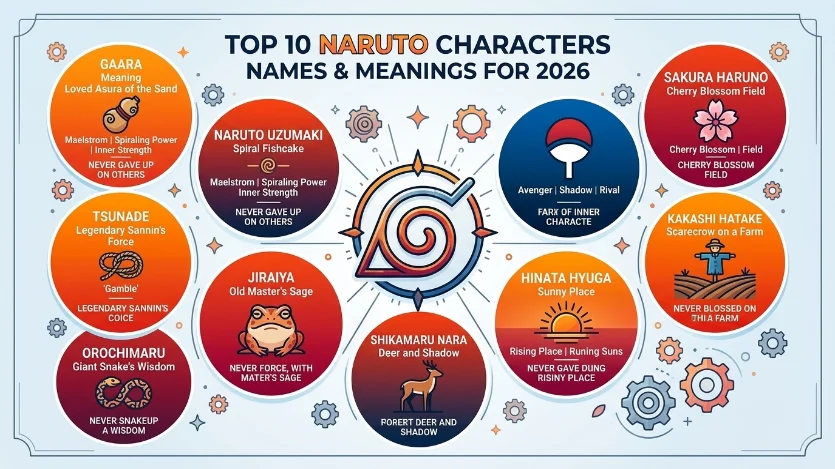
What are the meanings behind Naruto characters names? Naruto Uzumaki’s name means “spiral fishcake,” referencing his love for ramen. Sasuke Uchiha is named after the legendary ninja Sarutobi Sasuke. Sakura Haruno means “cherry blossom,” and Kakashi Hatake translates to “scarecrow,” a nod to his decoy-like tactics. Many names reference Japanese folklore and mythology.
If you’re a fan of the Naruto series, you know the characters are unforgettable. From the loud, orange-clad ninja with a dream to the brooding avenger with a dark past, each character leaves a mark. But there’s something you might not know. Their names are more than just labels.
Masashi Kishimoto, the creator of Naruto, is a master of using names to tell a story. He drew inspiration from Japanese history, mythology, and even everyday food . Every name has a purpose. It often reflects the character’s personality, abilities, or their place in the world. Understanding the hidden meanings behind the Naruto characters names can make you appreciate the series on a whole new level.
In this guide, we’ll break down the meanings behind some of the most iconic Naruto characters names. We’ll explore their origins, the folklore they reference, and the fascinating wordplay Kishimoto employed. Get ready to dive deep into the world of shinobi and discover the stories hidden within their names .
10 Naruto Characters Names with Meanings and Origins
1. Naruto Uzumaki
Meaning: Spiral fishcake / Whirlpool
Origin: Japanese
Personality: Naruto is the loud, energetic, and determined protagonist. His name is a direct reflection of his character. He is a force of nature, constantly spinning and moving forward. He’s a whirlwind of energy who never gives up. The name “Naruto” itself comes from narutomaki, the fishcake with a pink swirl used as a topping in ramen, his favorite food . This playful origin highlights his love for ramen and his down-to-earth nature.
Style: Playful, Heroic, Unconventional
Best For: A character who is the heart of a story, representing optimism and perseverance against all odds.
Popularity: The most iconic name in the series, Naruto is recognized worldwide. The name’s popularity has grown immensely due to the franchise’s success.
Emotional Appeal: It’s a name that’s both silly and profound. It makes you smile but also represents incredible strength.
Pop Culture Reference: The name is linked to the Naruto whirlpools in the Naruto Strait in Tokushima, Japan .
Similar names: Boruto (his son’s name, a pun on “bolt”), Menma, Konohamaru
Why It Still Works Today: Naruto’s name is memorable, fun, and perfectly encapsulates his character. It’s a symbol of the show’s unique blend of humor and epic storytelling.
2. Sasuke Uchiha
Meaning: Legendary ninja warrior
Origin: Japanese, from the legendary ninja Sarutobi Sasuke
Personality: Sasuke is the cool, brooding, and prodigiously talented genius. His name carries a weight of legacy. It was also the name of a legendary ninja from Japanese folklore . This perfectly fits Sasuke’s character, who is obsessed with legacy and restoring the honor of his clan. He is the perfect rival to Naruto’s more chaotic energy.
Style: Cool, Mysterious, Classic
Best For: A rival or anti-hero with a tragic past and incredible skill.
Popularity: Sasuke is one of the most popular characters in anime history. His name has become iconic.
Emotional Appeal: It sounds cool and powerful, evoking a sense of mystery and determination.
Pop Culture Reference: His name is a direct reference to the legendary ninja Sarutobi Sasuke, a character from Japanese children’s stories .
Similar Names: Sarutobi (his name’s inspiration), Itachi, Madara
Why It Still Works Today: Sasuke’s name is timeless. It’s a perfect example of how Kishimoto drew from Japanese history to create a character with depth and prestige.
3. Sakura Haruno
Meaning: Spring Cherry Blossom
Origin: Japanese
Personality: Sakura is the kind, intelligent, and strong-willed kunoichi. Her name is one of the most beautiful and straightforward in the series. “Sakura” means cherry blossom, and “Haruno” means spring field . Together, “Haruno Sakura” is a poetic phrase that evokes the image of spring fields filled with blooming cherry blossoms. It reflects her initial gentle and beautiful nature, which later develops into a strong, resilient character.
Style: Feminine, Elegant, Classic
Best For: A character who embodies beauty, strength, and growth.
Popularity: A very popular name for characters and in real life, symbolizing beauty and the fleeting nature of life in Japanese culture.
Emotional Appeal: It’s a beautiful, soft name that feels elegant and timeless.
Pop Culture Reference: Cherry blossoms (sakura) are an iconic symbol of Japan and are featured prominently in art and festivals.
Similar Names: Hinata (meaning “sunny place”), Ino (meaning “boar”)
Why It Still Works Today: Sakura’s name is a classic, representing one of the most beloved symbols of Japan, fitting for a heroine who grows from a gentle girl into a powerful woman.
4. Kakashi Hatake
Meaning: Scarecrow in a Field
Origin: Japanese
Personality: Kakashi is the calm, enigmatic, and incredibly skilled Jonin. His name is a brilliant piece of wordplay. “Kakashi” directly translates to “scarecrow” . “Hatake” means “field” or “farm” . His full name, “Hatake Kakashi,” literally means “field of scarecrows.” This is a clever nod to his role as a decoy and his use of misdirection in battle. It also reflects his calm, watchful nature, like a scarecrow standing guard over a field .
Style: Mysterious, Cool, Strategic
Best For: A mentor or sensei character who is wise, powerful, and has a hidden depth.
Popularity: Kakashi is one of the most popular and beloved sensei in anime. His name is instantly recognizable.
Emotional Appeal: It’s a cool, clever name that makes you think. It perfectly captures his enigmatic personality.
Pop Culture Reference: The name is a direct pun, showing Kishimoto’s love for wordplay.
Similar Names: Jiraiya (which has its own rich folklore), Obito, Minato
Why It Still Works Today: Kakashi’s name is a perfect example of Kishimoto’s creativity. It’s a simple pun, but it reveals so much about the character’s fighting style and personality.
5. Hinata Hyuga
Meaning: Sunny Place / Towards the Sun
Origin: Japanese
Personality: Hinata is the shy, gentle, but incredibly strong-willed kunoichi. Her name is a beautiful reflection of her personality. “Hinata” means “sunny place” or “towards the sun” . It symbolizes her kind and warm nature, which brings light to those around her. Her surname, Hyuga, is the name of an old province in Japan, adding a layer of depth and tradition.
Style: Gentle, Beautiful, Timeless
Best For: A character who represents kindness, inner strength, and quiet perseverance.
Popularity: A very popular and beloved name, often associated with the “sunflower” due to the meaning of turning towards the sun.
Emotional Appeal: It’s a warm, gentle name that feels full of light and hope.
Pop Culture Reference: “Hyuga” is the name of a real province in Japan, adding a touch of realism and history .
Similar Names: Hanabi (meaning “fireworks”), Neji (meaning “screw”)
Why It Still Works Today: Hinata’s name is simple yet profound. It perfectly captures her gentle but bright spirit, making it a timeless favorite.
6. Shikamaru Nara
Meaning: Deer Boy / Nara Prefecture
Origin: Japanese
Personality: Shikamaru is the lazy but incredibly intelligent genius. His name is a brilliant geographical pun. “Shikamaru” contains the word “Shika,” which means “deer” . His surname, “Nara,” is the name of a prefecture in Japan famous for its wild, free-roaming deer . This is a perfect reflection of his lazy but clever nature, like a deer lounging in the sun but always aware of its surroundings. He is a strategic mastermind who often outsmarts his opponents with minimal effort.
Style: Clever, Lazy, Strategic
Best For: A genius strategist who prefers to observe and think rather than act impulsively.
Popularity: Shikamaru is a fan-favorite for his intelligence and relatable laziness. His name is iconic.
Emotional Appeal: It’s a smart, funny name that perfectly fits his character. It’s a unique blend of laziness and brilliance.
Pop Culture Reference: The Nara prefecture is famous for its deer, and its name is also a major surname in Japan .
Similar Names: Choji (meaning “butterfly”), Ino (meaning “boar”)
Why It Still Works Today: Shikamaru’s name is a perfect example of Kishimoto using real-world Japanese geography and folklore to create a character’s identity.
7. Jiraiya
Meaning: Young Thunder
Origin: Japanese folklore
Personality: Jiraiya is the perverted, powerful, and legendary Sannin. His name is one of the most significant in the series. It comes from a famous Japanese folk hero, Jiraiya, who was a noble thief and a master of toad magic . Kishimoto directly adapted this legend into his series, making Jiraiya the leader of the Toad Sages. This instantly gives the character a sense of epic history and prestige.
Style: Legendary, Wise, Flawed
Best For: A powerful mentor figure with a rich backstory and a legendary status.
Popularity: Jiraiya is one of the most beloved and respected characters in the series. The name carries immense cultural weight.
Emotional Appeal: It feels ancient, powerful, and full of wisdom. It’s a name that commands respect.
Pop Culture Reference: Jiraiya is the title character of the Japanese folk tale Jiraiya Gōketsu Monogatari .
Similar Names: Tsunade (his teammate, also from folklore), Orochimaru
Why It Still Works Today: Jiraiya’s name is a direct link to Japanese folklore. It gives his character a depth and historical resonance that few others have.
8. Orochimaru
Meaning: Big Snake
Origin: Japanese
Personality: Orochimaru is the cunning, ambitious, and terrifying Sannin. Just like Jiraiya, his name is also taken from the Jiraiya Gōketsu Monogatari . In Japanese, “Orochi” means “big snake” and “maru” is a common suffix in names . This directly reflects his snake-like appearance, his abilities, and his treacherous nature. He is a master of snake-themed jutsu and is often seen as a cold-blooded, calculating villain.
Style: Villainous, Cunning, Mythical
Best For: A terrifying and intelligent antagonist with a complex, self-serving agenda.
Popularity: Orochimaru is one of the most iconic villains in anime. His name is synonymous with cunning and power.
Emotional Appeal: It sounds eerie, powerful, and slithering. It perfectly captures his snake-like personality.
Pop Culture Reference: “Orochi” is a legendary eight-headed serpent in Japanese mythology.
Similar Names: Jiraiya, Tsunade, Kabuto (who also has a snake theme)
Why It Still Works Today: Orochimaru’s name is a perfect fit for a terrifying villain. Its direct connection to Japanese mythology makes him feel like a mythical beast.
9. Tsunade
Meaning: Mooring Rope
Origin: Japanese
Personality: Tsunade is the strong, legendary, and gambling-addicted Sannin. She is the final member of the Sannin trio who is also based on the Jiraiya Gōketsu Monogatari . In the folk tale, Tsunade was Jiraiya’s wife and a master of slug magic. In the Naruto series, she is the Fifth Hokage, known for her incredible strength and her mastery of medical ninjutsu. Her name represents her role as a pillar of the village, someone who holds the community together like a mooring rope.
Style: Legendary, Strong, Matriarchal
Best For: A powerful female leader with a fierce will and a hidden soft side.
Popularity: Tsunade is one of the most respected leaders in the series. Her name is iconic.
Emotional Appeal: It sounds strong, regal, and traditional. It commands respect.
Pop Culture Reference: Directly from the Jiraiya Gōketsu Monogatari .
Similar Names: Jiraiya, Orochimaru, Sakura (her apprentice)
Why It Still Works Today: Tsunade’s name is a perfect example of how Kishimoto used a single folk tale to create an entire legendary trio of characters, each with their own distinct identity.
10. Gaara
Meaning: Self-Loving Demon
Origin: Japanese
Personality: Gaara is the lonely, powerful, and ultimately redeemed Jinchuriki. His name is a direct reflection of his tragic backstory. “Gaara” is often interpreted as “self-loving” or a “demon who loves only himself” . This perfectly describes his early character, a boy who was isolated and hated by his village, leading him to believe that his only purpose was to kill others and love only himself. His name is a poignant reminder of the pain and loneliness he experienced before finding friendship with Naruto.
Style: Tragic, Powerful, Redemptive
Best For: A character with a dark past who undergoes a powerful redemption arc.
Popularity: Gaara is one of the most popular characters in the series, loved for his tragic backstory and incredible power.
Emotional Appeal: It’s a dark, powerful name that evokes a sense of tragedy and loneliness.
Pop Culture Reference: The name is a unique creation by Kishimoto, designed to reflect his character’s personality.
Similar Names: Naruto, Kankuro (his brother), Temari (his sister)
Why It Still Works Today: Gaara’s name is a perfect example of how Kishimoto used names to tell a story. It’s a tragic name for a tragic character, making his eventual redemption all the more powerful.
Quick Comparison Table
| Nickname | Meaning | Style | Best For |
|---|---|---|---|
| Naruto Uzumaki | Spiral fishcake | Playful, Heroic | The optimistic protagonist |
| Sasuke Uchiha | Legendary ninja | Cool, Mysterious | The brooding rival |
| Sakura Haruno | Spring cherry blossom | Elegant, Feminine | The kind and strong heroine |
| Kakashi Hatake | Scarecrow in a field | Mysterious, Cool | The wise and powerful sensei |
| Hinata Hyuga | Sunny place | Gentle, Timeless | The kind and persevering kunoichi |
| Shikamaru Nara | Deer boy | Clever, Strategic | The lazy genius strategist |
| Jiraiya | Young thunder | Legendary, Wise | The legendary mentor figure |
| Orochimaru | Big snake | Villainous, Cunning | The terrifying and intelligent antagonist |
| Tsunade | Mooring rope | Legendary, Strong | The powerful female leader |
| Gaara | Self-loving demon | Tragic, Powerful | The redeemed Jinchuriki |
How to Choose a Name Inspired by Naruto
If you’re looking to name a pet, a character, or even a child after a Naruto character, here are some tips:
- Understand the Meaning: Don’t just pick a name because it sounds cool. Understand its meaning and how it reflects the character’s personality. This will give the name depth and significance.
- Consider the Character: Do you want a name that represents heroism, intelligence, or cunning? Naruto and Sasuke are strong, heroic names. Shikamaru is perfect for a clever strategist. Gaara is a powerful, tragic name.
- Think About Sound: Japanese names have a distinct rhythm and flow. Practice saying them out loud to see if they feel right.
- Look for Inspiration: Consider other characters like Itachi, Minato, or Kakashi. These are all iconic Naruto characters names with powerful meanings.
Most Popular Naruto Characters Names
Some of the most popular Naruto characters names are also the most meaningful. Here are a few favorites:
- Naruto: The main character’s name is universally recognized.
- Sasuke: A cool, classic name with legendary roots.
- Kakashi: The wise and powerful sensei.
- Jiraiya: A legendary name with deep ties to Japanese folklore.
- Gaara: A powerful, tragic, and redemptive name.
These names are popular because they represent iconic characters that fans have grown to love.
Vintage Naruto Character Names from Folklore
Kishimoto often drew inspiration from Japanese folklore and mythology. Some names have a vintage, legendary feel:
- Jiraiya: From a famous Japanese folk hero.
- Tsunade: From the same folk tale as Jiraiya.
- Orochimaru: Also from the same folk tale.
- Sasuke: From the legendary ninja Sarutobi Sasuke .
- Raijin: The God of Lightning in Japanese mythology.
These names give the characters a sense of history and grandeur.
Modern Naruto Character Name Trends
The Naruto series has influenced modern naming trends, even inspiring characters in the sequel series, Boruto:
- Boruto: The name is a pun on “bolt,” referencing his legacy as the son of Naruto and his connection to the Otsutsuki clan .
- Sarada: A modern, elegant name for the next generation of Uchiha.
- Mitsuki: A name that reflects his mysterious and synthetic origins.
These names continue the tradition of wordplay and meaning, showing the lasting influence of the original series.
Frequently Asked Questions
What does the name “Naruto” actually mean?
“Naruto” comes from narutomaki, a type of fishcake with a pink swirl that is used as a topping in ramen . It’s a playful name for a character who loves ramen. The surname “Uzumaki” means “spiral” or “whirlpool” .
Why is Sasuke named after a legendary ninja?
Sasuke’s name comes from the legendary ninja Sarutobi Sasuke, a famous figure in Japanese folklore . Kishimoto used this name to give the character a sense of legacy and prestige, fitting his prodigious talent and his obsession with his clan.
How did Jiraiya, Tsunade, and Orochimaru get their names?
These three are known as the “Legendary Sannin,” and they are all based on characters from a Japanese folk tale called Jiraiya Gōketsu Monogatari . This gives them a powerful, mythical status that fits their legendary roles in the series.
What does “Uchiha” mean?
“Uchiha” is a variant of the Japanese word “uchiwa,” which means a traditional Japanese folding fan . This is a reference to the clan’s fire-based abilities, as a fan is used to fan flames.
What does “Haruno Sakura” mean?
“Haruno” means “spring field,” and “Sakura” means “cherry blossom” . Together, “Haruno Sakura” is a poetic phrase that evokes the image of spring fields filled with blooming cherry blossoms, reflecting her beautiful and gentle nature.
What is the meaning behind the name “Kakashi”?
“Kakashi” directly translates to “scarecrow” in Japanese . This is a clever pun, as scarecrows are used as decoys, which reflects his fighting style and his calm, watchful demeanor.
What does “Shikamaru” mean?
“Shikamaru” contains the word “Shika,” which means “deer” . His surname, “Nara,” is the name of a Japanese prefecture famous for its wild deer . This is a clever geographical pun that reflects his lazy but clever nature.
What does “Gaara” mean?
“Gaara” is often interpreted as “self-loving” or a “demon who loves only himself” . This directly reflects his tragic backstory as a Jinchuriki who was isolated and hated by his village, leading him to believe his only purpose was to kill.
Conclusion
The world of Naruto is full of incredible characters, and their names are a huge part of what makes them so memorable. From the ramen-loving “Naruto” to the legendary “Sasuke” each name is a carefully crafted piece of the story. Masashi Kishimoto used Japanese culture, mythology, and clever wordplay to create a cast of characters with depth and meaning .
We hope this guide to Naruto characters names has given you a deeper appreciation for the series. Next time you watch an episode, remember the hidden stories behind each name. Share this article with a fellow fan and let us know your favorite character name in the comments below!

Scarlett Howard is a writer and name enthusiast at NicknameCorner. She creates creative and helpful guides on nicknames, names, usernames and naming ideas, helping readers find meaningful, memorable and unique names for every occasion.



1 thought on “Top 10 Naruto Characters Names & Meanings For 2026”