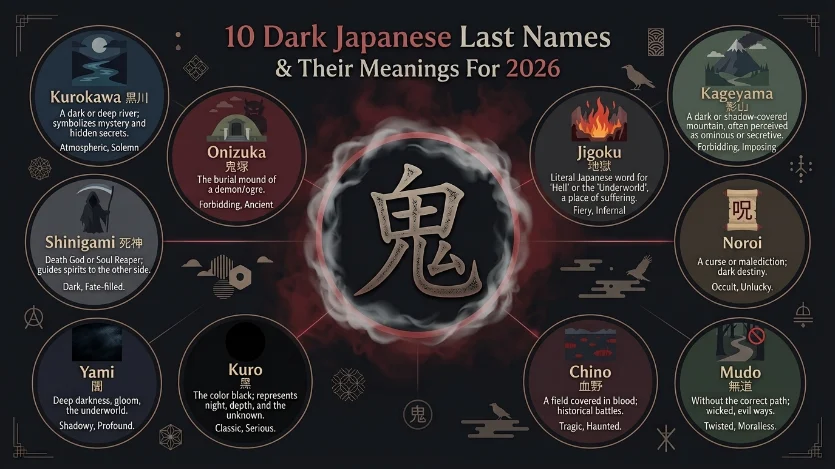
What are Japanese last names with dark meanings? Japanese last names with dark meanings include Kurokawa (black river), Onizuka (demon hill), Shinigami (death god), and Yami (darkness). These surnames often draw from folklore, featuring kanji for death, demons, shadows, and curses, and are frequently used in horror fiction.
Have you ever wondered how a surname can carry a mysterious story? Japanese last names with dark meanings are more than words that sound eerie. They can reflect nature, old traditions, places, legends, or ideas connected with darkness and the unknown. In Japanese culture, names often have meaning behind their kanji, so the same-sounding name can have different interpretations.
In this guide, we explore Japanese surnames with dark meanings, including Japanese surnames meaning dark and other Japanese surnames with dark meaning. You will also discover examples of Japanese names with dark meanings, dark Japanese names and meanings, and popular anime last names with dark meanings. Wondering about a specific example? We also explain the Kurokawa last name and its Kurokawa meaning. And if you are asking, “What about first names and last names?” we cover that distinction too. Let’s explore these haunting yet fascinating Japanese surnames.
10 Japanese Last Names with Dark Meanings
1. Kurokawa (黒川)
Meaning: Black river
Origin: Japanese
Personality: Kurokawa suggests a deep, powerful, and mysterious nature. Like a river that runs through dark forests, it carries secrets. A person with this name might be introspective, strong-willed, and quietly intense. They are deep thinkers who observe the world around them.
Style: Dark, Mysterious, Strong
Best For: Characters with hidden depths, story villains with complex motives, or anyone drawn to the power of nature’s darker side.
Popularity: A known surname in Japan, Kurokawa is one of the more recognized Japanese last names with dark meanings .
Emotional Appeal: The image of a “black river” is powerful and evocative. It suggests depth, mystery, and an unstoppable force of nature.
Pop Culture Reference: None.
Similar Names: Kurosawa (black swamp), Kuroshima (black island), Kurono (dark field), Kurokami (black god).
Why It Still Works Today: Kurokawa remains a powerful name because it connects to nature in a way that feels both ancient and modern. Its dark imagery is timeless.
2. Onizuka (鬼塚)
Meaning: Demon hill or demon mound
Origin: Japanese
Personality: Onizuka is a bold and formidable name. It suggests a person who is a fighter, a protector, or perhaps a force to be reckoned with. There is a sense of strength and resilience tied to the oni (demon) symbolism .
Style: Strong, Bold, Mythological
Best For: A warrior character, someone who has overcome great adversity, or a person with a fierce, protective spirit.
Popularity: As a real surname in Japan, Onizuka is recognized and carries significant cultural weight .
Emotional Appeal: This name is not just dark; it is empowering. It evokes the image of a demon guarding a sacred mound, suggesting both danger and protection.
Pop Culture Reference: None.
Similar Names: Onizawa (demon swamp), Onigahara (demon field), Akumura (demon village), Jigokuda (hell rice field).
Why It Still Works Today: Onizuka works because it taps into the complex and powerful imagery of the oni, a figure that is both frightening and respected in Japanese culture.
3. Shinigami (死神)
Meaning: Death god or god of death
Origin: Japanese
Personality: Shinigami is a name that commands attention. It embodies the ultimate end, the grim reaper figure of Japanese folklore. Someone with this name might be seen as serious, intense, and deeply connected to the cycle of life and death .
Style: Dark, Powerful, Mythological
Best For: Characters with a fatalistic or mysterious aura, antagonists who bring about change, or names for powerful entities in stories and games.
Popularity: While rare as a real surname, Shinigami is extremely popular in manga, anime, and video games .
Emotional Appeal: The name evokes a sense of inevitability, power, and the profound mystery of death. It is not just scary; it is awe-inspiring.
Pop Culture Reference: Shinigami appear in various anime and manga, most famously in Death Note and Bleach.
Similar Names: Kurotsuka (black tomb), Hakaba (graveyard), Hōno (burial field), Jigoku (hell).
Why It Still Works Today: Shinigami remains a compelling name because death is a universal and powerful theme. Its use in pop culture has cemented its place as a top dark surname.
4. Yami (闇)
Meaning: Darkness
Origin: Japanese
Personality: Yami is a simple yet profound name. It represents the unknown, the hidden, and the mysterious. A person with this name might be private, enigmatic, and possess a depth of character that is not immediately visible .
Style: Mysterious, Simple, Powerful
Best For: Characters with hidden depths, people who operate in the shadows, or those who embrace their mysterious nature.
Popularity: While Yami is more commonly a given name or a standalone word, it is a powerful element in many Japanese last names with dark meanings .
Emotional Appeal: “Darkness” can be comforting or terrifying. This name evokes the mystery of a moonless night, full of both fear and wonder.
Pop Culture Reference: None.
Similar Names: Yamino (dark field), Yamishita (under darkness), Ankoku (gloom), Kurayami (pitch dark).
Why It Still Works Today: Yami works because of its stark simplicity. It is a fundamental concept that resonates across cultures and time.
5. Kuro (黒)
Meaning: Black
Origin: Japanese
Personality: Kuro is a name of great depth. It represents the color of the void, the unknown, and the shadow. Like the color, a person named Kuro might be seen as elegant, strong, and slightly mysterious. They are often associated with power and formality .
Style: Elegant, Strong, Minimalist
Best For: Characters who are stylish, powerful, and carry a sense of mystery. It is also fitting for names related to formality and strength.
Popularity: Kuro is a foundational element in many Japanese surnames, making it a very popular root for names that evoke darkness .
Emotional Appeal: Kuro is elegant and strong. Black is a color of sophistication and power, making this a name that commands respect.
Pop Culture Reference: Kuro is a common name for characters in Japanese media, often signifying a dark or mysterious figure.
Similar Names: Kuroi (black), Kuroki (black tree), Kuromori (black forest), Kurosawa (black swamp).
Why It Still Works Today: Kuro is timeless. Its simplicity and powerful imagery make it a staple in naming, both for characters and in real life.
6. Jigoku (地獄)
Meaning: Hell
Origin: Japanese
Personality: Jigoku is a name of intense imagery. It represents the underworld, suffering, and damnation in Buddhist cosmology. A person with this name might be seen as tormented, intense, or a bringer of justice. It is a name that is not taken lightly .
Style: Intense, Fearful, Mythological
Best For: Villains, antagonists, or characters who have faced immense hardship and emerged changed. It is a powerful name for stories about redemption or damnation.
Popularity: Jigoku is not common as a real family name, but it is a popular surname in manga and horror fiction .
Emotional Appeal: The name evokes a visceral reaction. It speaks of punishment, the afterlife, and the consequences of one’s actions.
Pop Culture Reference: Jigoku is a common theme in Japanese horror films (Jigoku, 1960) and often appears in anime.
Similar Names: Hakaba (graveyard), Shinigami (death god), Ure (grief), Hisada (sadness).
Why It Still Works Today: Jigoku works because the concept of hell is a powerful and universal human fear. It is a name with undeniable dramatic weight.
7. Kageyama (影山)
Meaning: Shadow mountain
Origin: Japanese
Personality: Kageyama suggests a person of hidden power and mystery. Like a mountain that casts a long shadow, they are a significant presence. They are often calm, observant, and possess a quiet strength .
Style: Mysterious, Strong, Natural
Best For: The quiet but powerful character, a strategist who works behind the scenes, or someone who is deeply connected to the earth.
Popularity: Kageyama is a recognized Japanese surname . It is a popular and well-understood name.
Emotional Appeal: The image of a “shadow mountain” is both beautiful and imposing. It suggests hidden depths and a powerful, silent presence.
Pop Culture Reference: Kageyama is the surname of a main character in the popular anime Haikyuu!!, though the character does not embody a dark personality.
Similar Names: Yamakage (shadow of the mountain), Yamino (field of darkness), Kurashita (beneath darkness), Kurayama (dark mountain).
Why It Still Works Today: Kageyama works because it combines a natural element (mountain) with the mysterious concept of shadow, creating a balanced and evocative name.
8. Noroi (呪)
Meaning: Curse
Origin: Japanese
Personality: Noroi is a name touched by tragedy and strong emotion. It represents a malediction, a powerful and often negative wish. A person with this name might be seen as intense, carrying a heavy burden, or possessing a fierce will .
Style: Intense, Tragic, Powerful
Best For: Characters who are plagued by misfortune, those who wield dark powers, or stories about revenge and unresolved anger.
Popularity: While Noroi itself is more of a root word, it appears in various Japanese last names with dark meanings .
Emotional Appeal: “Curse” is a powerful word. It speaks of destiny, anger, and the supernatural. It is a name full of narrative potential.
Pop Culture Reference: Noroi: The Curse is a famous Japanese found-footage horror film.
Similar Names: Noruhara (cursed plain), Norugawa (river of curse), Magano (evil field), Akuzato (evil hamlet).
Why It Still Works Today: Noroi and its derivatives continue to be used because the concept of a curse is a compelling storytelling device. It adds weight and history to a character.
9. Chino (血野)
Meaning: Blood field
Origin: Japanese
Personality: Chino is a stark and violent name. It evokes images of battle, sacrifice, and deep emotion. A person with this name might be passionate, fierce, and connected to their history. It is a name with a raw edge .
Style: Violent, Stark, Historical
Best For: Warrior characters, figures from a bloody history, or someone who has overcome great trauma.
Popularity: Chino is one of the more direct and recognized Japanese last names with dark meanings .
Emotional Appeal: The name is shocking and memorable. It immediately brings to mind images of conflict and consequence.
Pop Culture Reference: None.
Similar Names: Chihara (blood field), Chiya (blooded arrow), Akai (red), Akumu (nightmare).
Why It Still Works Today: Chino works because of its brutal honesty. It is a name that does not shy away from the darker aspects of human experience.
10. Mudo (無道)
Meaning: No path or lawless
Origin: Japanese
Personality: Mudo represents a person who walks their own path, regardless of society’s rules. It suggests rebellion, freedom, and a refusal to conform. A person with this name is an outsider, a wanderer, or a force of chaos .
Style: Rebellious, Free, Lawless
Best For: Outlaw characters, rebels against an unjust system, or anyone who defies convention.
Popularity: Mudo is one of the more unique Japanese last names with dark meanings .
Emotional Appeal: “No path” is a deeply philosophical concept. It evokes a sense of loneliness but also ultimate freedom. It is both tragic and empowering.
Pop Culture Reference: None.
Similar Names: Mudō (no path), Yamishita (under darkness), Akumoto (demon origin), Kurashiro (dark castle).
Why It Still Works Today: Mudo resonates in an age where many feel constrained by society. It represents the ultimate act of defiance and independence.
Quick Comparison Table
| Japanese Surname | Kanji | Meaning | Style | Best For |
|---|---|---|---|---|
| Kurokawa | 黒川 | Black river | Dark, Mysterious | Deep, introspective characters |
| Onizuka | 鬼塚 | Demon hill | Strong, Bold | Fierce warriors or protectors |
| Shinigami | 死神 | Death god | Dark, Powerful | Mysterious, fatalistic figures |
| Yami | 闇 | Darkness | Mysterious, Simple | Private, enigmatic personalities |
| Kuro | 黒 | Black | Elegant, Strong | Stylish, powerful characters |
| Jigoku | 地獄 | Hell | Intense, Fearful | Villains or tormented souls |
| Kageyama | 影山 | Shadow mountain | Mysterious, Strong | Quiet, powerful strategists |
| Noroi | 呪 | Curse | Intense, Tragic | Characters with a heavy burden |
| Chino | 血野 | Blood field | Violent, Stark | Warriors or traumatized figures |
| Mudo | 無道 | No path | Rebellious, Free | Outlaws and rebels |
How to Choose a Japanese Last Name with a Dark Meaning
Choosing one of these names requires thought. The meaning carries weight in Japanese culture. Here are a few tips:
- Understand the Kanji: The written characters (kanji) are as important as the pronunciation. Each character has its own story and nuance. For example, 鬼 (oni) means demon, but it can also represent immense strength and protective power .
- Consider the Context: Are you naming a character or looking for a real surname? Some names like Shinigami are great for fiction but are extremely rare in reality .
- Reflect on the Personality: The names described above come with suggested personalities. This can help you decide which name best fits the person or character you have in mind.
- Think Beyond “Evil”: Many Japanese last names with dark meanings are not about being “evil.” They often represent resilience, the power of nature, or the profound mystery of life and death. Oni, for example, are complex figures that can be seen as both demons and guardians.
Most Popular Japanese Last Names with Dark Meanings
Based on cultural recognition and online discussions, some of the most popular Japanese last names with dark meanings include:
- Kurokawa: Liked for its powerful “black river” imagery.
- Onizuka: Recognized for its strong “demon hill” meaning.
- Kageyama: A known surname with a mysterious aura.
- Shinigami: Extremely popular in manga and anime culture .
- Jigoku: A strong, impactful name for dark characters.
These names are popular because they are easy to remember, have strong visual imagery, and carry significant cultural weight in storytelling .
Vintage Japanese Last Names Making a Comeback
Some older Japanese last names with dark or mysterious origins are being rediscovered:
- Ashida: Means “ash pile,” evoking images of a completed cycle and transformation .
- Murakami: Can be interpreted as “devil’s valley,” a name with deep folklore roots .
- Kuromori: Means “black forest,” a name with a solemn, natural dark beauty .
These vintage names are making a comeback because of their unique histories and the rich imagery they evoke.
Modern Trends in Japanese Dark Surnames
Modern trends often involve using kanji to create new meanings for dark names. There is a move towards:
- Celestial Darkness: Names like Tsukikage (moon shadow) and Nanahoshi (seven stars) .
- Mysterious Nature: Names incorporating mist, marshes, and hidden fields, such as Kasumisawa (hazy swamp) and Oshino (hidden field) .
- Direct and Stark Names: Names with direct meanings like Noroi (curse) and Shinigami (death god) remain popular .
These modern names feel fresh while maintaining a connection to traditional Japanese aesthetics.
Frequently Asked Questions
What are Japanese last names with dark meanings?
Japanese last names with dark meanings include Kurokawa (black river), Onizuka (demon hill), Shinigami (death god), Yami (darkness), and Jigoku (hell). These names often use kanji for death, demons, curses, and shadows .
What Japanese last name means “demon”?
Surnames like Onizuka (demon hill) and Onizawa (demon swamp) mean “demon.” The kanji 鬼 (oni) is used for demon or ogre in Japanese .
What Japanese last name means “darkness”?
The word “Yami” (闇) is a direct translation for darkness and is used in names like Yamino (dark field) and Yamishita (under darkness) .
Is Shinigami a real Japanese last name?
Yes, Shinigami (死神), meaning “death god,” exists as a surname, though it is extremely rare in real life. It is very popular in manga, anime, and video games .
What Japanese last name means “cursed”?
Surnames like Noroi (呪) mean “curse.” Other variants include Norugawa (cursed river) and Noruhara (cursed plain) .
Is Oni a Japanese last name?
“Oni” itself is not typically a standalone last name, but it is a common element in surnames like Onizuka and Onizawa, meaning “demon” hill or swamp .
What Japanese last name means “black”?
Kuro (黒) is the Japanese word for “black” and is used in many names, including Kurokawa (black river), Kurosawa (black swamp), and Kurokami (black god) .
Are these dark names commonly used in Japan today?
Some, like Kageyama, Kurokawa, and Onizuka, are recognized surnames. Others, like Shinigami and Jigoku, are very rare as real names but are iconic in popular culture .
Conclusion
Exploring Japanese last names with dark meanings reveals a world rich in history, folklore, and poetic imagery. These names are not simply “evil.” They represent the shadow side of nature, the power of spirits, and the profound mysteries of life and death. From the deep currents of Kurokawa to the fierce symbolism of Onizuka, each name tells a story.
Whether you are writing a compelling character or simply fascinated by Japanese culture, these surnames offer a glimpse into a unique worldview. They remind us that light and dark are intertwined. We hope this guide has helped you find the perfect Japanese last names with dark meanings. Which one resonated most with you? Share your favorite in the comments below, and feel free to share this article with fellow enthusiasts.

Benjamin Clarke is a writer and nickname enthusiast at NicknameCorner.com, where he helps readers discover creative, meaningful, funny and unique nicknames for people, pets, usernames and special occasions. His content focuses on practical ideas, clear explanations and nickname inspiration that makes choosing the perfect name easier.






1 thought on “Japanese Last Names With Dark Meanings|Mysterious Surnames, Hidden Stories & Their Chilling Origins 2026”