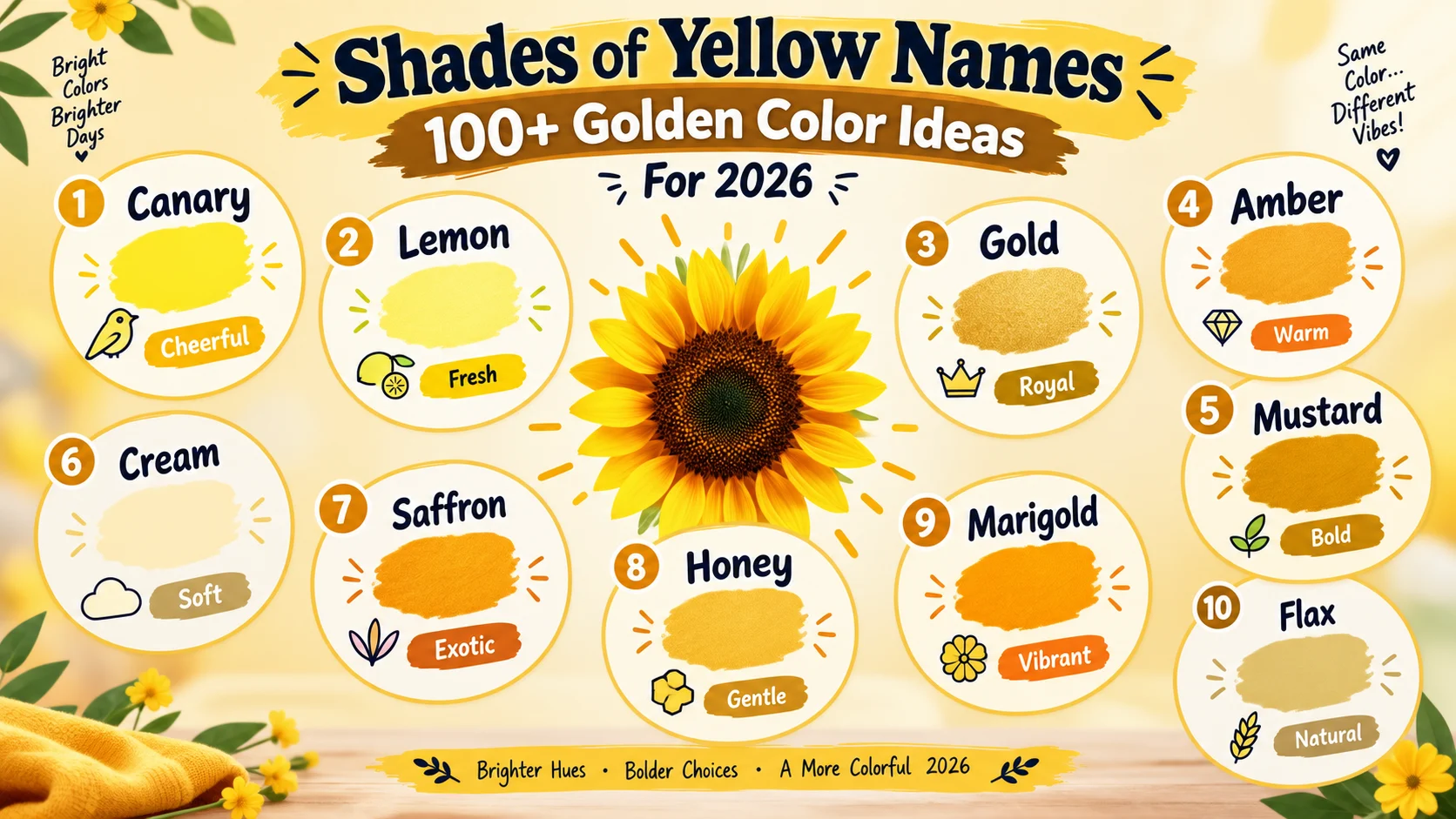
What are the shades of yellow called? Common shades of yellow include Canary (bright vivid yellow), Lemon (cool greenish yellow), Gold (warm metallic yellow), Amber (orange-yellow), Mustard (dark earthy yellow), Cream (pale soft yellow), Saffron (golden-orange), Honey (warm amber-gold), Marigold (rich golden yellow), and Flax (muted pale yellow) .
Color is one of the most powerful ways we describe the world. But when it comes to yellow, we often limit ourselves to a single word. Yellow is so much more than just yellow. It’s the golden glow of Honey, the softness of Cream, the boldness of Canary, and the warmth of Amber. Each of these shades of yellow names tells its own story.
Learning the names of different yellow shades is like learning a new language. It allows you to be more precise, more creative, and more expressive. Whether you’re a writer trying to capture the exact hue of a sunset, a designer looking for the perfect accent color, or simply someone who loves color, these names are a wonderful tool. This guide explores ten beautiful shades of yellow names, complete with their meanings, origins, and the personalities they represent.
10 Beautiful Shades of Yellow Names with Meanings and Personalities
1. Canary
Meaning: Named after the bright plumage of the canary bird. A vivid, almost neon shade of yellow .
Origin: English, from the bird’s name. First recorded as a color name in 1789 .
Personality: Canary is the bold, cheerful, and energetic shade. It’s the color of a bright summer day, full of life and enthusiasm. It demands attention and spreads joy.
Style: Bright, Bold, Playful.
Best For: Accent colors, cheerful designs, or describing someone’s sunny personality.
Popularity: A well-known and widely used color name.
Emotional Appeal: This shade feels happy, vibrant, and full of life. It’s impossible to feel sad around Canary yellow.
Pop Culture Reference: Canary yellow is a popular color for kitchen decor and bright fashion.
Similar Names: Lemon, Sunshine, Daffodil, Marigold.
Why It Still Works Today: Canary is a timeless descriptor for the brightest, most cheerful yellow.
2. Lemon
Meaning: Named after the bright rind of the lemon fruit. A light to medium yellow with a slight greenish tint .
Origin: English, from the fruit. First used as a color name in 1598 .
Personality: Lemon is the fresh, zesty, and cool shade. It’s crisp and clean, like the scent of citrus. It feels modern and energizing.
Style: Fresh, Cool, Modern.
Best For: Describing fresh, vibrant yellows, or evoking a clean, sharp feeling.
Popularity: A very common and recognizable shade name.
Emotional Appeal: This shade feels refreshing, clean, and slightly tart.
Pop Culture Reference: Lemon yellow is a popular color for spring fashion and modern interiors.
Similar Names: Canary, Citron, Chartreuse, Lime.
Why It Still Works Today: Lemon is a universally understood shade name that perfectly captures a fresh, citrusy yellow.
3. Gold
Meaning: Named after the precious metal. A warm, brownish or orange-toned yellow that evokes wealth and luxury .
Origin: English, from the metal.
Personality: Gold is the rich, elegant, and luxurious shade. It’s associated with success, achievement, and royalty. It feels sophisticated and timeless.
Style: Elegant, Luxurious, Classic.
Best For: Describing precious, high-quality yellows, or adding a touch of glamour.
Popularity: One of the most popular and universally recognized color names.
Emotional Appeal: This shade feels warm, valuable, and full of prestige.
Pop Culture Reference: Gold is the color of medals, jewelry, and awards.
Similar Names: Amber, Honey, Goldenrod, Old Gold.
Why It Still Works Today: Gold is a timeless name that immediately conveys warmth, value, and elegance.
4. Amber
Meaning: Named after fossilized tree resin. A warm color between orange and yellow .
Origin: English, from the fossil resin. From Arabic ‘anbar.
Personality: Amber is the warm, earthy, and glowing shade. It feels natural and organic, like sunlight through a jar of honey. It’s comforting and rich.
Style: Warm, Earthy, Natural.
Best For: Describing golden-orange hues, or evoking a sense of warmth and nature.
Popularity: A popular and widely used color name.
Emotional Appeal: This shade feels warm, organic, and full of natural beauty.
Pop Culture Reference: Amber is a popular name for gemstones and jewelry.
Similar Names: Honey, Gold, Saffron, Topaz.
Why It Still Works Today: Amber is a beautiful, nature-inspired name for a warm, glowing yellow.
5. Mustard
Meaning: Named after the condiment. A dark, earthy yellow with brown undertones .
Origin: English, from the condiment.
Personality: Mustard is the grounded, retro, and sophisticated shade. It’s a darker, more muted yellow that feels vintage and editorial. It’s for those who appreciate subtlety and depth.
Style: Vintage, Earthy, Sophisticated.
Best For: Describing muted, retro yellows, or adding a grounded, sophisticated tone.
Popularity: A popular color name in fashion and interior design.
Emotional Appeal: This shade feels warm, grounded, and slightly nostalgic.
Pop Culture Reference: Mustard yellow was a popular color in 1970s fashion and decor.
Similar Names: Goldenrod, Olive, Khaki, Bronze.
Why It Still Works Today: Mustard is a timeless shade name that captures a sophisticated, earthy yellow.
6. Cream
Meaning: Named after the dairy product. A pale, warm shade of yellow, closer to off-white .
Origin: English, from the dairy product.
Personality: Cream is the soft, gentle, and serene shade. It’s subtle and calming, like the color of fresh cream or a warm blanket. It brings a sense of peace and comfort.
Style: Soft, Elegant, Serene.
Best For: Describing pale, soft yellows, or creating a calming, neutral palette.
Popularity: A very popular neutral color name.
Emotional Appeal: This shade feels gentle, warm, and inviting.
Pop Culture Reference: Cream is a classic color for interior walls and elegant clothing.
Similar Names: Ivory, Eggshell, Vanilla, Beige.
Why It Still Works Today: Cream is a timeless, versatile shade name for soft, pale yellows.
7. Saffron
Meaning: Named after the saffron spice, derived from the crocus flower. A rich golden-orange yellow .
Origin: English, from the spice. From Arabic za’faran.
Personality: Saffron is the exotic, vibrant, and precious shade. It’s associated with spices, warmth, and faraway lands. It’s bold and full of character.
Style: Exotic, Rich, Vibrant.
Best For: Describing rich, golden-orange yellows, or evoking a sense of warmth and spice.
Popularity: A well-known shade name, especially in culinary and cultural contexts.
Emotional Appeal: This shade feels warm, rich, and full of exotic beauty.
Pop Culture Reference: Saffron is one of the most expensive spices in the world and a traditional color in South Asian and Buddhist cultures.
Similar Names: Turmeric, Marigold, Amber, Gold.
Why It Still Works Today: Saffron is a beautiful, evocative name for a warm, spicy yellow.
8. Honey
Meaning: Named after the sweet substance made by bees. A warm, amber-like yellow with golden-brown richness .
Origin: English, from the food.
Personality: Honey is the sweet, warm, and cozy shade. It’s the color of golden sunlight and comfort. It feels nurturing and natural.
Style: Warm, Sweet, Natural.
Best For: Describing warm, golden yellows, or evoking a sense of sweetness and comfort.
Popularity: A popular and beloved color name.
Emotional Appeal: This shade feels sweet, warm, and full of natural goodness.
Pop Culture Reference: Honey is a common metaphor for sweetness and warmth.
Similar Names: Amber, Gold, Caramel, Butterscotch.
Why It Still Works Today: Honey is a timeless, comforting name for a warm, golden yellow.
9. Marigold
Meaning: Named after the bright yellow flower. A rich, golden yellow reminiscent of the flower .
Origin: English, from the flower name.
Personality: Marigold is the cheerful, bold, and sunny shade. It’s the color of a vibrant flower garden. It’s warm, welcoming, and full of life.
Style: Bold, Cheerful, Floral.
Best For: Describing vibrant, golden yellows, or evoking a sense of cheerful energy.
Popularity: A popular shade name, especially in gardening and nature contexts.
Emotional Appeal: This shade feels cheerful, warm, and full of natural beauty.
Pop Culture Reference: Marigolds are popular flowers in gardens and in Mexican Day of the Dead celebrations.
Similar Names: Daffodil, Sunflower, Canary, Saffron.
Why It Still Works Today: Marigold is a beautiful, nature-inspired name for a rich, golden yellow.
10. Flax
Meaning: Named after the flax plant, used to make linen. A pale, muted, earthy yellow similar to tan or ecru .
Origin: English, from the plant.
Personality: Flax is the natural, understated, and rustic shade. It’s soft and muted, like the color of dried grass or linen fabric. It feels grounded and calm.
Style: Natural, Rustic, Understated.
Best For: Describing muted, earthy yellows, or creating a natural, rustic palette.
Popularity: A less common but beautiful shade name.
Emotional Appeal: This shade feels calm, natural, and full of quiet beauty.
Pop Culture Reference: Flax is a traditional material for linen clothing and textiles.
Similar Names: Ecru, Khaki, Wheat, Straw.
Why It Still Works Today: Flax is a unique, nature-inspired name for a soft, muted yellow.
Quick Comparison Table
| Shade | Meaning | Style | Best For |
|---|---|---|---|
| Canary | Bright bird-like yellow | Bright, Bold | Cheerful accents |
| Lemon | Fresh citrus yellow | Fresh, Cool | Modern designs |
| Gold | Precious metal yellow | Luxurious, Classic | Elegant contexts |
| Amber | Fossil resin yellow | Warm, Earthy | Natural palettes |
| Mustard | Dark condiment yellow | Vintage, Sophisticated | Retro designs |
| Cream | Soft dairy yellow | Soft, Serene | Calming spaces |
| Saffron | Spice-derived golden yellow | Exotic, Rich | Warm, vibrant contexts |
| Honey | Sweet amber-gold yellow | Sweet, Cozy | Comforting designs |
| Marigold | Flower-inspired golden yellow | Bold, Cheerful | Nature-inspired work |
| Flax | Plant-derived muted yellow | Natural, Rustic | Earthy palettes |
How to Choose the Perfect Shade of Yellow
Choosing the right shade of yellow depends on the mood and context you want to create. Here are some practical tips.
- Consider the Mood: Bright yellows like Canary and Lemon feel energetic and cheerful. Muted yellows like Flax and Mustard feel calm and sophisticated. Choose a shade that matches the feeling you want to convey.
- Think About the Context: For interior design, soft yellows like Cream and Flax work well as wall colors. Bold yellows like Gold and Saffron are better as accents. For fashion, Mustard and Amber are popular for autumn, while Lemon and Canary are perfect for spring.
- Pair with Complementary Colors: Yellow pairs beautifully with blues, purples, and greys. A soft yellow with a cool blue creates a balanced, harmonious look. A bold yellow with a deep purple creates a striking contrast.
- Use Descriptive Names in Writing: When writing, using specific shade names like Honey or Marigold instead of just “yellow” makes your descriptions more vivid and engaging.
- Trust Your Eye: At the end of the day, the best shade is the one that looks right to you. Trust your instincts and choose the yellow that brings you joy.
Most Popular Shades of Yellow Today
Some of the most popular and widely used shades of yellow today include:
- Gold: A classic, luxurious shade.
- Lemon: A fresh, modern yellow.
- Mustard: A trendy, retro yellow.
- Amber: A warm, natural yellow.
- Canary: A bright, cheerful yellow.
These shades are popular because they are versatile, recognizable, and evoke strong emotions.
Vintage Shades of Yellow Making a Comeback
Vintage shades have a timeless charm. Some old-fashioned yellows making a comeback include:
- Mustard: A retro 1970s favorite.
- Flax: A natural, rustic shade.
- Cream: A soft, vintage neutral.
- Old Gold: A muted, antique gold.
- Maize: A bright, corn-inspired yellow.
These shades feel nostalgic, warm, and full of history.
Modern Shades of Yellow Trends
Today’s trends in yellow shades reflect broader color movements:
- Warm, Earthy Yellows: Amber, Honey, and Saffron are popular for their natural, grounding feel.
- Soft, Muted Yellows: Cream, Flax, and Jasmine are trending for their calming, neutral qualities.
- Bright, Bold Yellows: Canary and Lemon are popular for making bold statements.
- Retro Yellows: Mustard and Marigold are making comebacks in fashion and design.
Frequently Asked Questions
What are the shades of yellow called?
Shades of yellow include Canary, Lemon, Gold, Amber, Mustard, Cream, Saffron, Honey, Marigold, and Flax. Each shade has its own unique hue, saturation, and mood .
What is the brightest shade of yellow?
Canary yellow is often considered the brightest, most vivid shade of yellow. It is a bold, almost neon yellow inspired by the canary bird .
What is a pale yellow shade called?
Pale yellow shades include Cream, Flax, Lemon Chiffon, and Light Yellow. These are soft, muted yellows created by mixing yellow with white .
What is a dark yellow shade called?
Dark yellow shades include Mustard, Goldenrod, and Dark Goldenrod. These are earthy, muted yellows with brown undertones, created by mixing yellow with black .
What is a warm yellow shade called?
Warm yellow shades include Amber, Gold, Honey, and Saffron. These yellows have orange or brown undertones, giving them a warm, glowing quality .
What is a cool yellow shade called?
Cool yellow shades include Lemon and Citron. These yellows have a slight greenish tint, giving them a fresh, crisp quality .
What is a yellow shade named after a flower?
Yellow shades named after flowers include Marigold, Daffodil, and Jonquil. These names evoke the beauty and cheerfulness of spring blooms .
What is a yellow shade named after a food?
Yellow shades named after foods include Lemon, Butter, Honey, and Mustard. These names connect the color to familiar, everyday items .
Conclusion
Exploring the many shades of yellow names is a joyful journey through color, nature, and language. From the bright cheer of Canary to the soft calm of Cream, each shade has its own personality and story. Learning these names helps you see the world in richer detail and express yourself with greater precision.
Whether you’re a writer, a designer, or simply someone who loves color, the shades of yellow names we’ve explored offer a beautiful vocabulary to brighten your work and your day. We hope this guide has inspired you to appreciate the golden hues all around you. Share your favorite shade of yellow in the comments below!

Benjamin Clarke is a writer and nickname enthusiast at NicknameCorner.com, where he helps readers discover creative, meaningful, funny and unique nicknames for people, pets, usernames and special occasions. His content focuses on practical ideas, clear explanations and nickname inspiration that makes choosing the perfect name easier.