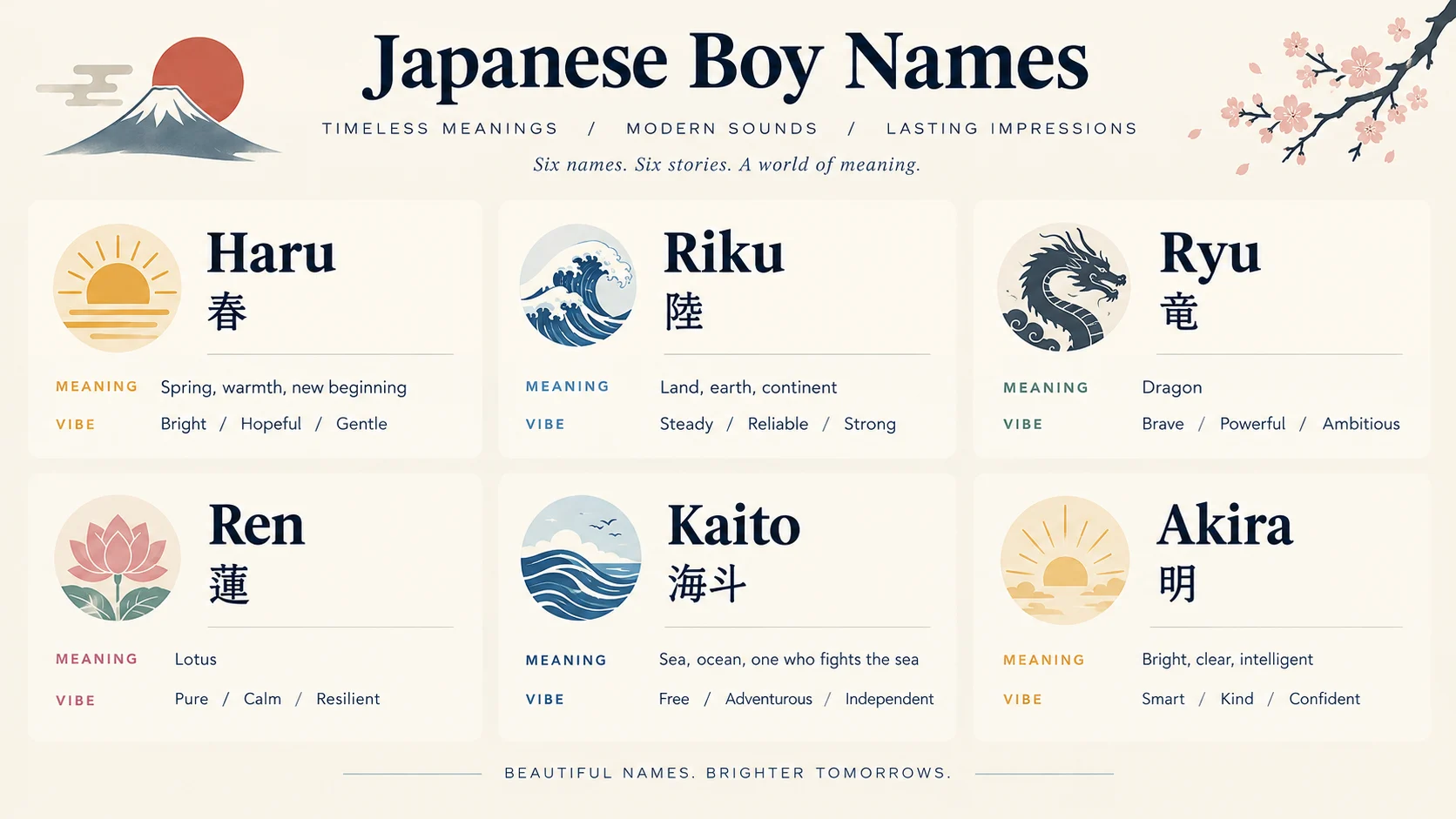
Japanese boy names are masculine given names used in Japan, typically written in kanji, hiragana, or katakana. They often reflect nature, positive traits, or birth order, with common endings like -to, -ta, and -suke.
Choosing a name for a boy is a decision that carries weight, hope, and a bit of poetry. When you look toward Japan, you find a naming culture that treats this choice as an art form. Japanese boy names are not just labels. They are compact stories built from kanji characters, each stroke carrying a wish for brightness, strength, honesty, or a connection to the natural world.
But the full name is only part of the picture. The nicknames that follow a boy through life—the ones shouted on playgrounds, whispered by parents, and typed into group chats—often shape his identity just as much. Japanese nicknames range from the classic and sturdy to the soft and modern. Some come from birth order, like Taro. Others are elegant abbreviations of longer names, like Haru from Haruto.
This guide explores Japanese boy names and the nicknames that bring them to life. You will find meanings, origins, and practical advice for choosing a name that sounds beautiful and feels right. Whether you are naming a child, writing a character, or simply curious, these names offer a window into a culture that values precision and feeling in equal measure.
Main Content: 12 Japanese Boy Nicknames and Names
1. Haru (陽 / 晴)
Meaning and Origin: Haru is a versatile name and nickname. Written as 陽, it means “sun” or “sunlight.” Written as 晴, it means “clear weather” or “fair skies.” Both kanji are currently among the most searched characters for boys in Japan, reflecting a cultural preference for names that evoke brightness and positivity.
Vibe and Style: Haru has a soft, warm, and approachable feel. It is gentle but not weak, carrying the quiet confidence of a sunny morning. It works beautifully as a standalone name or as a nickname for longer names like Haruto or Haruki.
Best For: Parents who want a name that feels modern and universally easy to pronounce. It suits a boy who brings people together.
Similar Nicknames: Hina, Sora, Yuki, Ren.
Why It Works Today: Haru fits the current Japanese trend of two-syllable names with vowel endings. It is friendly, international, and deeply rooted in nature imagery.
2. Riku (陸 / 理玖)
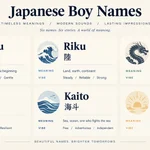
Meaning and Origin: Riku commonly means “land” or “shore” when written as 陸. It can also be written with kanji meaning “reason” (理) and “beauty” (玖) for a more modern feel. It is consistently ranked among the top searched readings for boys in Japan.
Vibe and Style: Grounded, reliable, and quietly cool. Riku has a steady, earthy quality that makes it feel dependable without being boring.
Best For: A boy with a calm, thoughtful nature. It also works well for characters who are steady protagonists.
Similar Nicknames: Rikuto, Rikuya, Sota, Kaito.
Why It Works Today: Its short, punchy sound and clear meaning make it a favorite for parents who want something strong but not aggressive.
3. Ryu (龍 / 竜)
Meaning and Origin: Ryu means “dragon.” In Japanese mythology, dragons are typically protective, wingless, and associated with water and sky. The name carries a sense of power and nobility.
Vibe and Style: Bold, mythological, and slightly edgy. Ryu is short, sharp, and memorable.
Best For: A boy with a fearless spirit, or for creative projects needing a name with built-in drama. It also has global recognition due to pop culture figures like Ryu from Street Fighter.
Similar Nicknames: Ryuji, Ryusei, Tatsu, Kuryu.
Why It Works Today: Ryu offers maximum meaning in a single syllable. It is striking without being difficult to pronounce in English.
4. Sota (颯太 / 奏多)
Meaning and Origin: Sota often combines “sudden” or “sound of the wind” (颯) with “great” or “thick” (太). It can also mean “to play music” (奏) with “many” (多). It is a popular modern choice that peaked in the 2000s and remains well-liked.
Vibe and Style: Energetic, youthful, and musical. Sota has a breezy quality, like a gust of wind or a quick melody.
Best For: An active, creative boy. It suits someone who is always moving and making.
Similar Nicknames: Souta, Sora, Hayate, Ren.
Why It Works Today: Sota balances tradition with a modern, rhythmic sound. The “-ta” ending is a classic masculine marker in Japanese names.
5. Ren (蓮)
Meaning and Origin: Ren means “lotus.” The lotus is a powerful symbol in Buddhism, representing purity and enlightenment rising from muddy waters. Ren has been one of the most popular boy names in Japan in recent years, frequently topping monthly rankings.
Vibe and Style: Elegant, spiritual, and clean. Ren is a single kanji name that feels complete and refined.
Best For: Parents seeking a name with spiritual depth and modern simplicity.
Similar Nicknames: Renren, Rennosuke, Haru, Riku.
Why It Works Today: Ren is short, easy to write, and carries profound cultural weight. It is popular without feeling overused.
6. Kaito (海斗 / 海翔)
Meaning and Origin: Kaito combines “sea” or “ocean” (海) with “constellation” (斗) or “to fly” (翔). It evokes the image of a vast ocean and a starry sky, suggesting boundless possibility.
Vibe and Style: Adventurous, open, and expansive. Kaito feels like a name for someone who looks outward.
Best For: A curious boy who loves the outdoors or dreams big.
Similar Nicknames: Kai, Kaito, Taito, Minato.
Why It Works Today: Kaito has a pleasing rhythm and a romantic meaning. It is internationally recognizable but distinctly Japanese.
7. Daiki (大輝 / 大樹)
Meaning and Origin: Daiki typically combines “big” or “great” (大) with “brightness” or “radiance” (輝), or with “tree” (樹). It suggests a person of great brightness or a strong, rooted presence.
Vibe and Style: Strong, radiant, and dependable. Daiki has a solid, masculine energy.
Best For: A boy expected to grow into a leader or a pillar of his community.
Similar Nicknames: Dai, Daichi, Taiki, Hiroki.
Why It Works Today: The name combines two powerful kanji into a balanced, easy-to-pronounce package. Dai is a natural, friendly nickname.
8. Akira (昭 / 明 / 亮)
Meaning and Origin: Akira means “bright,” “clear,” or “luminous.” It is a classic name that has been used for centuries, carried by figures like filmmaker Akira Kurosawa (given name written 明).
Vibe and Style: Timeless, intelligent, and clear. Akira has a literary quality.
Best For: A thoughtful, observant boy. It also suits characters with a calm, sharp intellect.
Similar Nicknames: Aki, Akira, Sho, Ryo.
Why It Works Today: Akira is a vintage name that never feels dated. Its meaning is simple and universally positive.
9. Yuto (悠斗 / 優人)
Meaning and Origin: Yuto can combine “calm” or “distant” (悠) with “constellation” (斗), or “gentleness” (優) with “person” (人). It is a modern favorite with a soft, melodic sound.
Vibe and Style: Gentle, thoughtful, and kind. Yuto has a warm, approachable quality.
Best For: A boy with a quiet, caring nature.
Similar Nicknames: Yu, Yuto, Haruto, Sota.
Why It Works Today: The “-to” ending is a dominant trend in Japanese boy names, and Yuto’s kanji combinations offer parents flexibility in meaning.
10. Takeshi (武 / 猛)
Meaning and Origin: Takeshi commonly means “warrior” or “fierce” (武). It is a traditional name that evokes strength and discipline.
Vibe and Style: Bold, traditional, and strong. Takeshi has a no-nonsense, classic masculine feel.
Best For: A boy with a determined spirit. It works well for characters in historical or action settings.
Similar Nicknames: Take, Takeshi, Takeru, Isamu.
Why It Works Today: Takeshi offers a connection to traditional Japanese values of discipline and strength. It is a name with weight and history.
11. Hinata (陽向 / 日向)
Meaning and Origin: Hinata means “sunny place” or “facing the sun.” It is written with kanji for “sun” (陽/日) and “direction” or “facing” (向). While used for both genders, it is common for boys.
Vibe and Style: Warm, bright, and optimistic. Hinata feels like a sunbeam.
Best For: A cheerful, outgoing boy. It also has a strong association with the character Hinata Shoyo from the manga Haikyuu!!, known for his relentless optimism.
Similar Nicknames: Hina, Haru, Yota, Sora.
Why It Works Today: Hinata combines a beautiful meaning with a friendly, accessible sound. The “-ta” ending is classic, while the sun imagery is a current trend.
12. Taro (太郎)
Meaning and Origin: Taro traditionally means “first son” or “big boy.” It was historically a yobina (childhood name) and remains a recognizable, iconic Japanese name.
Vibe and Style: Traditional, sturdy, and nostalgic. Taro has a folkloric quality, like a character from a old tale.
Best For: Parents who value tradition and a strong sense of heritage. It is also great for characters needing a classic Japanese feel.
Similar Nicknames: Tarou, Ichiro, Jiro, Saburo.
Why It Works Today: Taro connects to Japanese history and family structure. While its use as a baby name has declined, it remains culturally significant and instantly recognizable.
Quick Comparison Table
| Nickname | Meaning | Style | Best For | Vibe |
|---|---|---|---|---|
| Haru | Sun / Clear weather | Soft, modern | Warm, friendly boys | Sunny |
| Riku | Land / Shore | Grounded, cool | Calm, steady boys | Earthy |
| Ryu | Dragon | Bold, mythological | Fearless spirits | Powerful |
| Sota | Sudden wind / Music | Energetic, youthful | Active, creative boys | Breezy |
| Ren | Lotus | Elegant, spiritual | Thoughtful, pure souls | Refined |
| Kaito | Sea + Constellation | Adventurous | Curious explorers | Expansive |
| Daiki | Great brightness | Strong, radiant | Future leaders | Solid |
| Akira | Bright / Clear | Timeless, literary | Observant, sharp minds | Classic |
| Yuto | Calm + Constellation | Gentle, melodic | Kind, quiet boys | Warm |
| Takeshi | Warrior | Bold, traditional | Determined fighters | Strong |
| Hinata | Sunny place | Warm, optimistic | Cheerful, outgoing boys | Bright |
| Taro | First son | Traditional, nostalgic | Heritage-focused families | Folkloric |
How to Choose the Perfect Nickname
Choosing a Japanese boy name or nickname requires a balance of sound, meaning, and cultural respect.
Start with the kanji, not just the sound. A name like Haru can mean “sun” or “clear weather” depending on the character. Decide what feeling you want the name to carry before settling on the pronunciation.
Consider the nickname potential. Japanese nicknames often shorten a name by taking the first two syllables (Haruto becomes Haru) or adding a diminutive suffix like -chan for children. A name that shortens well offers flexibility as a child grows.
Check the pronunciation for your context. If the name will be used outside Japan, ensure it is easy to pronounce. Names like Ren, Kai, and Ryu travel well. Names with long vowels or unusual kanji readings may require more explanation.
Respect cultural significance. Names like Taro carry historical weight related to birth order. If you are not Japanese, use these names with an awareness of their cultural context rather than treating them as mere sounds.
Avoid overly trendy choices if longevity matters. While names like Haruto and Ren are currently popular, classic names like Akira and Takeshi offer a sense of permanence.
Query Fan-Out
What is a common Japanese boy name?
Haruto, Ren, and Yuto are frequently heard. Haruto often uses kanji meaning “sun” or “fly,” reflecting brightness and ambition.
What does the name Hiroto mean?
Hiroto combines elements like “big/great” (大) or “command/esteem” (博) with “person” or “fly” (翔), suggesting greatness or broad potential.
What Japanese name means dragon?
Ryu or Ryuu (龍) directly means “dragon,” a symbol of power and protection in Japanese culture.
Is Yuki a boy’s name?
Yuki is unisex. For boys, it often means “snow” (雪) or “happiness” (幸), though kanji choice varies widely.
What is the Japanese naming convention for boys?
Traditionally, names may include birth order (Ichiro for first son) or wishes for strength and brightness. Modern names prioritize sound and unique kanji combinations.
How do you pronounce Japanese boy names?
Each syllable is evenly stressed. For example, Haruto is “HAH-roo-toh,” not “huh-ROO-toh.” Long vowels (ō, ū) are held slightly longer.
FAQ
What is the most popular Japanese boy name right now?
Recent search data from Japan shows Haru, Riku, and Haruto among the top-read names for boys, with the kanji for “sun” (陽) leading character searches. Popularity shifts monthly, but soft sounds and nature imagery dominate.
What Japanese boy name means “strong”?
Takeshi (武) directly means “warrior” or “martial.” Daiki (大輝) means “great brightness” and implies strength through radiance. Kaito (海斗) suggests the strength of the ocean.
Is Ren a boy or girl name in Japan?
Ren is predominantly used for boys in Japan and has been one of the most popular boy names for several years. It can be used for girls, but the majority of recent Ren babies are male.
What does the name Haruto mean?
Haruto combines “sun” or “light” (陽/晴) with “fly” or “constellation” (翔/斗). It suggests a person who flies toward the light or has boundless potential.
Can I use a Japanese nickname if I am not Japanese?
Yes, with respect. Many people use Japanese names for creative projects, pets, or personal interest. It is best to learn the meaning and pronunciation first, and to avoid using names with deep religious or historical significance casually.
What is a rare Japanese boy name?
Names with unusual kanji readings or older traditional names that have fallen out of fashion, like Taro or Saburo (third son), are rarer today. Some parents also choose unique combinations of kanji for common pronunciations.
How do Japanese nicknames work?
Common patterns include shortening the full name (Haruto to Haru), adding -chan for affection (especially for children), or using a related kanji reading. Adult nicknames may be based on personality or physical traits.
What Japanese name means “moon”?
Tsuki (月) directly means “moon.” Riku can use the kanji 陸 for “land,” but the moon kanji is more common in names like Tsukito or Mitsuki. Moon imagery is less common for boys than sun imagery.
Conclusion
Choosing a Japanese boy name is an act of storytelling. Whether you are drawn to the sunny warmth of Haru, the grounded strength of Riku, or the mythological power of Ryu, each name carries a history and a hope. Japanese boy names offer a rare combination: sounds that are beautiful to say and meanings that are beautiful to know.
Take your time with the list. Say the names out loud. Imagine them on a playground, in a classroom, in a letter. The right one will feel less like a choice and more like a discovery. We would love to hear which name resonated with you. Share your favorite in the comments or pass this guide along to someone who is searching for the perfect name.

Benjamin Clarke is a writer and nickname enthusiast at NicknameCorner.com, where he helps readers discover creative, meaningful, funny and unique nicknames for people, pets, usernames and special occasions. His content focuses on practical ideas, clear explanations and nickname inspiration that makes choosing the perfect name easier.