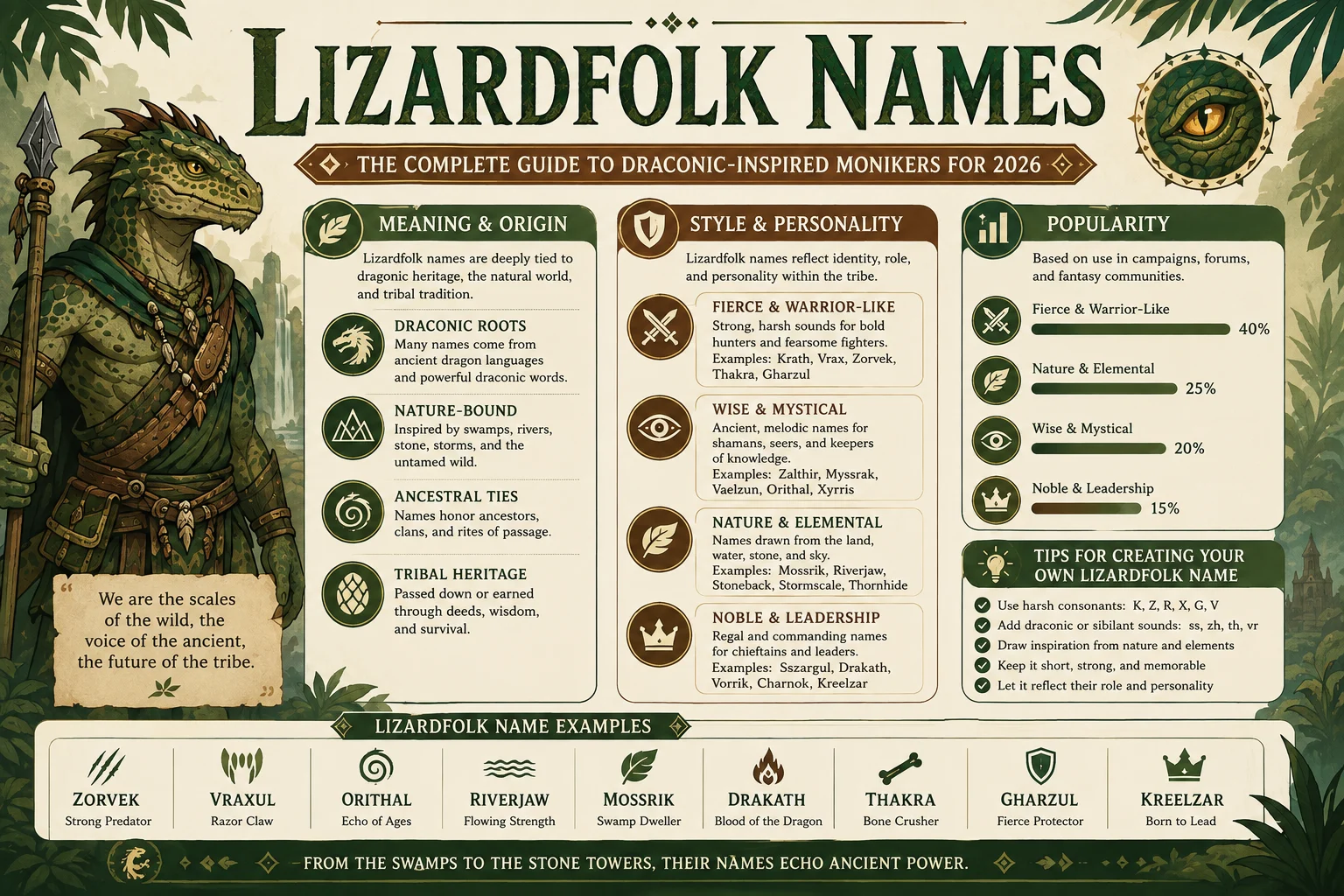
Lizardfolk names are drawn from the Draconic language and reflect notable traits or deeds. Examples include Garurt (axe), given to a warrior who claimed an enemy’s weapon, and Achuak (green), for one who hides in foliage. Lizardfolk use simple descriptives as names, making no distinction between male and female .
Have you ever stared at a blank character sheet, trying to name a scaled warrior with a forked tongue and a heart of steel? The right name can breathe life into any lizardfolk. It turns a collection of stats into a living, breathing character.
Lizardfolk names are special. They aren’t just random syllables thrown together. They carry meaning. They tell a story about who the character is and where they come from.
In Dungeons & Dragons lore, lizardfolk names come from the Draconic language. Names are often granted by the tribe based on notable deeds or actions. A lizardfolk who defeats an orc and claims his axe might be named Garurt, which simply means “axe” .
Finding authentic lizardfolk names matters. It adds depth to your roleplay. It helps you connect with your character. In this guide, you’ll discover over 100 lizardfolk names organized by category, plus their meanings and cultural significance.
Whether you are building a mighty warrior, a cunning rogue, or a wise shaman, you’ll find the perfect lizardfolk name right here. Let’s find the name that fits your character’s claws and scales.
Achuak: The Green One
Meaning
Green.
Origin
This lizardfolk name originates from the Draconic language, serving as a descriptive term for lizardfolk who blend into natural surroundings .
Personality
Achuak suggests a patient, observant individual. Think of a predator who watches and waits. This personality values stealth and strategy over brute force.
Style
- Classic
- Natural
- Stealthy
Best For
This lizardfolk name works perfectly for rangers, rogues, or druids who favor the shadows.
Popularity
This is a classic lizardfolk name used across many D&D sourcebooks, making it a timeless choice .
Emotional Appeal
There is a quiet strength here. Achuak evokes the feeling of the deep swamp. It sounds ancient.
Similar Nicknames
- Sauriv (eye)
- Thurkear (night)
- Kosj (small)
Why It Still Works Today
Simplicity makes this name work. It is easy to pronounce and carries a clear image. It fits any lizardfolk who values patience.
Garurt: The Axe Bearer
Meaning
Axe.
Origin
A lizardfolk name from the Draconic language. It is a descriptive name, often given to a lizardfolk warrior who defeated an orc and took his weapon .
Personality
Garurt is a fighter. This personality is direct, physical, and potentially brutal. This individual solves problems with strength.
Style
- Strong
- Warrior-like
- Classic
Best For
This is perfect for barbarians, fighters, and any lizardfolk who values martial prowess.
Popularity
This is one of the most well-known lizardfolk names from D&D lore .
Emotional Appeal
It sounds dangerous. It carries the weight of a weapon. It is unpretentious and honest about who the character is.
Similar Nicknames
- Jhank (hammer)
- Vargach (battle)
- Aryte (war)
Why It Still Works Today
Honesty is why this name endures. It doesn’t pretend to be something it is not. Garurt tells you exactly what to expect.
Kepesk: The Storm
Meaning
Storm.
Origin
This lizardfolk name comes from the Draconic language .
Personality
Kepesk embodies raw power and unpredictability. This personality is fierce, passionate, and cannot be controlled. Think of a shaman commanding lightning.
Style
- Powerful
- Dramatic
- Mystical
Best For
Great for sorcerers, warlocks, or druids with a focus on elemental power.
Popularity
This name is featured in standard D&D lore .
Emotional Appeal
This name is loud and commanding. It suggests a character who is not easily ignored. There is a majesty and terror to it.
Similar Nicknames
- Valignat (burn)
- Korth (danger)
- Kothar (demon)
Why It Still Works Today
Kepesk fits modern fantasy tropes perfectly. It sounds fantastic and feels inherently magical. It works for lizardfolk with fiery personalities.
Litrix: The Armored One
Meaning
Armor.
Origin
A Draconic-derived lizardfolk name meaning “armor” or “protected” .
Personality
Litrix suggests a defensive, stoic individual. They are a wall. This personality is reliable, tough, and perhaps a bit stubborn.
Style
- Protective
- Solid
- Classic
Best For
Perfect for paladins, fighters with shields, or any defensive-minded character.
Popularity
Emotional Appeal
This name feels safe and dependable. Litrix sounds like a rock. There is comfort in its steadiness.
Similar Nicknames
- Darastrix (dragon)
- Verthica (mountain)
- Vyth (steel)
Why It Still Works Today
Practicality makes this name work. It speaks to a core lizardfolk desire for survival. It represents durability.
Mirik: The Song
Meaning
Song.
Origin
Personality
Mirik is a surprising choice for a lizardfolk. This name suggests creativity, expression, and perhaps a bardic soul. They are not all warriors.
Style
- Artistic
- Unique
- Soft
Best For
Excellent for bards or any lizardfolk with a creative or diplomatic bent.
Popularity
This lizardfolk name appears in the official name lists .
Emotional Appeal
This name stands out as different and unexpected. It offers a glimpse into a softer side of a reptilian race. It is gentle yet strong.
Similar Nicknames
- Sauriv (eye)
- Othokent (smart)
- Baeshra (animal)
Why It Still Works Today
Uniqueness makes it work. Playing against type is a classic character creation strategy. Mirik is a reminder that lizardfolk can have depth.
Throden: The Many
Meaning
Many.
Origin
A name from the Draconic language meaning “many” .
Personality
Throden might represent a leader or a character with many facets. This personality is complex, perhaps a strategist who sees the big picture.
Style
- Intriguing
- Mysterious
- Classic
Best For
Great for clan leaders, warlords, or characters with a hidden past.
Popularity
Included in standard D&D lore .
Emotional Appeal
There is a sense of scale and importance. This name suggests numbers and strength in unity. It feels ancient and powerful.
Similar Nicknames
- Argathor (from table)
- Vutha (black)
- Kethend (gem)
Why It Still Works Today
This name has historical weight. It sounds like a name a leader would have. It still feels fresh and modern in a fantasy context.
Childhood Names: The Clutch’s Endearments
Meaning
Lizardfolk clans give descriptive or event-based names to the young. These lizardfolk names often act as nicknames within the community .
Origin
This is a cultural naming tradition within lizardfolk tribes .
Personality
This is a name given by others. It reflects how the tribe sees you. It could be a badge of honor or a playful jab.
Style
- Playful
- Descriptive
- Endearing
Best For
Used among the clutch and family. It might later be used as a nickname or even replaced by a deed-name.
Popularity
This is a common feature in D&D lore .
Emotional Appeal
These names feel personal and familial. They show that lizardfolk are not all cold-blooded killers. They have a sense of community.
Similar Nicknames
Why It Still Works Today
We all have nicknames from our childhood. It makes the lizardfolk feel real. It adds a layer of backstory and emotional connection.
Clan Names: The Lineage of Scales
Meaning
These are family or lineage names, often long and complicated. They represent a Lizardfolk’s heritage and standing .
Origin
Clan names are a long-standing tradition in lizardfolk societies .
Personality
This name connects you to your ancestors. It suggests duty and responsibility. It can open doors or shut them.
Style
- Grandiose
- Ancient
- Formal
Best For
Used to identify the tribe or family. Often used in formal introductions.
Popularity
These names appear in official D&D books .
Emotional Appeal
These names sound impressive. They have a certain gravitas that simple names lack. They are perfect for lizardfolk who value tradition.
Similar Nicknames
Why It Still Works Today
Long fantasy names are part of the genre. They sound ancient and exotic. They give a sense of legacy that enhances roleplay.
Vutha: The Darkness
Meaning
Black.
Origin
This lizardfolk name comes from the Draconic language .
Personality
Vutha suggests a character who operates in shadows, morally grey areas, or perhaps holds a dark secret. There is a sense of mystery here.
Style
- Dark
- Mysterious
- Edgy
Best For
Perfect for shadow monks, rogues, or warlocks with dark patrons.
Popularity
This name appears in standard D&D name lists .
Emotional Appeal
Vutha sounds threatening and cool. It implies a sense of power and control. It is perfect for a more intimidating lizardfolk.
Similar Nicknames
- Usk (iron)
- Irhtos (secret)
- Korth (danger)
Why It Still Works Today
This lizardfolk name works because “dark and mysterious” is a timeless character archetype. Vutha is easy to say and sticks in the mind.
Verthica: The Mountain
Meaning
Mountain.
Origin
A lizardfolk name of Draconic origin .
Personality
This suggests a character who is unshakeable, patient, and strong. They are a cornerstone. Verthica is someone you can rely on.
Style
- Strong
- Classic
- Solid
Best For
Great for fighters, barbarians, or any character built like a tank.
Popularity
Emotional Appeal
This name feels grand and powerful. It suggests longevity and endurance. It is a name that demands respect.
Similar Nicknames
- Darastrix (dragon)
- Litrix (armor)
- Garurt (axe)
Why It Still Works Today
The imagery is powerful and universal. A mountain represents strength and stability, making it a brilliant name for a lizardfolk.
Quick Comparison Table
| Nickname | Meaning | Style | Best For |
|---|---|---|---|
| Achuak | Green | Natural | Rangers |
| Garurt | Axe | Warrior | Barbarians |
| Kepesk | Storm | Powerful | Sorcerers |
| Mirik | Song | Artistic | Bards |
| Throden | Many | Intriguing | Leaders |
| Vutha | Black | Edgy | Rogues |
| Verthica | Mountain | Solid | Fighters |
| Litrix | Armor | Defensive | Paladins |
How to Choose the Perfect Lizardfolk Name
Choosing lizardfolk names for your character can be a tough task. Here is a simple guide to help you decide.
First, consider your character’s class. A barbarian might suit a strong name like Garurt or Jhank. A spellcaster might prefer something mystical like Kepesk or Mirik.
Second, think about their personality. Is your lizardfolk a brute or a philosopher? This will guide your choice.
Third, consider the backstory. Was your character named for a great deed? Or do they still carry a childhood nickname like Climber or Pious?
Most Popular Lizardfolk Names Today
Some lizardfolk names have become classics among the D&D community. Here are a few fan favorites.
Garurt, meaning “axe,” is a top choice for warriors. Achuak is also very popular for its simplicity and natural meaning.
Kepesk, the storm, is a brilliant name for magic users. Sauriv, meaning “eye,” is another favorite, often used for characters with keen perception.
Vintage Lizardfolk Names Making a Comeback
Longer lizardfolk names like the clan names are seeing a resurgence. Players are looking for names that feel ancient and powerful.
Names like Clethtinthiallor and Drachedandion are intimidating and impressive. They offer rich roleplaying opportunities and a deep connection to lore.
Another comeback is the use of descriptive titles and honorifics . Using a title like “Slayer of Beasts” or “Keeper of Secrets” adds depth to the character.
Modern Lizardfolk Trends
Modern players are moving away from purely physical names. They are exploring the softer and more creative lizardfolk names.
Mirik (song) and Othokent (smart) are gaining popularity. They show that a lizardfolk can be more than just a brute. This is a “play against type” trend.
There is also a trend toward naming lizardfolk after natural elements. Names like Thurkear (night) and Usk (iron) remain strong but are being applied to more nuanced characters.
What does Lizardfolk mean?
Lizardfolk are a humanoid reptilian species in Dungeons & Dragons. They are known for their connection to nature and the Draconic language.
Why is this name popular?
These lizardfolk names are popular because they carry clear meanings and are steeped in official D&D lore, providing authenticity.
Is the name modern?
Many lizardfolk names are classic, not modern. However, their simplicity and descriptive nature make them timeless.
Is the name vintage?
Yes. These names originate in the Draconic language. They are ancient and have been used in D&D for many years.
Who should use a name like this?
Anyone looking for an authentic fantasy name. They are suitable for D&D, RPGs, and fantasy writing.
Is the name unique?
Yes. The specific combination of the name and the character’s backstory makes it unique.
What personality fits this name?
It depends on the name. For example, a name meaning “axe” fits a warrior, while “song” fits an artist.
FAQ
1. What are the origins of lizardfolk names?
Lizardfolk names originate from the Draconic language. They are often descriptive, reflecting a notable physical trait or deed that defines the character.
2. Are there male and female lizardfolk names?
No. Lizardfolk make no distinction between male and female in their naming conventions. The same names are used for all genders .
3. What are some examples of lizardfolk names and their meanings?
Achuak means “green,” Garurt means “axe,” and Kepesk means “storm.” These names are derived from simple descriptives in the Draconic language .
4. What are lizardfolk childhood names?
Lizardfolk childhood names are nicknames given to the young by their tribe. These names often describe a habit or event. Examples include Climber, Leaper, and Ropechewer .
5. What is the naming tradition for lizardfolk?
The tribe gives lizardfolk names based on deeds. A warrior who claims an enemy’s weapon might be named Garurt (“axe”) . Clan names are also used .
6. What are lizardfolk clan names?
Clan names are like surnames. They are often long and ancient-sounding, such as Clethtinthiallor or Norixius. They represent the character’s lineage .
7. What are good names for a lizardfolk shaman?
Kepesk (“storm”) or Othokent (“smart”) are excellent choices. These names suggest a connection to magic or wisdom .
8. What is the Southlands lizardfolk naming tradition?
In the Southlands, lizardfolk often have a use-name followed by a title. Examples include Tekul, Slayer of Beasts, or Keeper of Secrets .
Conclusion
Choosing the perfect name is an important step in bringing your character to life. This guide should make it easier. There is a great variety to choose from. You can pick a classic name from the D&D sourcebooks, or create a unique one that breaks the mold. The best names fit your character’s story and personality.
The lizardfolk are a fascinating race with a rich culture. Their naming traditions reflect their values and connection to nature. These names are more than just words. They are history. They are identity. They give a window into the soul of a scaled hero.
We would love to hear your thoughts. Which name will you use for your next campaign? Let us know in the comments below. And if you found this guide useful, please share it with your fellow adventurers.

Benjamin Clarke is a writer and nickname enthusiast at NicknameCorner.com, where he helps readers discover creative, meaningful, funny and unique nicknames for people, pets, usernames and special occasions. His content focuses on practical ideas, clear explanations and nickname inspiration that makes choosing the perfect name easier.
1 thought on “Lizardfolk Names| The Complete Guide to Draconic-Inspired Monikers For 2026”