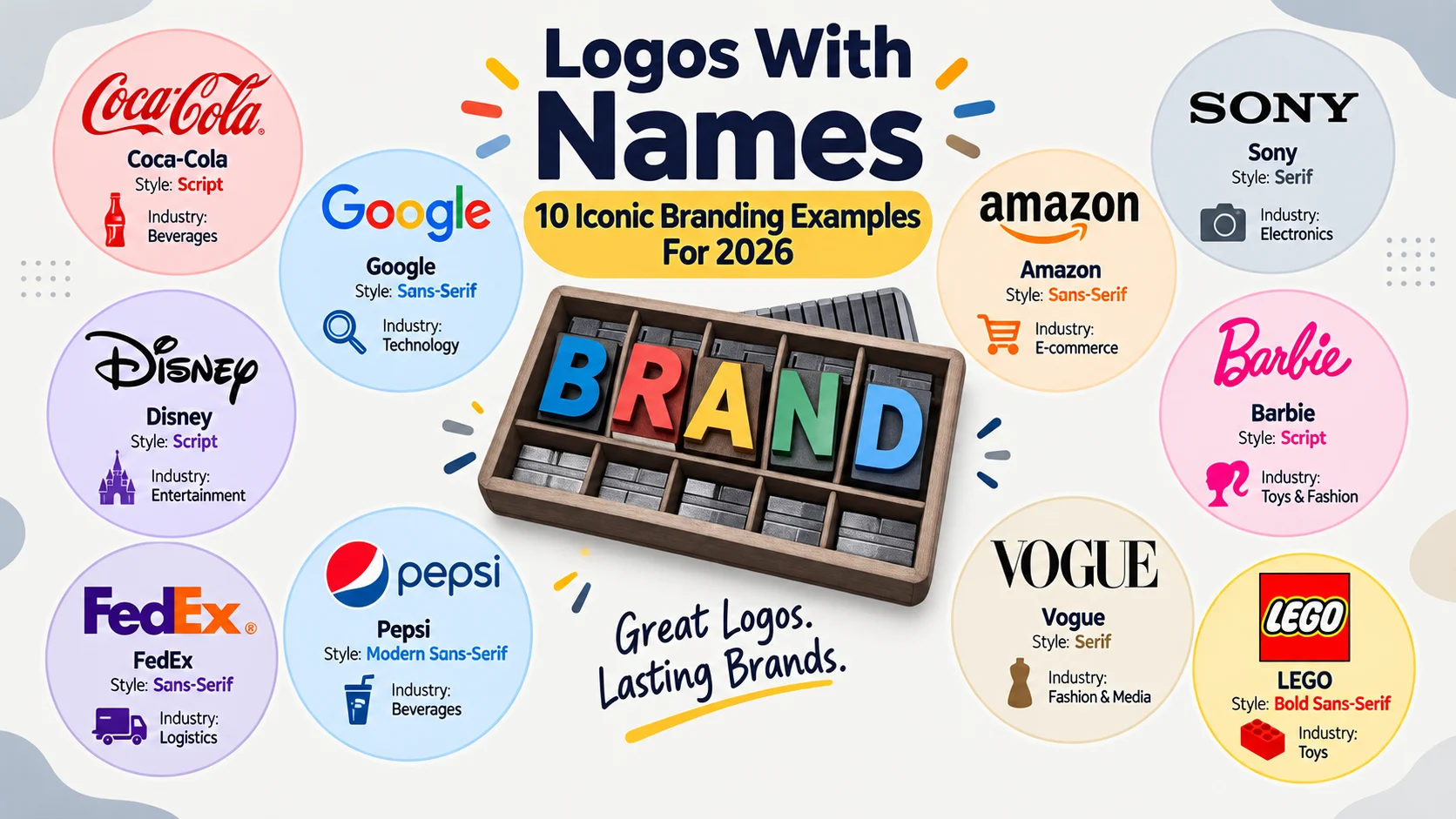
What are logos with names? Logos with names, also called wordmarks or logotypes, are logos that primarily consist of the brand name in stylized typography. Examples include Coca-Cola, Google, Disney, and FedEx. These logos are effective because they build strong name recognition.
Think about your favorite brands. You probably recognize their logos instantly. A red circle. A bitten apple. A swoosh. But some of the most powerful logos don’t rely just on an icon. They use the brand name itself to make a statement. These are logos with names, and they are everywhere.
A logo with a name is called a wordmark or logotype. It’s a design that uses typography to make the brand name the star of the show. Sometimes it stands alone. Sometimes it’s paired with a symbol. But the name is always the hero.
Why are logos with names so effective? Because they build instant recognition. When a customer sees the name, they remember the brand. From the classic script of Coca-Cola to the bold simplicity of Google, these logos tell a story through type. In this guide, we’ll look at ten iconic examples and explore what makes them work.
10 Iconic Logos With Names and Their Stories
1. Coca-Cola
Meaning: The name comes from its original ingredients: coca leaves and kola nuts.
Origin: American, 1886.
Personality: Coca-Cola is the classic, friendly, and nostalgic brand. It’s the taste of summer, of family gatherings, of happiness.
Style: Classic, Vintage, Script.
Best For: Brands that want to evoke tradition, warmth, and nostalgia.
Popularity: One of the most recognized logos in the world.
Emotional Appeal: The flowing Spencerian script feels personal and handwritten. It evokes a sense of history and Americana.
Pop Culture Reference: Coca-Cola is a global icon of American culture.
Similar Logos: Pepsi, Dr Pepper, Fanta.
Why It Still Works Today: The script is timeless. It’s instantly recognizable even without the color. It’s a masterclass in brand consistency.
2. Google
Meaning: A play on the word “googol,” which is the number 1 followed by 100 zeros.
Origin: American, 1998.
Personality: Google is the friendly, innovative, and playful tech giant. It organizes the world’s information.
Style: Modern, Clean, Sans-Serif.
Best For: Tech companies, startups, and brands that want a clean, modern look.
Popularity: One of the most valuable and recognized brands in the world.
Emotional Appeal: The simple, colorful letters feel approachable and fun. The colors represent the playfulness of the brand.
Pop Culture Reference: “Just Google it” is a common phrase.
Similar Logos: Microsoft, Apple, Amazon.
Why It Still Works Today: The design is simple, scalable, and works perfectly on screens. It’s a modern classic.
3. Disney
Meaning: Named after founder Walt Disney.
Origin: American, 1923.
Personality: Disney is the magical, whimsical, and storytelling brand. It’s the home of fairy tales and childhood dreams.
Style: Classic, Magical, Script.
Best For: Entertainment, media, and brands that want to evoke magic and wonder.
Popularity: One of the most beloved brands in the world.
Emotional Appeal: The whimsical script, based on Walt Disney’s own signature, feels personal and magical. It’s a promise of fantasy.
Pop Culture Reference: The Disney logo appears before every Disney movie.
Similar Logos: Warner Bros., Pixar, Universal.
Why It Still Works Today: The logo is a symbol of childhood wonder. It’s nostalgic and magical.
4. FedEx
Meaning: Federal Express.
Origin: American, 1971.
Personality: FedEx is the fast, reliable, and efficient delivery brand.
Style: Modern, Bold, Sans-Serif.
Best For: Logistics, delivery, and brands that want to convey speed and reliability.
Popularity: A globally recognized logo with a famous hidden meaning.
Emotional Appeal: The bold purple and orange colors feel energetic. The hidden arrow between the “E” and “x” is a clever design touch that represents speed and precision.
Pop Culture Reference: The hidden arrow is often cited as one of the best logo designs ever.
Similar Logos: UPS, DHL, USPS.
Why It Still Works Today: The hidden arrow is a brilliant piece of design that rewards observation and reinforces the brand’s message of speed.
5. Coca-Cola (Revisited) vs. Pepsi
Meaning: Pepsi is named after the digestive enzyme pepsin.
Origin: American, 1898.
Personality: Pepsi is the youthful, energetic, and modern rival to Coca-Cola.
Style: Modern, Bold, Sans-Serif.
Best For: Brands that want to appeal to a younger, more energetic audience.
Popularity: One of the most recognized logos globally.
Emotional Appeal: The red, white, and blue globe evokes patriotism and energy.
Pop Culture Reference: The “Cola Wars” between Coke and Pepsi are legendary.
Similar Logos: Coca-Cola, Dr Pepper.
Why It Still Works Today: The Pepsi globe is simple, dynamic, and instantly recognizable.
6. Sony
Meaning: From the Latin word “sonus,” meaning sound.
Origin: Japanese, 1946.
Personality: Sony is the innovative, sophisticated, and reliable electronics brand.
Style: Classic, Elegant, Serif.
Best For: Technology, electronics, and brands that want to convey quality and sophistication.
Popularity: A globally recognized brand.
Emotional Appeal: The elegant serif typeface feels refined and trustworthy. It suggests precision and quality.
Pop Culture Reference: Sony is a pioneer in electronics and entertainment.
Similar Logos: Samsung, Panasonic, LG.
Why It Still Works Today: The classic serif font is timeless. It conveys a sense of heritage and quality.
7. Amazon
Meaning: Named after the Amazon River, the largest river in the world.
Origin: American, 1994.
Personality: Amazon is the vast, customer-centric, and convenient e-commerce giant.
Style: Modern, Clean, Sans-Serif.
Best For: E-commerce, technology, and brands that want to convey scale and convenience.
Popularity: One of the most valuable brands in the world.
Emotional Appeal: The smile arrow under the name is a clever touch. It goes from A to Z, suggesting the company sells everything. It also looks like a smile, reinforcing customer satisfaction.
Pop Culture Reference: The Amazon smile is instantly recognizable.
Similar Logos: eBay, Walmart, Alibaba.
Why It Still Works Today: The hidden smile is a brilliant design that communicates the brand’s core message in a single symbol.
8. Coca-Cola (Classic) vs. Barbie
Meaning: Barbie is named after the founder’s daughter, Barbara.
Origin: American, 1959.
Personality: Barbie is the iconic, fun, and fashionable doll brand.
Style: Playful, Trendy, Script.
Best For: Toy brands, fashion brands, and brands that want to convey fun and style.
Popularity: One of the most famous toy brands in the world.
Emotional Appeal: The iconic pink and the playful script font evoke childhood, fashion, and fun.
Pop Culture Reference: The Barbie movie in 2023 brought the brand back into the spotlight.
Similar Logos: Disney, Hello Kitty, LEGO.
Why It Still Works Today: The Barbie logo is instantly recognizable and has evolved while staying true to its playful roots.
9. Vogue
Meaning: From the French word for “fashion” or “style.”
Origin: American, 1892.
Personality: Vogue is the elegant, high-fashion, and aspirational magazine.
Style: Elegant, Classic, Serif.
Best For: Fashion, beauty, and luxury brands.
Popularity: The most influential fashion magazine in the world.
Emotional Appeal: The elegant, thin serif typeface is the epitome of sophistication. It’s timeless and iconic.
Pop Culture Reference: Vogue is a cultural icon.
Similar Logos: Harper’s Bazaar, Elle, Vanity Fair.
Why It Still Works Today: The Vogue logo is a masterclass in elegant simplicity. It’s never gone out of style.
10. LEGO
Meaning: From the Danish phrase “leg godt,” meaning “play well.”
Origin: Danish, 1932.
Personality: LEGO is the creative, playful, and imaginative toy brand.
Style: Playful, Bold, Rounded.
Best For: Toy brands, educational brands, and brands that want to convey creativity.
Popularity: A globally beloved brand.
Emotional Appeal: The bold, rounded letters and the red, white, and black color scheme feel fun and friendly. The LEGO logo is a promise of creativity and play.
Pop Culture Reference: LEGO has expanded into movies, video games, and theme parks.
Similar Logos: Playmobil, Mattel, Hasbro.
Why It Still Works Today: The LEGO logo is playful and timeless. It’s a symbol of creativity for all ages.
Quick Comparison Table
| Logo | Meaning | Style | Best For |
|---|---|---|---|
| Coca-Cola | From coca leaves and kola nuts | Classic, Script | Nostalgia and tradition |
| Play on “googol” | Modern, Sans-Serif | Tech and innovation | |
| Disney | Named after Walt Disney | Classic, Magical | Entertainment and magic |
| FedEx | Federal Express | Modern, Bold | Speed and reliability |
| Pepsi | From the enzyme pepsin | Modern, Bold | Youth and energy |
| Sony | From the Latin “sonus” | Classic, Serif | Quality and sophistication |
| Amazon | Named after the river | Modern, Clean | Scale and convenience |
| Barbie | Named after Barbara | Playful, Script | Fun and fashion |
| Vogue | French for “fashion” | Elegant, Serif | Luxury and style |
| LEGO | “Play well” in Danish | Playful, Bold | Creativity and play |
How to Design a Logo With Your Name
Creating a logo with your name is a strategic process. Here are some tips to help you get started.
- Choose Your Typography Wisely: The font you choose is the most important decision. A serif font feels classic and trustworthy. A sans-serif font feels modern and clean. A script font feels personal and elegant. Choose a font that matches your brand’s personality.
- Consider Color: Color is a powerful tool. Red is energetic and bold. Blue is trustworthy and calm. Green is natural and fresh. Choose colors that align with your brand’s message.
- Think About Layout: Will your name stand alone? Will it be paired with an icon? A horizontal layout is classic and easy to read. A stacked layout is compact and works well for social media profiles.
- Make It Scalable: Your logo needs to work in a variety of sizes, from a tiny app icon to a large billboard. Ensure your text is readable at all sizes.
- Be Consistent: Use your logo consistently across all platforms. This builds brand recognition and trust.
Most Popular Logos With Names Today
According to branding experts, these are some of the most recognized logos with names:
- Classic Wordmarks: Coca-Cola, Disney, Vogue, Sony.
- Modern Wordmarks: Google, Amazon, FedEx, Netflix.
- Playful Wordmarks: LEGO, Barbie, Toys “R” Us.
These logos are successful because they are simple, memorable, and perfectly aligned with the brand’s identity.
Frequently Asked Questions
What is a logo with a name called?
A logo that is primarily composed of the brand name in stylized text is called a wordmark or a logotype. Examples include Coca-Cola, Google, and FedEx.
Why are logos with names effective?
Logos with names are effective because they build instant brand recognition. They communicate the brand’s identity directly. They are also easy to remember because the name is the design.
What is the most famous logo with a name?
The Coca-Cola logo is arguably the most famous wordmark in the world. It is instantly recognizable and has been used for over a century.
What is a wordmark vs. a logo?
A logo is a broad term for any graphic mark that identifies a brand. A wordmark is a specific type of logo that consists primarily of the brand name in text. A brandmark is a logo that uses an icon or symbol.
How do I create a logo with my name?
To create a logo with your name, choose a font that matches your brand’s personality. Select colors that evoke the right emotion. Keep the design simple and scalable. Consider hiring a professional designer for the best results.
What are some examples of good typography in logos?
Coca-Cola uses a flowing script. Google uses a simple, colorful sans-serif. Vogue uses an elegant serif. FedEx uses a bold, modern sans-serif.
Should my logo have an icon or just my name?
It depends on your brand. A standalone wordmark is clean and professional. Pairing a wordmark with an icon can create a stronger visual identity. Many brands use both, with the wordmark for formal contexts and the icon for social media avatars.
What is the hidden meaning in the FedEx logo?
The FedEx logo has a hidden arrow in the negative space between the letters “E” and “x.” This arrow represents speed and precision, which are core to the brand’s promise.
Conclusion
Designing a logo with your name is a powerful way to build a brand. It’s a strategy that has worked for some of the biggest companies in the world. From the nostalgic script of Coca-Cola to the modern simplicity of Google, these logos with names prove that great typography can be just as powerful as any icon.
We hope this guide has inspired you. Whether you’re designing your first logo or refining an existing one, remember that simplicity, consistency, and meaning are the keys to success. Your name is your brand. Let your logo make it shine. Share this article with a fellow entrepreneur, and let us know your favorite logo in the comments!

Scarlett Howard is a writer and name enthusiast at NicknameCorner. She creates creative and helpful guides on nicknames, names, usernames and naming ideas, helping readers find meaningful, memorable and unique names for every occasion.

3 thoughts on “Logos With Names| 10 Iconic Branding Examples For 2026”