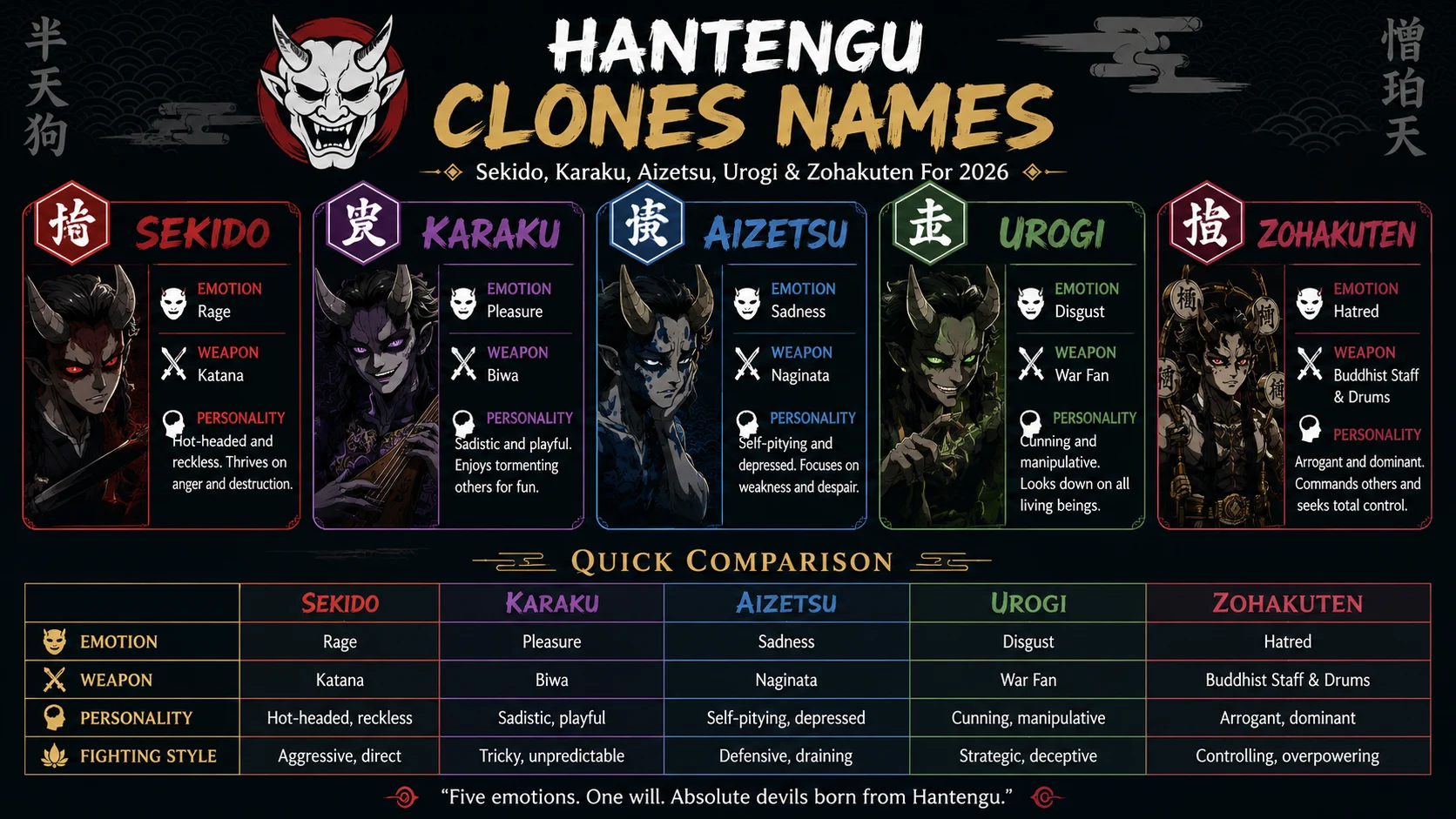
The Hantengu clones names are Sekido (anger/rage), Karaku (pleasure/lust), Aizetsu (sorrow/grief), Urogi (joy/delight), and Zohakuten (malice/resentment). Zohakuten is the fusion of the four clones and the most powerful.
Who Is Hantengu?
Before we explore the Hantengu clones names, it’s important to understand the demon himself. Hantengu is Upper Rank Four (Upper Moon 4) in the Twelve Kizuki, serving directly under Muzan Kibutsuji.
Hantengu is a cowardly, pitiful demon who constantly plays the victim. He whines, cries, and begs for mercy, yet he is incredibly dangerous. His true power lies in his Blood Demon Art, which allows him to externalize his emotions as separate physical entities his clones.
His clones are not just mindless servants. They are extensions of his own psyche, each representing a different emotional state:
- Sekido represents his hatred and anger
- Karaku represents his lust and pleasure
- Aizetsu represents his sorrow and grief
- Urogi represents his joy and delight
- Zohakuten is the fusion of the four, representing his malice and resentment
The Main Hantengu Clones Names
1. Sekido (Anger/Shock)
Meaning: “Sekido” translates to “angry” or “furious”
Personality: Sekido is the embodiment of Hantengu’s hatred and anger. He is aggressive, confrontational, and constantly enraged. He is the most combat-ready of the clones and often takes the lead in battle.
Appearance: Sekido is a large, muscular demon with a red complexion and a menacing expression. He wields a massive kanabo (club) and wears a robe patterned with lightning bolts.
Abilities: He uses his kanabo to channel lightning-based attacks, striking with incredible speed and force.
Best For: Sekido represents pure, unadulterated rage.
Similar Names: Ikari (Japanese for anger), Enraged
2. Karaku (Pleasure/Lust)
Meaning: “Karaku” translates to “pleasure” or “lust”
Personality: Karaku embodies Hantengu’s lust and desire for pleasure. He is arrogant, smug, and takes delight in toying with his opponents. He represents Hantengu’s selfish and hedonistic side.
Appearance: Karaku has a more refined appearance than Sekido, with a relaxed and confident demeanor. He wields a large fan as his weapon.
Abilities: His fan can create powerful gusts of wind that can disorient and damage his enemies.
Best For: Karaku represents desire and self-indulgence.
Similar Names: Raku (pleasure), Pleasure
3. Aizetsu (Sorrow/Grief)
Meaning: “Aizetsu” translates to “sorrow” or “grief”
Personality: Aizetsu is the embodiment of Hantengu’s sadness and self-pity. He is melancholic, weeping, and constantly lamenting his fate. He represents Hantengu’s victim complex.
Appearance: Aizetsu has a sorrowful expression, with tears streaming down his face. He wields a long spear as his weapon.
Abilities: His spear attacks are precise and deadly, often infused with his sorrowful energy.
Best For: Aizetsu represents grief and victimhood.
Similar Names: Kanashimi (Japanese for sadness), Grief
4. Urogi (Joy/Delight)
Meaning: “Urogi” translates to “joy” or “delight”
Personality: Urogi embodies Hantengu’s twisted joy and delight. He is maniacal, laughing uncontrollably, and finds amusement in violence and suffering.
Appearance: Urogi is a winged demon with bird-like features, allowing him to fly. He has a wild, gleeful expression.
Abilities: He can fly and attack from the air, using his claws and talons to slash his enemies.
Best For: Urogi represents cruel joy and delight in suffering.
Similar Names: Yorokobi (Japanese for joy), Delight
5. Zohakuten (Malice/Resentment)
Meaning: “Zohakuten” translates to “resentment” or “malice”
Personality: Zohakuten is the fusion of the four main clones. He represents Hantengu’s deepest malice, resentment, and hatred. He is calm, calculating, and incredibly powerful the most dangerous of all the clones.
Appearance: Zohakuten is a large, imposing demon with a wooden, drum-like structure on his back. He has a cold, expressionless face and glowing eyes.
Abilities: He can create powerful sound-based attacks using the drums on his back, manipulating the battlefield with devastating effects.
Best For: Zohakuten represents pure malice and overwhelming power.
Similar Names: Nikushimi (Japanese for hatred), Malice
Quick Comparison Table
| Name | Emotion | Personality | Weapon | Style |
|---|---|---|---|---|
| Sekido | Anger/Rage | Aggressive, confrontational | Kanabo (club) | Lightning attacks |
| Karaku | Pleasure/Lust | Arrogant, smug | Large fan | Wind attacks |
| Aizetsu | Sorrow/Grief | Melancholic, weeping | Long spear | Precise strikes |
| Urogi | Joy/Delight | Maniacal, laughing | Claws/Talons | Aerial attacks |
| Zohakuten | Malice/Resentment | Calm, calculating | Drums | Sound-based attacks |
The Importance of Hantengu’s Clones in the Story
The Hantengu clones names are not just cool character designs they serve a crucial narrative purpose:
They Represent Hantengu’s Broken Psyche
Hantengu is a deeply traumatized and broken individual. His clones are physical manifestations of the emotions he cannot process or control. By externalizing his feelings, he creates a twisted family of demons that fight for him.
They Create a Unique Battle Dynamic
The clones force the Demon Slayer Corps to fight multiple opponents at once, each with a different fighting style and personality. This makes the battle against Hantengu one of the most challenging and memorable in the series.
They Highlight the Theme of Emotion
Demon Slayer explores the destructive power of unchecked emotions. Hantengu’s clones are a perfect example of how hatred, lust, sorrow, and joy can become weapons of destruction when left uncontrolled.
They Showcase the Power of the Demon Slayers
Defeating Hantengu and his clones requires teamwork, strategy, and incredible determination. The battle showcases the strength and resilience of Tanjiro, Nezuko, Genya, and the others.
How to Use Hantengu Clone Names for Characters
The Hantengu clones names are rich with meaning and symbolism. Here’s how you might use them for creative inspiration:
1. For a Character Inspired by Sekido
- Meaning: Anger, rage, intensity
- Personality: Aggressive, confrontational
- Best For: A character who is driven by anger or a desire for revenge.
2. For a Character Inspired by Karaku
- Meaning: Pleasure, hedonism
- Personality: Arrogant, self-indulgent
- Best For: A character who is selfish or driven by desire.
3. For a Character Inspired by Aizetsu
- Meaning: Sorrow, grief
- Personality: Melancholic, self-pitying
- Best For: A tragic character or a victim of circumstance.
4. For a Character Inspired by Urogi
- Meaning: Joy, delight
- Personality: Maniacal, gleeful
- Best For: A chaotic character who takes pleasure in chaos.
5. For a Character Inspired by Zohakuten
- Meaning: Malice, resentment
- Personality: Calm, calculating
- Best For: A powerful, cold antagonist.
Frequently Asked Questions
What are the Hantengu clones names?
The main Hantengu clones names are Sekido (anger), Karaku (pleasure), Aizetsu (sorrow), Urogi (joy), and Zohakuten (malice/resentment).
What is Zohakuten?
Zohakuten is the fusion of the four main clones. He represents Hantengu’s deepest malice and resentment and is the most powerful of all the clones.
What does Sekido mean in Demon Slayer?
Sekido means “angry” or “furious” in Japanese. He represents Hantengu’s hatred and anger.
What does Karaku mean in Demon Slayer?
Karaku means “pleasure” or “lust” in Japanese. He represents Hantengu’s desire for pleasure and self-indulgence.
What does Aizetsu mean in Demon Slayer?
Aizetsu means “sorrow” or “grief” in Japanese. He represents Hantengu’s sadness and self-pity.
What does Urogi mean in Demon Slayer?
Urogi means “joy” or “delight” in Japanese. He represents Hantengu’s twisted delight in violence.
Conclusion
The Hantengu clones names are a fascinating window into the mind of one of Demon Slayer’s most complex villains. Each clone Sekido, Karaku, Aizetsu, Urogi, and Zohakuten represents a different aspect of Hantengu’s fractured psyche, from his rage to his sorrow to his malice.
Understanding these clones adds depth to the story and makes the battle against Hantengu even more compelling. Whether you’re a fan of the series, a writer looking for inspiration, or simply curious about these terrifying demons, the world of Demon Slayer offers endless fascination.
Which Hantengu clone is your favorite? Share your thoughts in the comments below, and don’t forget to share this guide with other Demon Slayer fans!

Benjamin Clarke is a writer and nickname enthusiast at NicknameCorner.com, where he helps readers discover creative, meaningful, funny and unique nicknames for people, pets, usernames and special occasions. His content focuses on practical ideas, clear explanations and nickname inspiration that makes choosing the perfect name easier.